Family dinners look different when one sibling can’t tolerate the smell of certain foods, or when a game night ends early because the noise gets to be too much.
That’s not a failure of the relationship. It’s one more thing families raising an autistic child, and that child’s brothers and sisters, are figuring out together.
Lately, autism and sibling relationships come up in almost every intake conversation we have at Achieve ABA Therapy Group, usually somewhere between talking about school and talking about bedtime.
Here’s what we’ve learned works, and what research says about these relationships over time.
What Research Shows About Sibling Relationships
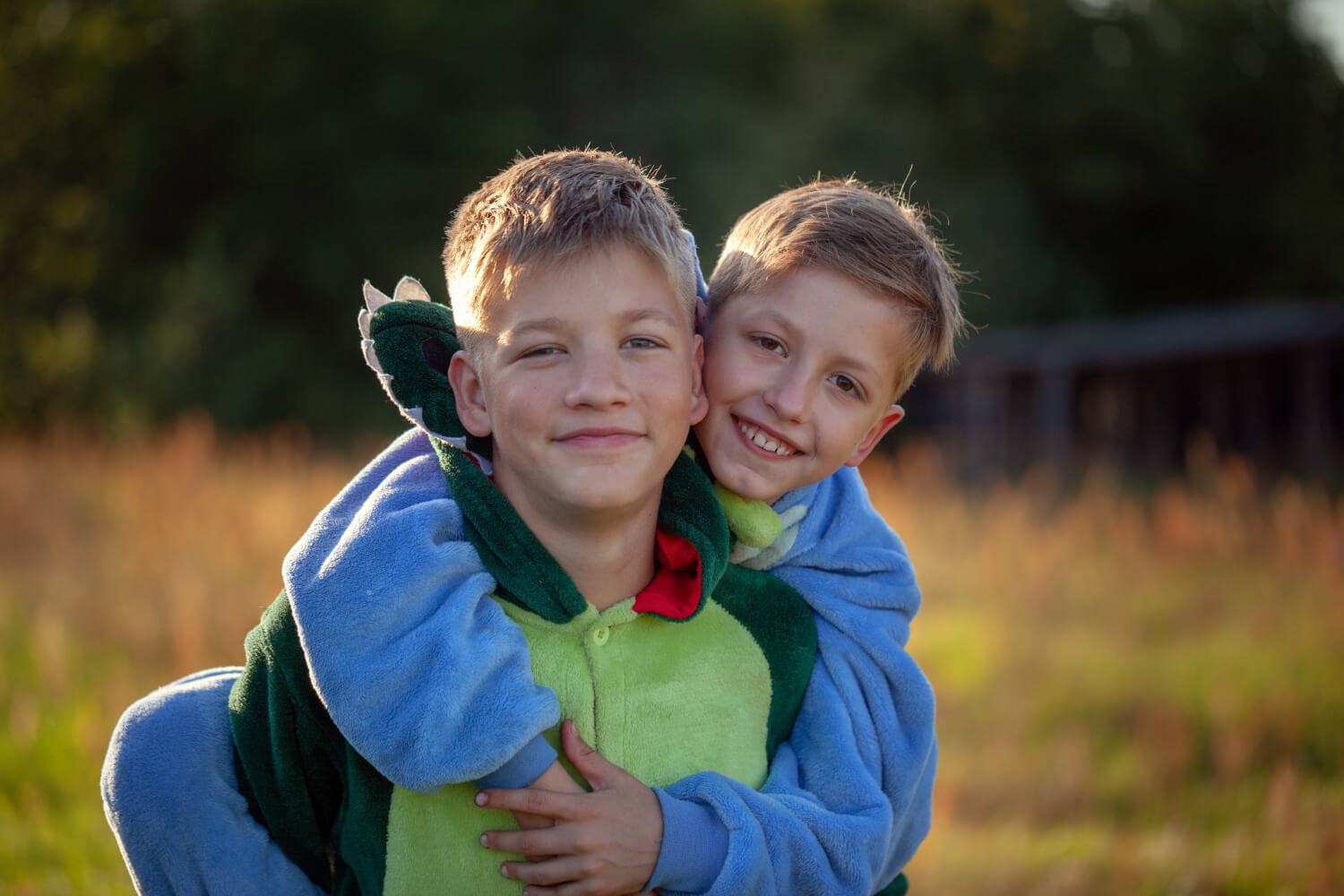
It’s worth saying clearly upfront: most siblings of autistic children turn out fine. Many describe real closeness, protectiveness, and pride.
Research does point to real risk factors worth understanding. A study following 168 families found sibling relationship quality varied significantly depending on the autistic child’s specific profile, not autism as a single category (Rixon et al., 2021).
Siblings of children with more complex support needs but fewer behavior problems often reported warm, if less close, relationships. Siblings of children with milder symptoms but more frequent behavior challenges reported more conflict.
In other words, it isn’t autism itself driving the relationship. It’s the specific mix of behavior, communication, and support needs in your own home.
Why the Relationship Looks Different in Every Family
No two sibling pairs experience this the same way, even within the same family.
When Age Gap and Birth Order Shape the Bond
An older sibling often settles into a teaching or protective role early. A younger sibling might not remember a time before adapting to their brother or sister’s needs, which can make the adjustment feel more natural.
Neither position is easier across the board. Each comes with its own version of pressure.
When One Sibling Becomes the Helper
A recurring pattern shows up in sibling research: older siblings, sisters in particular, often step into caregiving roles early, especially when their autistic sibling also has an intellectual disability (Godara et al., 2023).
That role can build real closeness. It can also become a quiet source of pressure if it’s never acknowledged or balanced with time to just be a kid.
What Siblings Are Often Feeling but Rarely Say
Siblings tend not to volunteer the harder parts. A review of sibling-focused research found recurring themes: pride and love sitting right alongside grief, isolation, and worry about the future (Godara et al., 2023).
- Pride in their sibling’s progress and personality
- Quiet worry about who will provide care later in life
- Frustration that’s hard to express without guilt
- A wish for ordinary, uneventful time together
- Protectiveness that shows up outside the home too
None of these feelings cancel the others out. A sibling can love deeply and still need space, in the same week.
Why In-Home Time Gives You a Real Advantage
This is one place where in-home ABA has a built-in advantage over clinic-based care.
Sibling interactions happen naturally at home, in real time, without anyone having to recreate them in a clinic room.
A good in-home team doesn’t ignore that. They build around it.
Letting Siblings See and Join Therapy Safely
With the right boundaries, siblings can be part of certain session activities, not as junior therapists, but as another person your child gets to practice social skills with.
Your BCBA decides what’s appropriate to include based on your child’s specific goals and your other child’s comfort level. This isn’t something families need to figure out alone.
Building Structured Time Together
Predictability helps here too. Knowing exactly what happens during shared time (fifteen minutes of a specific game, then something else) can lower the pressure on both kids.
Many families build this out using a visual schedule, so both siblings know what to expect without a parent narrating every transition.
Simple Ways to Build Connection at Home
You don’t need a formal program to start. A few small shifts make a real difference.
- Choose low-demand shared activities over ones that need a lot of back-and-forth
- Let the relationship be a little messy, not every interaction needs to be therapeutic
- Give the sibling language for what’s happening (“sometimes loud rooms are hard for your brother”)
- Notice and name the sibling’s own effort, not just their patience
A simple token economy built around shared play, where both kids earn something for a few minutes of cooperative time, can also make turn-taking feel less like a negotiation and more like a game.
Giving Each Child One-on-One Time Too
Connection between siblings often grows stronger, not weaker, when each child also gets real one-on-one time with a parent.
That might mean a trusted sitter stepping in occasionally. Our piece on finding a babysitter who can handle your child’s autism covers what to look for and how to prepare them.
A steady, predictable setting outside the home, like a familiar daycare, can also free up space for one-on-one time elsewhere. We cover what to look for in choosing a daycare for an autistic child in Colorado.
When to Bring in Extra Support
Sometimes the most helpful thing isn’t anything a parent does at home. It’s connecting the sibling with other siblings.
The Sibling Support Project runs Sibshops, peer support groups built specifically for brothers and sisters of kids with disabilities, in locations across the country.
There’s also a small but growing body of research on sibling-mediated intervention, where a typically developing sibling is taught simple strategies to support their brother or sister directly, with real oversight from a clinician (U.S. National Library of Medicine).
This isn’t about turning a sibling into a therapist. It’s recognizing that the relationship itself already has real value when it’s supported well.
How We Support the Whole Family at Achieve ABA
We don’t only build plans around the child with the diagnosis. We build around the whole family, including brothers and sisters.
Most of that work happens through our in-home ABA services, in the exact setting where sibling relationships actually play out.
Parent training includes real conversation about sibling dynamics, not just strategies for the child receiving therapy.
For families with a younger child just starting services, our early intervention program builds sibling interaction into the plan from the beginning.
Families balancing multiple kids’ schedules also lean on our weekend ABA sessions to keep therapy consistent without crowding out family time during the week.
If you’re still early in the process, our autism diagnosis page walks through what that looks like and how quickly we can typically get families started.
Getting Support Across Colorado
Achieve ABA Therapy Group works with families across the state, and sibling relationships come up in every one of these communities.
That includes Denver, Aurora, and Colorado Springs.
It’s the same in Lakewood, Fort Collins, Pueblo, Thornton, Arvada, Westminster, and Centennial.
And whether you’re in Boulder, Greeley, Longmont, Loveland, Broomfield, Castle Rock, Parker, or Englewood, the same team and approach are available to your family.
See our full list of service areas or reach out to start an assessment.
Making Space for a Stronger Sibling Bond
Autism and sibling relationships aren’t something to fix once and move past. They shift as both kids grow, and the goal isn’t a perfect relationship, it’s an honest one.
Small, consistent choices at home, real one-on-one time, and outside support when it’s needed all add up over years, not weeks.
If you’d like help building a plan that considers your whole family, give us a call.
Frequently Asked Questions
Will my other child resent their autistic sibling?
Resentment can show up sometimes, and it doesn’t mean the relationship is broken. It’s often a sign the sibling needs their own outlet, some one-on-one time, or language to describe what they’re feeling.
Should I include my other child in ABA sessions?
Sometimes, with the right structure. Your BCBA can help decide when and how a sibling’s involvement fits your child’s specific goals, rather than guessing on your own.
How do I know if my other child needs their own support?
Watch for persistent withdrawal, ongoing anxiety, or a sudden drop in how they’re doing at school. Occasional frustration is normal; a consistent pattern is worth mentioning to your pediatrician or a counselor.
Is it normal for them to fight like any other siblings?
Yes. Ordinary sibling conflict, over toys, attention, or fairness, doesn’t need to be treated differently just because one child is autistic.
What if my older child has taken on too much responsibility?
Name it directly and rebalance where you can. A sibling who has quietly become a second caregiver benefits from hearing that it’s not their job, even if they’ve been doing it well.
Can sibling-mediated strategies actually help my autistic child’s progress?
Early research is promising, particularly for social and communication skills, but it should be introduced with a clinician’s guidance rather than as an informal expectation placed on the sibling.
How do I talk to my other child about their sibling’s autism?
Use plain, age-appropriate language and leave room for questions over time rather than one single conversation. What they need to know at six looks different from what they need at twelve.
Sources
- Rixon, L., Hastings, R. P., Kovshoff, H., & Bailey, T. (2021). Sibling adjustment and sibling relationships associated with clusters of needs in children with autism: A novel methodological approach. Journal of Autism and Developmental Disorders, 51(11), 4067–4076. https://pmc.ncbi.nlm.nih.gov/articles/PMC8510907/
- Godara, K., Patil, V., & Phakey, N. (2023). When a sibling has autism: Narrative review of interventions for typically developing siblings. Indian Journal of Psychological Medicine, 46(2), 103–109. https://pmc.ncbi.nlm.nih.gov/articles/PMC11076939/
- Sibling Support Project. (n.d.). About the Sibling Support Project. https://siblingsupport.org/major-initiatives/
- U.S. National Library of Medicine. (n.d.). Sibling-mediated intervention on literacy and reciprocity for children with autism (NCT05098392). https://clinicaltrials.gov/study/NCT05098392
- Centers for Disease Control and Prevention. (2024). Signs and symptoms of autism spectrum disorder. https://www.cdc.gov/autism/signs-symptoms/index.html