



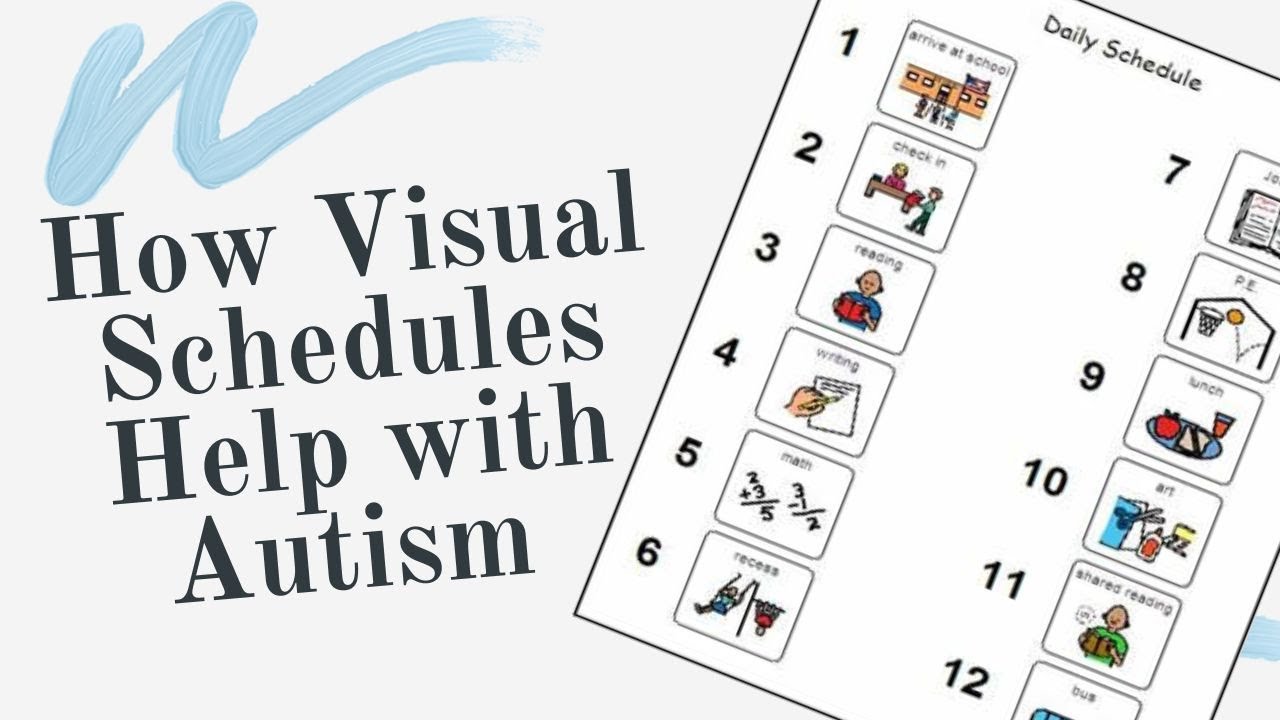
A visual schedule is a row of pictures, words, or objects in order. Your child looks at it and sees what comes next. Nothing has to be held in their head.
Some families I visit have already tried one. The laminated strip is still taped to the fridge. Three icons have gone missing. Nobody has touched it since winter.
The tool did not fail your child. Usually the schedule tried to cover a whole day when one routine would have done. Or nobody taught the child how to use it.
At Achieve ABA Therapy Group, we build these with families every week. Our therapists do it in kitchens and mudrooms and living rooms across Colorado, during the routines that are already falling apart. A visual schedule for autism works when it stays small. It has to be taught directly. And it has to end somewhere your child wants to go.
What a Visual Schedule Does for a Child With Autism
Spoken directions vanish the second you say them. Your child has to catch the words, hold them, then act in the right order. That is real work. A visual schedule moves that work out of your child’s head and onto something they can check again.
How picture schedules ease daily transitions
Four things usually shift first. None of them are dramatic:
- Your voice leaves the routine. Fewer reminders. Less repeating yourself.
- The finish line becomes visible. A child who can see four steps left waits differently than a child who has no idea when it ends.
- Your child gets a way to answer “what is next” without asking you.
- Transitions get shorter. Transitions are where most hard moments live.
I worked with a five-year-old in Aurora. Her mornings ran on roughly a dozen redirections between waking up and the front door. We changed nothing about the routine itself. We added a six-picture strip and spent two weeks teaching her to use it. By week six she needed one adult prompt. Her mom said mornings felt survivable again. That pace is fairly ordinary.
Visual supports and the autism evidence base
Visual supports are one of 28 evidence-based practices named by the National Clearinghouse on Autism Evidence and Practice. Their review covered research published between 1990 and 2017. Multiple high-quality studies found positive effects, replicated by independent research groups.
You can read the evidence yourself in the free visual supports brief packet from UNC’s Frank Porter Graham Child Development Institute.
Colorado schools work from the same idea. The Colorado Department of Education autism team trains district staff in Structured Teaching. The model is built around the visual strengths of people with autism. In-person days are held in the Denver metro area, with a follow-up day inside the participant’s own school.
One caveat, kept in proportion. The research supports the category. Whether the strip on your fridge helps your child comes down to how it gets taught and maintained. That is the rest of this article.
Why Visual Schedules for Autism Stop Working at Home
Four patterns come up over and over on home visits. They show up in every kind of household, in every part of the state. All four are fixable. None of them require buying anything.
The schedule tried to cover the whole day
Wall charts that map breakfast through bedtime look impressive. They almost never get used. Twenty items is a poster, not a schedule.
Your child cannot act on twenty items. You cannot keep twenty items current on a Tuesday when the sitter cancels.
Pick one routine with a clear start and a clear end. Morning. Bedtime. Getting out the door. One routine taught well beats a full-day chart nobody updates.
Nobody taught the child to use the picture schedule
This is the big one. Parents in Lakewood and Thornton tell me the same sentence. I put it up and he ignored it.
A schedule is a skill, not a sign. Skills get taught.
Teaching looks like this. You stand beside your child. You guide them to the first picture. You guide them through the step. You guide them back to move the card. Then you repeat that dozens of times while doing less each round. Our breakdown of prompting levels covers how to fade that support without losing the skill.
The pictures were the wrong level for your child
A child who does not yet read line drawings will not connect a cartoon toothbrush to the real one. A ten-year-old who reads well may find icons babyish. Some refuse on that alone.
Match the format to how your child already understands the world. Then test it instead of assuming.
Finishing the schedule led nowhere
If the strip ends and another demand starts, your child learns something. Finishing produces more work.
Put something they want at the end, at least while the routine is new. It does not have to be big. Two minutes of a video. A chosen song in the car. A specific snack. Families in Colorado Springs and Pueblo often find this one change does more than redesigning the cards.
How to Choose a Visual Schedule Format for Your Child
Format is where most families stall. It is simpler than it looks. You are answering one question. What does my child already recognize? Three decisions follow.
Objects, photos, icons, or written words
There is a rough progression. Children move along it at very different speeds.
- Objects. A real spoon means mealtime. Good for early learners and children with significant visual processing differences.
- Photographs. Your bathroom. Your car seat. Your child’s preschool door. Concrete and instantly recognizable.
- Line drawings or icons. Standard symbols, common in schools, easy to replace when one goes missing.
- Written words. A checklist by the door works for a confident reader.
- Combined. A word next to a photo. The picture can fade as reading develops.
Test before you commit. Hand your child the picture. Ask them to bring you the item. If they can do it across a few tries, the format works.
Bilingual households sometimes label both languages. Colorado supports this reasonably well. CDE publishes its autism evaluation guidelines in Spanish as well as English. That helps when a family in Greeley or Westminster is keeping home and school language lined up.
How many steps a visual schedule should have
Three to six is a good starting range. Go lower if the routine is new or your child is very young.
You can always add steps once the sequence runs smoothly. Adding is far easier than rescuing a schedule your child has learned to ignore.
Count the steps your child can already do. Not the steps you wish they could do. A schedule built from unlearned skills becomes a list of failures.
Where to put your child’s visual schedule
Two options. The routine decides which one you need.
- Fixed. Taped by the door, on the bathroom mirror, inside a cabinet. Best for routines that always happen in one place.
- Portable. A ring of cards, a strip in a folder, a page on a phone. Best for outings, appointments, and pickup lines.
Either way, put it where the routine happens. Put it at your child’s eye level. A beautiful chart hung above their sightline does nothing.
How to Make a Visual Schedule for Autism in 6 Steps
Plan on an afternoon of setup and about two weeks of teaching. That is the realistic cost. Below is the sequence we use with families. It runs the same whether we are in a kitchen in Fort Collins or coordinating with a classroom team in Centennial.
Step 1. Pick one routine and name one problem
Choose the routine costing your family the most right now. For many households that is the morning. For others it is dinner through lights out. That stretch is often tangled up with sleep in the first place, so our guide to bedtime and sleep problems pairs well with an evening schedule.
Then say the problem in one sentence. “Getting shoes on takes twenty minutes” works. “Mornings are hard” does not.
Step 2. Write down every step in the routine
Walk through the routine and write each step in order. Most parents are surprised by the count. Getting dressed for school is rarely one step. It is often seven.
We call this a task analysis. It just means breaking a skill into teachable pieces.
Keep the steps observable. “Put on left sock” is a step. “Get ready” is a category.
Step 3. Make picture cards you can replace
Print, photograph, or draw one image per step. Laminate if you can. Make a spare set the same day, because pieces disappear.
Velcro is worth the trouble. Physically moving a card marks completion in a way that glancing at a list does not.
Add an “all done” pocket at the end. Your child needs somewhere to put each finished card. That small motion carries surprising weight.
Step 4. Teach the visual schedule before you expect it
Practice at a calm time first. Not during the real routine. Run a rehearsal on a Saturday afternoon in Boulder or Broomfield, when nobody is late for anything.
Hand your child the first card. Guide them physically if needed. Then step back to a gesture. Then to nothing. Say as little as you can.
The schedule should prompt your child. You should not be prompting the schedule.
Fade your voice first. Then your presence. Then the pictures. Reversing that order is the most common mistake we see.
Step 5. Build in a finish your child chose
The last card should be something they picked. Offer two or three options before the routine starts. That way the ending belongs to them.
Over time, natural outcomes take over and the reward can shrink or drop off. If one hard step keeps stalling the whole chain, our explainer on shaping shows how to build that piece in increments.
Step 6. Track two weeks of rough data
Write one line a day. How many prompts did it take? Where did it fall apart? Which step is the sticking point?
You are not running a study. You are gathering enough to change the right thing. Otherwise you scrap the whole system after one bad Tuesday.
Visual Schedules for Autism in Colorado Homes and Schools
Two local conditions shape how these schedules run here. Winter is the first. It adds a long chain of steps to every school morning for about seven months. The second is how Colorado defines autism in schools. That affects what you can ask a school team to do.
The Colorado winter dressing routine
Coat, hat, gloves, boots. For much of the state, snow pants too. That is a five-step chain repeating every morning from October into April. Longer at altitude.
Few routines suit a picture strip better. The order barely changes. The steps repeat hundreds of times in one season. Families in Longmont and Loveland often start here for that reason.
A photo sequence taped inside the mudroom gets more practice trials in one Colorado winter than most skills get in a year. Gear routines work the same way. Ski days. Rec center swim lessons. Packing for a weekend in the mountains. All of them follow a fixed order that a portable card ring handles well.
Visual supports and your child’s IEP
Colorado writes its autism eligibility criteria into the state Rules for the Administration of the Exceptional Children’s Education Act. Those rules describe a child who seeks consistency in daily events. They name marked distress when routines change.
So predictability supports already sit inside the definition your IEP team works from. The full CDE evaluation guidelines spell it out. That gives you a natural opening in a meeting.
Two questions are worth asking at your next IEP or 504 meeting:
- What visual supports does my child use during the school day, and can I see them?
- Can we use the same symbols at home so my child is not learning two systems?
Consistency across settings is one of the better predictors of whether a support holds up. Our school-based ABA team coordinates directly with teachers and IEP teams for that reason. That holds whether your child attends school in Denver, Arvada, or Castle Rock.
Preschool, Child Find, and the year before kindergarten
Colorado offers up to 15 hours a week of tuition-free preschool through Universal Preschool Colorado. It covers the year before kindergarten and is run by the Colorado Department of Early Childhood. Families whose child has an IEP can register through IEP Direct Placement.
For many children, that is the first setting with a real daily sequence. Arrival, circle, centers, snack, outside.
If your child is younger and you have concerns, start with Child Find. It is Colorado’s system for identifying children ages three through five who may need support. It runs through regional teams, including the Metro, Pikes Peak, North Central, and West Central regions. Our overview of early intervention in Colorado explains the birth-to-three side and what changes at age three.
A schedule built at home before preschool gives your child a head start on a structure they will meet anyway. For children under six, our early intervention services target the skills a schedule depends on. And daycare-based ABA puts the same structure into a setting your child already attends.
Snow days, school breaks, and schedule changes
Colorado school calendars break for snow. The Front Range usually takes its heaviest snowfall in March. That is late enough that routines are established and easy to knock loose. Long summer breaks and mountain-town seasonal schedules do the same.
Two habits help more than anything else:
- Keep a “change” card. A question mark, or a symbol that means today is different. Teach it during small, low-stakes changes so it is familiar before a real disruption.
- Run the schedule on non-school days too, in a shorter form. A routine that only exists on school mornings will not survive a two-week break.
Visual Schedule Troubleshooting for Parents
Every schedule stalls eventually. The useful move is figuring out which thing went wrong. The fixes are different. Applying the wrong one usually makes it worse.
Your child refuses one specific step
Say your child moves through five steps and stops cold at the sixth. The problem is that step, not the schedule. Something about it is hard, unpleasant, or frightening.
Toothbrushing and hair washing show up here constantly. Pull the step out. Break it into smaller pieces. Teach it on its own. Put it back once it is easier.
Your child races through the picture cards
Some children figure out that flipping cards is the game. Every picture lands in the “all done” pocket in fifteen seconds. Nothing gets done.
Make card movement follow completion instead of leading it. Hold the card until the step is finished, then hand it over. Reward the finished step, not the flip.
Your child gets rigid about the schedule
This is the worry I hear most from parents. It is a fair one. A child who melts down over any deviation has traded one problem for another.
Prevent it on purpose. Once the routine is solid, change something small once or twice a week. Swap two neutral steps. Insert the change card. Skip a step, then add it back.
Small planned variation early is much easier than confronting rigidity after a year of identical mornings.
The visual schedule worked, then stopped
Usually one of three things. The reward at the end lost its appeal, which happens fast with young children. Adults drifted back into verbal prompting, which makes the schedule redundant. Or the routine changed and the pictures did not.
Check all three before deciding your child has outgrown the tool.
How to Fade a Visual Schedule Toward Independence
The long-term goal is a child who can run a sequence without an adult over their shoulder. Worth saying plainly, though. A visual support a fifteen-year-old still uses is a success. Adults run calendars and checklists for the same reason. Three moves get you there.
Fade the adult before the schedule
Your presence usually goes last. It should be the first thing you work on.
Move from beside your child, to across the room, to the next room, to a check-in at the end. Keep each move small enough that the routine keeps running.
Move from picture cards to a written list
For readers, pair each picture with its word for a few weeks. Then shrink the picture. Then take it away.
A written list updates faster and travels better. It also looks more age-typical for an older child. A middle schooler in Parker running their morning off a phone note is doing exactly what the picture strip trained.
Teach flexibility on purpose
Independence includes handling the day the schedule is wrong. Build that tolerance like any other skill. Start small. Keep it predictable at first. Reward the coping, not just the compliance.
A first-then board alongside the schedule helps some children. It absorbs an unexpected demand without rewriting the sequence. If your child communicates mainly through pictures, our explainer on PECS covers how a picture exchange system and a visual schedule do different jobs.
How Our Colorado ABA Team Builds Visual Schedules With Families
We are a Colorado-based ABA provider. Most of this work happens where routines break down, not in a clinic room that looks nothing like your child’s life. You can see the full range of what we offer if you want the overview first.
In-home ABA therapy is where morning and evening sequences get built and taught. In your kitchen. In your child’s bedroom. Skills learned where they will be used tend to stick.
When school is the sticking point, our school-based team works alongside teachers and IEP teams. If weekday scheduling is the problem, Saturday and Sunday sessions keep therapy from competing with a paycheck. Our group home ABA applies the same principles for older individuals in residential settings.
The piece that decides whether any of it lasts is parent training. A schedule your therapist can run and you cannot is not a household routine. We teach the teaching. The strip on your fridge has to work on the days we are not there.
Still waiting on answers? Our autism diagnosis partners see most families within one to two weeks. Our insurance page lists the plans we work with. You do not need a diagnosis to start building structure at home. It does open doors to funded services.
We serve families across the state. From Denver and Englewood to Grand Junction and dozens of communities in between.
Ready to start? Get in touch with our team. We will talk through what your child’s routines need.
Visual Schedule for Autism: Parent Questions Answered
At what age can a child start using a visual schedule?
As early as toddlerhood, if the format fits the child. Children under three often start with real objects or photos rather than icons. There is no minimum age. There is only a match between what your child understands and the symbols you pick.
My child can read. Do they still need picture cards?
Probably not. A written checklist is a visual schedule. For confident readers, text is more age-appropriate. It also updates faster and travels better. Many older children move to a notes app.
How long before a visual schedule starts working?
Most families see a first change within two to three weeks of daily teaching. This varies a lot. If nothing has shifted after a month of steady use, look at the teaching method, the step size, or the reward. The problem is rarely the child.
Should the schedule cover the whole day or one routine?
One routine. Whole-day charts are hard to maintain and rarely get used. Add a second routine once the first runs smoothly on its own.
What if my child throws or destroys the schedule?
Make a duplicate set right away. Then treat the destruction as information. It usually means a step is too hard, the sequence is too long, or a demand arrived with no warning. Shorten the routine and re-teach before adding anything back.
Can we use an app instead of printed cards?
Yes, and many families do. Weigh two trade-offs. A device can become its own distraction. And a phone is often less available to a young child than a strip taped to a door. Some families use cards at home and an app for outings.
Is a visual schedule the same thing as PECS?
No. A visual schedule shows a sequence of what happens next. The Picture Exchange Communication System teaches a child to hand a picture to another person to communicate a want. They do different jobs and work well side by side.
Will my child’s school use the same visual schedule we use at home?
Not automatically. But you can ask. Raise it at your next IEP or 504 meeting. Request the same symbols at home and school where it is practical. Most teams are receptive, and the consistency makes the support far more durable.
Does my child need an autism diagnosis to use a visual schedule?
No. Visual schedules help many children. That includes children with ADHD, language delays, or no diagnosis at all. A diagnosis affects funding and access to formal services. It has nothing to do with whether you can tape a picture strip beside the door.
Sources:
- Centers for Disease Control and Prevention. (2025). Data and statistics on autism spectrum disorder. https://www.cdc.gov/autism/data-research/index.html
- Colorado Department of Early Childhood. (n.d.). Colorado universal preschool. https://cdec.colorado.gov/universal-preschool-colorado
- Colorado Department of Education. (n.d.). Autism spectrum disorder (ASD). https://ed.cde.state.co.us/cdesped/sd-main/sd-autism
- Colorado Department of Education. (2020). Guidelines for the educational evaluation of autism spectrum disorder. https://www.cde.state.co.us/cdesped/asd_guidelines
- Colorado Department of Education. (n.d.). Child Find for children ages 3 through 5 years old. https://ed.cde.state.co.us/cdesped/childfindpreschoolsped/child-find-for-children-ages-3-through-5-years-old
- Colorado Department of Public Health and Environment. (n.d.). Autism spectrum disorder (ASD). https://cdphe.colorado.gov/autism-spectrum-disorder-asd
- Council of Autism Service Providers. (2024). Applied behavior analysis practice guidelines for the treatment of autism spectrum disorder (3rd ed.) [Clinical practice guidelines]. https://www.casproviders.org/asd-guidelines/
- National Clearinghouse on Autism Evidence and Practice. (n.d.). Research and resources. https://ncaep.fpg.unc.edu/research-and-resources/
- Sam, A., & AFIRM Team. (2024). Visual supports, updated. The University of North Carolina at Chapel Hill, Frank Porter Graham Child Development Institute, Autism Focused Intervention Resources and Modules. https://afirm.fpg.unc.edu/resource/visual-supports-brief-packet/
- Steinbrenner, J. R., Hume, K., Odom, S. L., Morin, K. L., Nowell, S. W., Tomaszewski, B., Szendrey, S., McIntyre, N. S., Yücesoy-Özkan, S., & Savage, M. N. (2020). Evidence-based practices for children, youth, and young adults with autism. The University of North Carolina at Chapel Hill, Frank Porter Graham Child Development Institute, National Clearinghouse on Autism Evidence and Practice Review Team. https://ncaep.fpg.unc.edu/