


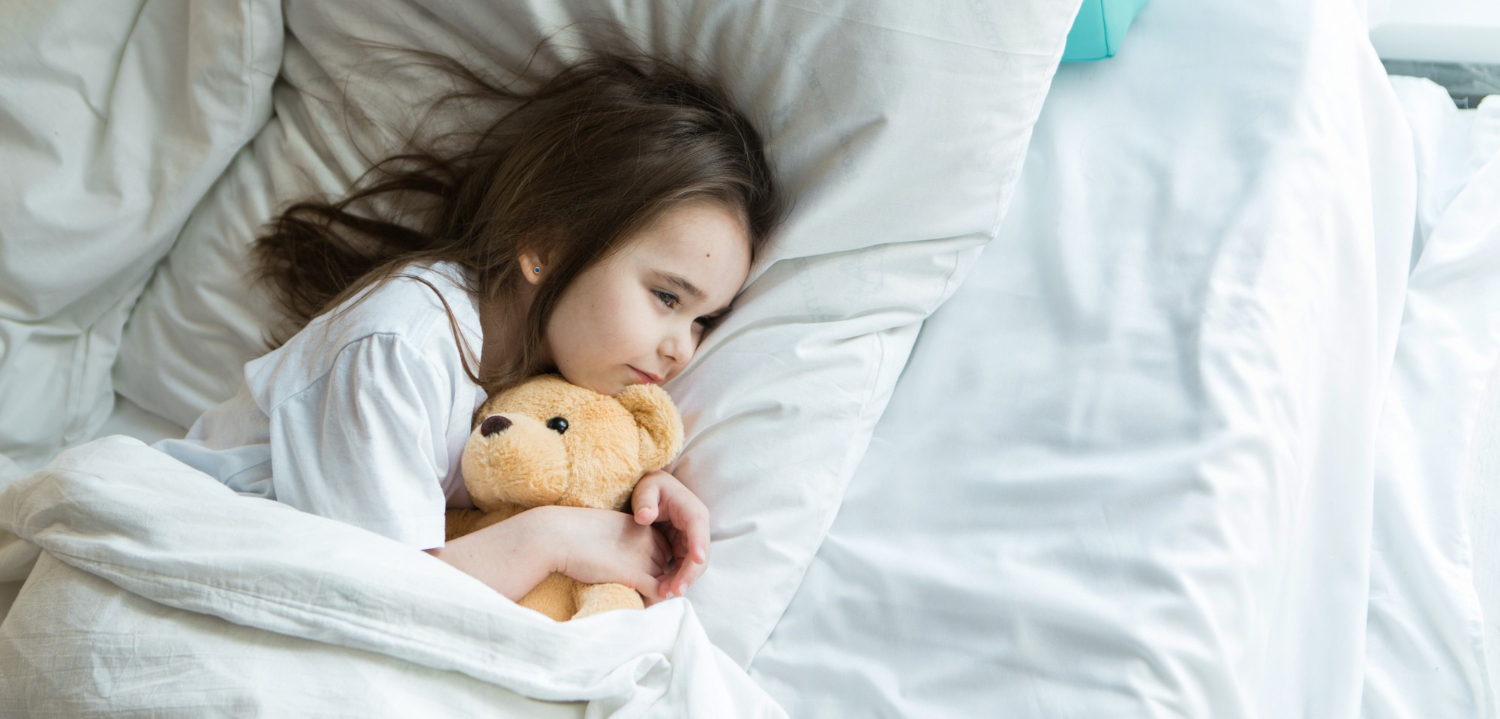
Autism sleep problems are common, and they are also treatable more often than parents are told. The complication is that most families try things in the wrong order, starting with a supplement and ending with a doctor, when the sequence that clinical guidelines recommend runs the other way.
Somewhere between 50 and 80 percent of autistic children have a chronic sleep problem. Some cannot fall asleep. Some wake at two in the morning and are up for the day. Some do both, in the same week, for years.
Below is the order that national guidelines actually recommend, why bedtime is harder for autistic children in the first place, and what our in-home ABA team does when a family tells us that nights have become the hardest part of the day.
How Common are Autism Sleep Problems?
Before troubleshooting, it helps to know the scale of this and what a reasonable amount of sleep even looks like. Parents often discover their expectations were either far too high or, more often, too low after years of adjusting to less.

What the numbers show
Autism Speaks puts it plainly on its sleep resource hub: over half of autistic children, and possibly as many as four in five, have one or more chronic sleep problems. Difficulty falling asleep and difficulty staying asleep are the two most reported patterns.
Sleep problems are also more likely when a child has significant repetitive behaviors, anxiety, or sensory sensitivities, which describes a large share of the children we work with. The pattern holds regardless of where a family lives. Parents in Denver and parents in Colorado Springs describe the same three problems to us: cannot fall asleep, cannot stay asleep, or up for the day at four in the morning.
How much sleep children need by age
These figures come from a consensus panel of the American Academy of Sleep Medicine, which reviewed 864 studies and was endorsed by the American Academy of Pediatrics.
| Age | Recommended Sleep per 24 Hours | Notes |
|---|---|---|
| 4 to 12 months | 12 to 16 hours | Includes naps |
| 1 to 2 years | 11 to 14 hours | Includes naps |
| 3 to 5 years | 10 to 13 hours | Includes naps |
| 6 to 12 years | 9 to 12 hours | Naps usually gone |
| 13 to 18 years | 8 to 10 hours | Body clock shifts later in adolescence |
Add up what your child got last week. Many parents find a two-hour nightly gap they had stopped noticing.
Why sleep loss looks like behavior
A tired child has less capacity for everything: transitions, waiting, frustration, unfamiliar sounds, being told no. Sleep debt does not announce itself as tiredness in young children. It shows up as aggression, meltdowns, hyperactivity, and rigidity.
This is why we ask about sleep during nearly every intake. A behavior plan built on top of chronic sleep deprivation is a plan working against a headwind it did not create. If you are weighing whether to seek support at all, our list of signs worth watching includes several that overlap with sleep loss.
Why Bedtime Is Harder for Autistic Children
Bedtime asks a child to do several genuinely difficult things at once, and each of them is harder with autism. Understanding which piece is failing for your child changes what you try.
The body clock runs on a different schedule
Some autistic children show differences in how and when their bodies release melatonin, the hormone that signals the brain that night has arrived. When that signal comes late or weakly, a child can be genuinely wide awake at ten at night regardless of how long the day was.
This is worth knowing because it reframes the resistance. A child who is not sleepy is not refusing to sleep. They are being asked to do something their body has not yet prepared for.
Sensory input gets louder in a quiet house
The tag in the pajamas. The furnace clicking on. The hallway light under the door. During the day these compete with everything else. At night, with the room dark and quiet, they become the whole world.
Parents are often surprised how much a single change helps, and equally surprised that it was something they never noticed. One family in Loveland spent months on bedtime routines before working out that the culprit was a bathroom fan two doors down the hall. If your child seeks out movement or deep pressure to settle, sensory-friendly spaces during the day can take some pressure off the evening.
Bedtime is a transition, and transitions are hard
Going to bed means stopping something preferred to start something non-preferred, alone, in the dark, with no clear sense of when it ends. It is arguably the hardest transition of the entire day.
Framing it as a transition problem rather than a sleep problem often unlocks better solutions, because you already know what helps your child with transitions during the day.
Recognizing the feeling of being tired
Interoception is the sense that tells you your body needs something: hungry, thirsty, needing the bathroom, sleepy. Many autistic children read those internal signals less reliably.
A child who cannot feel tired has no internal reason to cooperate with bedtime, which is one argument for making the external cues stronger and more predictable than they would need to be otherwise.
Anxiety keeps the lights on
Anxiety runs high in autistic children, and darkness plus stillness plus being alone is where anxiety tends to surface. Separation is often the real barrier rather than sleep itself.
The tell is a child who falls asleep easily on the couch with the family but cannot manage it in their own room.
Medical Causes to Rule Out First
This section comes before the strategies for a reason. National guidance is explicit that clinicians should assess for medications and coexisting conditions contributing to sleep disturbance and address what they find before anything else. No behavior plan will fix a child who cannot breathe well lying down.
Obstructive sleep apnea
Loud snoring, pauses in breathing, gasping, mouth breathing, restless thrashing, morning headaches, or sleeping in strange positions to keep the airway open. Enlarged tonsils and adenoids are a common cause in young children and are treatable.
Apnea gets missed frequently in autistic children because the daytime symptoms look like autism or like ADHD. Mention snoring to your pediatrician even if it seems minor.
Reflux and constipation
Gastrointestinal problems are common in autism and both interfere with sleep. A child who wakes crying and arches their back, or who settles better propped up, is worth a conversation about reflux.
Constipation is easy to miss in a child who cannot describe discomfort, and it can quietly wreck sleep for months.
Restless legs, low iron, and seizures
Restless legs syndrome is associated with low iron stores and is diagnosable with a blood test. Children who kick, cannot get comfortable, or need constant leg movement to settle are worth screening.
Seizures can also occur during sleep and are more common in autism than in the general population. Unusual repetitive movements at night, or a child who is unrousable or confused in the morning, should be described to your doctor.
Medications your child already takes
Stimulants, some antidepressants, and certain asthma medications can delay sleep onset. Timing adjustments sometimes solve the problem entirely, but only your prescriber should make that change.
What to bring to the appointment
Appointments are short. Arriving with two weeks of written data changes the conversation from a general complaint into a specific one. It is also worth asking early whether a referral to a pediatric sleep specialist makes sense, because wait times vary a great deal by region. Families on the Western Slope near Grand Junction often wait longer than families in the metro, so starting that conversation sooner is practical rather than pushy.
- Time your child got into bed and the time they appeared to fall asleep.
- Number of night wakings and roughly how long each lasted.
- Wake time in the morning, including weekends.
- Snoring, gasping, unusual movements, or bedwetting.
- Every medication and supplement, including the dose and the time of day it is given.
- What the following day looked like behaviorally.
Behavioral Strategies That Come First
The American Academy of Neurology reviewed the evidence and recommends behavioral strategies as the first-line approach for sleep disturbance in autistic children and adolescents, either on their own or alongside other treatment. The reasoning is practical: these approaches are free, they have no side effects, and they work for a meaningful share of children.
Fix the wake time before the bedtime
Most families start by moving bedtime earlier, which usually backfires and produces an hour of a child lying awake. The stronger lever is a consistent wake time, seven days a week, including weekends.
A fixed morning anchor gradually pulls the whole system into alignment. It is unpleasant for a week or two and it is the single highest-yield change most families can make.
Summer makes this harder in Colorado than it does in most of the country. Sitting near the western edge of the Mountain time zone, the Front Range gets sunsets past 8:30 in late June, so a child in Fort Collins or Greeley can be looking at full daylight at what is supposed to be bedtime. Hold the wake time steady through summer anyway. The alternative is arriving at August with a body clock two hours off.
Build a short, fixed, visual routine
Four or five steps, in the same order, taking twenty to thirty minutes. Bath, pajamas, teeth, two books, lights out. Long routines drift and drifting routines stop signaling anything.
Put it on the wall as pictures. A visual sequence lets your child see how many steps remain, which removes a large share of the arguing without anyone having to say a word.
Change the room, not just the rules
Environment work is the least glamorous and often the most effective part of this. Two families we worked with, one in Boulder and one in Longmont, got more improvement from blackout curtains and a fan than from anything else we tried that year.
- Cool and dark. Blackout curtains are close to essential here from May through August, which surprises families who moved from further east.
- A steady sound floor. A fan or white noise machine covers the household noises that wake light sleepers.
- Remove the interesting things. A bed surrounded by toys is a play area that occasionally hosts sleep.
- Check the fabrics. Seams, tags, and stiff sheets are a real problem for some children.
- Keep the bed for sleeping, not for time-outs or homework.
Deal with screens honestly
Screens are a genuine problem before bed, both from light exposure and from how engaging the content is. They are also, for many exhausted families, the only thing that buys a quiet twenty minutes.
Rather than an all-or-nothing rule that collapses by Wednesday, set a fixed cutoff and pair it with a predictable replacement your child likes. Our guide to screens and routines covers how to make that swap stick when the schedule changes.
Teach falling asleep alone, in steps
If your child can only fall asleep with you in the room, the goal is to move you out gradually rather than all at once. Sit on the bed, then in a chair beside it, then by the door, then in the hallway, over a couple of weeks.
Each step holds until it is boring. Moving too fast is the usual reason this fails, and going back one step is a normal adjustment rather than a setback. A mother in Pueblo took eleven weeks to get from the edge of the bed to the hallway, and described the last three nights as the easiest of the whole stretch.
Use a bedtime pass for repeated call-outs
For the child who gets up eight times, a bedtime pass gives them one card good for one trip out of bed, for one drink or one hug. Once it is spent, it is spent until morning.
It works because it gives a child some control over a situation where they otherwise have none, and because it makes the limit concrete rather than a negotiation. A family in Arvada went from eleven call-outs a night to two within a fortnight, and the child eventually started saving the pass rather than spending it.
What the Research Says About Melatonin
Melatonin is the most common thing families try, often before anything else and usually without a conversation with a doctor. It does have real evidence behind it for autistic children. It also has safety issues that the bottle does not mention.
Where melatonin sits in the guideline
The American Academy of Neurology practice guideline recommends that clinicians offer melatonin when behavioral strategies have not been sufficient and when contributing coexisting conditions and medications have already been addressed. It also recommends pharmaceutical-grade melatonin where available, and that clinicians counsel families about potential adverse effects and the absence of long-term safety data.
Read the order there. Behavioral strategies and a medical workup come first, not because melatonin does not work, but because starting with a supplement can mask a treatable medical cause.
The safety issues that are rarely discussed
In the United States melatonin is regulated as a dietary supplement rather than as a medication, which means the label is not verified the way a prescription label is. The American Academy of Sleep Medicine health advisory cites research finding melatonin content ranging from less than half to more than four times the amount printed on the package, with the widest variation in chewable tablets, which is the form children are most likely to be given.
Accidental ingestion is a separate and growing problem. A CDC analysis of poison control data found 260,435 pediatric melatonin ingestions reported between 2012 and 2021, with the annual number rising 530 percent. Most of the increase came from unintentional ingestions by children aged five and under. Gummies look like candy. Store them the way you would store any medication.
What to ask your pediatrician
This is a medical decision and belongs with your child’s doctor, not with an article or a supplement aisle. A few questions that make that appointment more productive:
- Have we ruled out apnea, reflux, constipation, and low iron first?
- Could any of my child’s current medications be delaying sleep?
- If we try melatonin, what dose and what timing do you recommend?
- Is there a pharmaceutical-grade or USP Verified product you would suggest?
- How long should we try it before deciding whether it helped?
- What should I watch for, and when should I call you?
Autism Speaks publishes a free melatonin guide for parents through its Autism Treatment Network that is worth reading before that appointment.
Products the Evidence Does Not Support
Autism sleep problems are a large market, and exhausted parents are the target audience. Two heavily marketed categories were specifically reviewed in the AAN guideline and came up short.
Weighted blankets
The guideline concluded there is no evidence supporting routine use of weighted blankets for improving disrupted sleep. The trial reviewed found no serious adverse events, and the guideline notes that if a family asks, a weighted blanket could be a reasonable option for some individuals.
That is a meaningfully different message from the marketing. If your child likes theirs and sleeps better, keep using it. Just do not expect it to solve the problem, and follow safe-use guidance about weight and independent removal with your pediatrician.
Vibration-based mattress technology
Specialized mattress technology marketed for autism was also reviewed, and the guideline found insufficient evidence to support it for improving sleep or daytime behavior.
These products are expensive. Knowing the evidence base before spending is worth the two minutes.
How to evaluate the next product you see
Ask three questions. Is there a published trial, or only testimonials? Was it tested with autistic children specifically? And does the seller compare it against a control group, or only against how things were before?
Most sleep products marketed to autism families fail the first question.
How In-Home ABA Supports Sleep Routines
Sleep is one of the clearest cases for working in the home rather than a clinic, because the problem does not exist anywhere else. A therapy room cannot replicate a hallway light, a sibling in the next room, or the specific chain of events between dinner and lights out.
The work happens where the problem is
When our team runs in-home ABA, we can see the actual bedroom, watch the actual routine, and notice the things nobody mentions in an intake because they have stopped registering. The nightlight that is brighter than the parents realize. The routine that runs 50 minutes on good nights and 15 on bad ones.
The physical setup shapes the plan more than most families expect. A bedroom shared with a sibling in an Aurora apartment is a different problem from a basement bedroom in Castle Rock where a child can call out without waking anyone. Thin walls change what a workable plan looks like, and so does a household where a parent leaves for a shift at five in the morning, which is a common reality for the Lakewood families we work with.
Most of what we change in the first two weeks is small and environmental. It is not glamorous work and it is frequently the part that moves the needle.
What a sleep-focused program includes
A behavior analyst builds the plan around your family rather than a template, and the parent is the one running it. Common components:
- A two-week baseline sleep log before anything changes.
- A written, visual bedtime routine that every adult in the house follows identically.
- A gradual plan for fading adult presence out of the room.
- A defined response for night wakings, agreed in advance so nobody is improvising at 3 a.m.
- Coordination with your pediatrician when a medical cause is suspected.
- Weekly review of the data and adjustment of one variable at a time.
Parents do the implementing, which is why parent training is central rather than optional here. For families with very young children, the same approach fits inside our early intervention work.
Expect it to get worse before it improves
When a pattern that reliably worked for your child stops working, the behavior usually intensifies before it fades. A child who got a parent to lie down by calling out will call out louder and longer for a few nights.
This is predictable, it has a name, and it has a shape. Our explanation of the rough patch covers what it looks like and roughly how long it tends to run. Knowing it is coming is what allows families to hold the plan through the worst night instead of abandoning it.
Tracking Whether the Plan Is Working
Sleep changes are slow and uneven, which makes memory a poor judge. Three nights of progress followed by one bad night feels like failure and often is not.
Keep a simple log
Paper by the bed beats an app, because you will fill it in at eleven at night without unlocking anything. Two weeks before you change a single thing, then continuously afterward. One father in Westminster kept his on the back of an envelope and it was the reason we spotted that the bad nights were all Sundays.
Watch three numbers
- Sleep latency: minutes between lights out and asleep. This usually improves first.
- Night wakings: how many, and total minutes awake.
- Total sleep: compare against the age range in the table above.
Look at weekly averages rather than individual nights. A single terrible Tuesday tells you almost nothing.
Know when to go back to the doctor
If six to eight consistent weeks produce no movement in any of the three numbers, that is information worth taking back to your pediatrician rather than a reason to try harder.
Daytime sleepiness at school is also worth flagging in both directions. If a teacher reports your child dozing off or falling apart by mid-morning, our note on when to tell the school team explains how to get that into the right hands.
Where to Start Tonight
If tonight is already going badly, do not start a plan. Get through it. Plans built at midnight by exhausted people do not survive contact with morning.
Start tomorrow instead, with two things. Book the pediatrician appointment and mention snoring, gasping, restlessness, and constipation by name. And begin a two-week sleep log before changing anything, because you will need a baseline to know whether anything you try later worked.
Those two steps cost nothing and put you in the order that clinical guidelines recommend. Everything else follows from what they turn up.
If you want a second set of eyes on the routine itself, that is work our in-home ABA and parent training teams do in the bedroom where the problem lives. We visit families across the south metro in Greenwood Village and Parker, and everywhere else listed on our service areas page. Call 720-463-9000 or reach out here. If your child has not been evaluated yet, our autism evaluation team can start there.
Autism sleep problems are common, they are exhausting, and for a meaningful share of families they get better. Not every family gets a full night back. Most get more than they have now.
FAQs
These come up in nearly every parent training block we run, whether the family is in Thornton or Centennial.
Why does my autistic child not seem tired at bedtime?
Two common reasons. Some autistic children release melatonin later or less strongly, so the biological signal for sleep arrives late. Others have difficulty reading internal body signals generally, including tiredness. Both make external cues, such as a fixed wake time and a predictable routine, more important than they would be for another child.
Is melatonin safe for autistic children?
The AAN guideline supports offering it when behavioral strategies have not been enough and medical contributors have been addressed, using pharmaceutical-grade product where available. It also notes there is no long-term safety data. Because melatonin is sold as a supplement in the United States, actual content can differ substantially from the label. Talk to your pediatrician before starting it, and store it like medication.
Do weighted blankets help autistic children sleep?
The evidence does not support routine use for improving disrupted sleep. The trial reviewed in the AAN guideline reported no serious adverse events, and the guideline says a weighted blanket may be a reasonable option for some individuals. If your child finds it comforting, that is a legitimate reason to keep it. It is not a treatment.
Should I let my child sleep in my bed if it is the only thing that works?
Co-sleeping is a family decision, not a clinical error, and plenty of families make it work. The question is whether it is a choice you are comfortable with or an arrangement you fell into and want out of. If it is the second, a gradual fading plan is far more likely to succeed than an abrupt change.
How long does it take to see improvement?
Most families see some movement in sleep latency within two to four weeks of consistent implementation, though this varies widely. Night wakings usually take longer than falling asleep. Give any plan six to eight weeks before deciding it did not work, and expect a difficult stretch early on.
Can sleep problems be part of why behavior got worse?
Frequently, yes. Sleep loss reduces tolerance for demands, transitions, and sensory input, which are already the hardest parts of the day. Families sometimes see behavior improve after sleep improves without changing anything else about the behavior plan.
My child sleeps fine at school breaks but not during term. Why?
Usually a combination of schedule shift and daytime demand load. Wake times slide during breaks, which moves the whole body clock, and the return to school adds anxiety on top of a system that is now misaligned. Holding the wake time steady through breaks prevents most of this.
Sources:
- Williams Buckley, A., Hirtz, D., Oskoui, M., et al. (2020). Practice guideline: Treatment for insomnia and disrupted sleep behavior in children and adolescents with autism spectrum disorder. Neurology, 94(9), 392-404. https://pubmed.ncbi.nlm.nih.gov/32051244/
- American Academy of Sleep Medicine. (2022, updated 2026). Health Advisory: Melatonin Use in Children and Adolescents. https://aasm.org/advocacy/position-statements/melatonin-use-in-children-and-adolescents-health-advisory/
- Lelak, K., Vohra, V., Neuman, M. I., Toce, M. S., & Sethuraman, U. (2022). Pediatric Melatonin Ingestions, United States, 2012-2021. MMWR Morbidity and Mortality Weekly Report, 71(22), 725-729. https://www.cdc.gov/mmwr/volumes/71/wr/mm7122a1.htm
- Paruthi, S., Brooks, L. J., D’Ambrosio, C., et al. (2016). Recommended amount of sleep for pediatric populations: a consensus statement of the American Academy of Sleep Medicine. Journal of Clinical Sleep Medicine, 12(6), 785-786. https://aasm.org/resources/pdf/pediatricsleepdurationconsensus.pdf
- Autism Speaks. Sleep resource hub. https://www.autismspeaks.org/sleep
- Autism Speaks Autism Treatment Network / AIR-P. Melatonin and Sleep Problems: A Guide for Parents. https://www.autismspeaks.org/tool-kit/atnair-p-melatonin-and-sleep-problems-guide-parents
- Autism Speaks Autism Treatment Network / AIR-P. Strategies to Improve Sleep in Children with Autism: A Parent’s Guide. https://www.autismspeaks.org/tool-kit/strategies-improve-sleep-children-autism
- Autism Speaks Autism Treatment Network / AIR-P. Sleep Strategies for Teens with Autism. https://www.autismspeaks.org/tool-kit/atnair-p-sleep-strategies-teens-autism
- Rosen, C. L., Aurora, R. N., Kapur, V. K., et al. (2020). Supporting the American Academy of Neurology’s new clinical practice guideline on evaluation and management of insomnia in children with autism. Journal of Clinical Sleep Medicine, 16(6), 989-990. https://pmc.ncbi.nlm.nih.gov/articles/PMC7849669/
- Erland, L. A. E., & Saxena, P. K. (2017). Melatonin natural health products and supplements: presence of serotonin and significant variability of melatonin content. Journal of Clinical Sleep Medicine, 13(2), 275-281. https://pubmed.ncbi.nlm.nih.gov/27855744/