
A prompt is any bit of help added to a direction so your child can respond correctly. Prompting levels are the ranked amounts of that help, running from hand over hand support at one end down to no help at all at the other.
In ABA therapy, we pick a level on purpose and then work to reduce it on purpose, because the goal was never a child who performs well with an adult standing beside them. The goal is a child who washes their hands, asks for a snack, or gets their boots on when nobody is prompting anything.
Parents in Denver and Pueblo ask me some version of the same question after watching a session for the first time. Why did the therapist guide his hands that time and only point the next time? The short answer is that we were moving through a hierarchy. The longer answer is worth a few minutes of your morning, because once you can see the levels, you can use them at breakfast and bedtime without turning your kitchen into a therapy room.
Here is how we at Achieve ABA Therapy Group think about prompting levels, and what fading them looks like in Colorado homes, preschools, and school buildings.
What Prompting Levels Mean in ABA Therapy
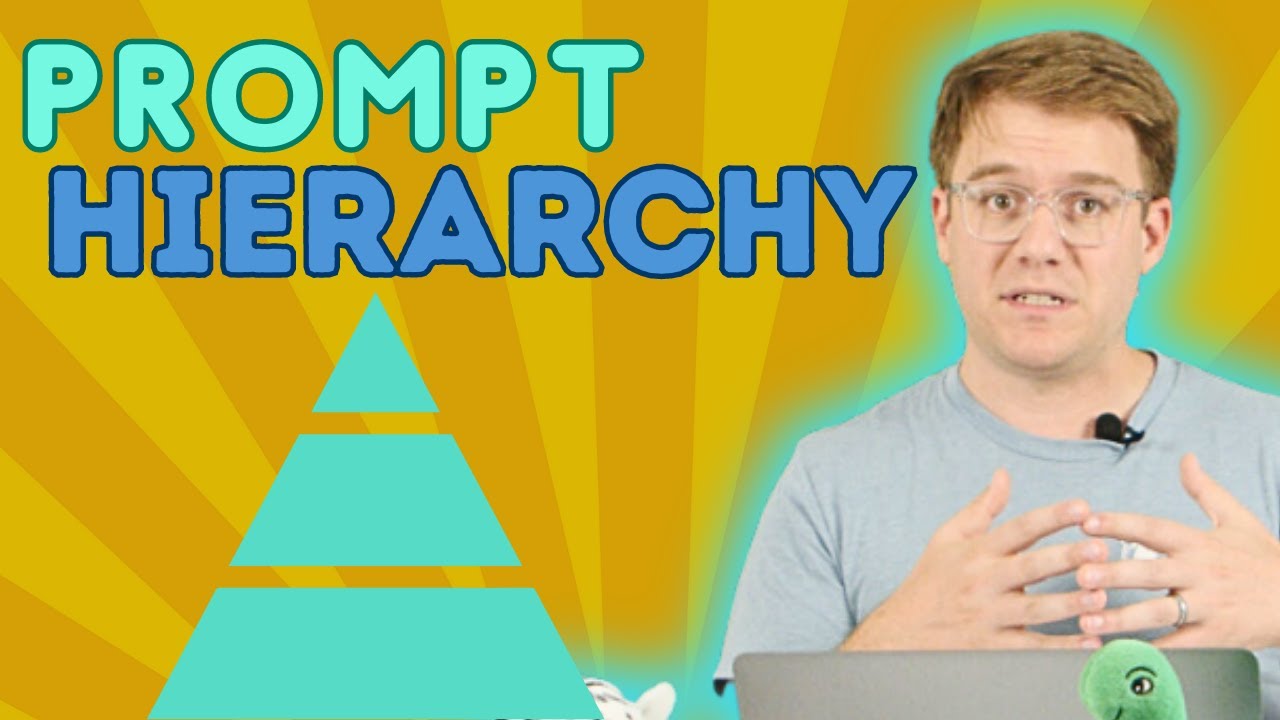
A prompt is added help. A prompting level describes how much help. The full set of levels, ranked from heaviest support to lightest, is what clinicians call a prompt hierarchy, and it is one of the most-used tools in a behavior analyst’s kit.
Prompting also happens to be one of the better researched pieces of autism intervention. The National Clearinghouse on Autism Evidence and Practice at the University of North Carolina reviewed nearly three decades of studies and named prompting, along with time delay and reinforcement, among the 28 evidence-based practices that met its criteria for children and youth with autism.
Research tells us the tool works. It does not tell us which level your child needs on a Tuesday morning when they slept badly. That call comes from data, and from knowing the child.
How the hierarchy is organized
Different teams write the levels slightly differently, and that is fine. What stays constant is the ordering principle: how much of the response is being carried by the adult versus by the child.
| Prompt Level | What It Looks Like | Amount of Support |
|---|---|---|
| Full physical | Hand over hand guidance through the whole response | Most |
| Partial physical | A light touch at the elbow or wrist to start the movement | High |
| Model | You do it first, your child copies | Moderate to high |
| Gestural | Pointing, tapping the object, a glance toward the sink | Moderate |
| Verbal | A spoken cue, from a full sentence down to one sound | Moderate to light |
| Visual | A picture schedule, a checklist, a photo on the cabinet | Light |
| Positional | The correct item placed closer to your child | Very light |
| Independent | Your child responds to the natural cue with no added help | None |
One caveat on that table. Verbal prompts sit mid-list, but in practice they are among the hardest to fade, because a spoken cue is easy to give and easy to wait for.
Why every prompt comes with a fading plan
When we write a skill goal, we write the starting prompt level beside it and the criteria for stepping down. A program without a stated fading path tends to sit at the same support level for months, and everyone feels productive while independence stalls.
Those fading plans are also part of what gets reviewed. Colorado families using Health First Colorado access ABA through the state’s pediatric behavioral therapies benefit, and the Department of Health Care Policy and Financing maintains a public provider list that Achieve ABA appears on for statewide service. Utilization reviewers look for goals that move toward independence. So should you, when you read your child’s treatment plan.
If you are still sorting out coverage or waiting on an evaluation, our insurance and autism evaluation pages cover the practical steps.
The Prompt Levels, from Most Support to Least
Here is each level in plain language, with the kind of moment where I would reach for it. None of these levels is a judgment about your child. They describe the support in the room, nothing more.
Full and partial physical prompts
A full physical prompt means guiding your child’s hands through the whole movement. We use it for brand new motor skills where a wrong repetition is hard to undo, and we use it briefly. A partial physical prompt is a light touch at the wrist or elbow that starts the movement and then lets go.
Physical prompts require gentle, consent-based handling. If a child pulls away, that is information, and we back off and find another route in. A prompt a child resists is no longer teaching anything.
Model prompts
You perform the response and your child copies it. Modeling works beautifully for imitation-ready learners and for anything with a visible sequence, like pumping soap, scrubbing, rinsing, drying.
Models come in full and partial versions. Showing all four handwashing steps is full. Showing only the pump and then waiting is partial, which is already a step down.
Gestural prompts
Pointing at the cup, tapping the shelf, glancing toward the door. Gestures are lighter than models and they fade cleanly, because a big point can shrink to a small one and then to a subtle shift of your eyes.
I recommend gestures to parents often. They are quiet, they work across a room, and they add no words to a moment when your child is already processing plenty.
Verbal prompts
Spoken help ranges from a full instruction to a partial word to a single sound. Verbal prompts feel natural to give, which is exactly why they pile up. A parent says the child’s name, then repeats the direction, then adds a reminder, and within a week the child has learned that nothing needs to happen until the third repetition.
When a family tells me their child only listens when they raise their voice, we almost always find a stacked verbal prompt pattern underneath. The fix is rarely more words. It is fewer, said once, followed by a real wait.
Visual prompts
Picture schedules, first-then boards, a laminated checklist by the door, a photo taped inside the cabinet. Visual prompts have a practical advantage over everything above them: they do not require a person.
That makes them a natural landing spot as adult support fades. A ten-year-old following a written morning list in Arvada is functioning independently in any meaningful sense, even though the list is technically a prompt.
Positional and stimulus prompts
Positional prompts shift the environment rather than the instruction. The correct fork sits closer, or the target picture is placed nearer your child’s dominant hand. Stimulus prompts exaggerate a feature of the right choice, then shrink that exaggeration over time. Both are easy to miss, which is why teams sometimes forget to fade them and then wonder why a skill falls apart once materials get rearranged.
Independent responding
The natural cue does the work. The timer goes off and your child heads to the sink. Nobody said anything, nobody pointed. This is the target, and it is worth naming out loud with your team so every prompt decision gets measured against it.
Two Directions We Move Through the Hierarchy
Direction turns out to be a bigger decision than most families expect. We either start with heavy help and lighten it, or start with almost none and add as needed. The choice depends on the skill, on what an error costs, and on how your child handles being stuck.
Most-to-least prompting
We begin at a support level that guarantees success, then step down as your child demonstrates the response. This approach is often called errorless learning, and it suits new skills, safety skills, and children who shut down after a few failed attempts.
A child learning to hold a rail on a steep set of stairs does not benefit from trial and error. Neither does a child learning to hand over a picture card to request a drink, since the whole point is that requesting works right away.
Least-to-most prompting
We give the natural instruction, wait, and only then add the smallest prompt that helps. If that does not work, we step up one level. This suits partially learned skills and children who tolerate a little productive struggle.
The risk is adding help too quickly. The wait is doing the teaching, so cutting the wait short cuts the teaching short.
Time delay
Time delay is a fading method rather than a prompt level. We deliver the instruction, insert a pause before the prompt, and lengthen that pause as the skill firms up.
Constant time delay holds the pause at a fixed length, often three to five seconds. Progressive time delay stretches it gradually. Both give your child room to beat the prompt, which is the whole point.
Graduated guidance
With graduated guidance, physical support lightens within a single attempt. Full hand contact becomes fingertips at the wrist, then a hand hovering nearby, then a hand at the adult’s side. It is a useful bridge for self-care routines like toothbrushing and dressing, where the movement itself is the skill.
If you are working on toileting, our walkthrough of potty training steps applies the same logic to a full routine.
Prompt Dependence and How We Work Against It
A child who performs beautifully with an adult beside them and does nothing without one has learned a real skill. Unfortunately, the skill they learned is waiting. Prompt dependence develops quietly, usually because prompting works so well in the short term that nobody notices the help never came off.
Signs your child may be waiting for the prompt
These patterns show up often enough that I mention them at nearly every parent training session.
- Your child pauses and looks at you before every step of a routine they have done a hundred times.
- Accuracy is high with one particular adult and low with everyone else.
- The skill appears at the kitchen table and vanishes in the bathroom.
- Your child starts, then stops halfway and waits, even though they know the next step.
- Progress data plateaus at the same prompt level for several weeks with no plan to change it.
None of these means anything has gone wrong permanently. They mean the fading plan needs attention.
How we fade prompts on purpose
Fading is its own set of techniques, not just doing less. Here is what we use most.
- Move down the hierarchy one level at a time, with a data rule for when to step.
- Lengthen the delay between the instruction and the prompt.
- Give a stronger, more enthusiastic response to independent attempts than to prompted ones.
- Rotate who delivers the instruction so the skill does not attach to one person.
- Run transfer trials, where a prompted correct response is immediately followed by an unprompted repeat.
- Shift from adult prompts to environmental ones, like a visual list or a placed item.
You may see behavior get a little worse before it gets better when help is withdrawn. That bump has a name and a predictable shape, which we cover in our piece on extinction bursts.
Prompt fading inside Colorado classrooms
Colorado IEPs often describe adult support with phrases like dedicated adult support or line-of-sight supervision. The Colorado Department of Education’s guidance on paraprofessionals serving IDEA-eligible students spells out that any paraprofessional assisting with special education must be adequately and appropriately trained for that specific student’s IEP, under ECEA Rule 3.04(1)(e)(i), with supervision scaled to the student’s level of vulnerability.
What that guidance does not do, and cannot do, is write your child’s fading plan. So at IEP meetings across Denver Public Schools, Aurora Public Schools, Jeffco in Lakewood, Poudre in Fort Collins, and District 11 in Colorado Springs, I encourage parents to ask one question: what is the plan for reducing this support, and how will we know it is working?
When our team provides school-based support, prompt levels are one of the first things we align with classroom staff so a child is not independent in session and fully supported in second period. If something shifts at school midyear, our guide on when to loop us in explains what is worth a message.
Using Prompting Levels at Home Without Turning Your Kitchen Into a Clinic
Families sometimes hear all of this and try to run structured teaching trials at dinner. That rarely holds up past week two. What holds up is choosing one routine, choosing one level, and being consistent inside that small space.
Pick one routine and one level
Handwashing before dinner. Shoes on before the bus. Backpack on the hook. Pick a single routine that repeats daily and decide, ahead of time, what level of help you will give.
A sticky note near the spot helps more than you would think, mostly because it keeps every adult in the house on the same level.
Wait longer than feels comfortable
Most parents prompt again after roughly two seconds. Try counting to five. That silence feels endless when you are running late, and it is where independent responding gets built.
If your child fills the pause with humming, rocking, or hand movements, that is usually regulation rather than avoidance. Our overview of stimming and redirection covers when to leave it be.
Use the coat, the boots, and the door
Colorado hands you a built-in dressing routine most of the year. Coat, hat, gloves, boots, and for much of the state, snow pants. That is a five-step chain repeating every morning from October through April.
I worked with a preschooler in Loveland whose family started at partial physical for boots and finished the winter at a photo sequence taped by the door. Nothing about the routine changed. Only the prompt level did. A family in Longmont ran the same plan with a mudroom checklist and got there by February.
Practice in community settings
Skills that only exist at home are half-built. Rec centers, libraries, and grocery stores are where prompt levels get tested honestly.
Riding RTD light rail from Aurora into downtown, ordering at a counter in Centennial, or checking out books in Thornton each involve a chain your child can learn with graduated support. Weekend outings are often the easiest time to practice, which is one reason we offer weekend sessions in the first place.
How Prompting Levels Shift with Age and Setting
The hierarchy stays the same across a childhood. What changes is which levels get used, how quickly fading happens, and who else is involved in the plan.
More families are having these conversations than a decade ago. The CDC’s most recent surveillance report, published in 2025 using 2022 data, put autism prevalence at about 1 in 31 eight-year-olds nationally, up from 1 in 36 two years earlier. That is a lot of parents sitting in conferences trying to decode phrases like prompt level.
Birth through age two
Colorado runs its federal Part C program as Early Intervention Colorado, overseen by the Colorado Department of Early Childhood. Services are offered at no cost to families, with no income requirement, for children from birth until the third birthday who show a delay of at least 25 percent in one or more areas of development or have a qualifying diagnosed condition.
Colorado also adopted an Extended Part C Option, a state policy that lets early intervention continue past a child’s third birthday for children whose birthdays fall inside a range published annually by the state. Most states do not have this. It is worth asking about if your child turns three in the spring.
At this age, prompting happens inside diapering, snack, and play rather than at a table. Most-to-least is common, because toddlers rarely benefit from repeated failure. Our overview of early intervention in Colorado walks through eligibility and the transition at three, and our early intervention ABA program is built for these years.
The preschool years
Colorado Universal Preschool gives every child at least 15 hours per week of tuition-free preschool in the year before kindergarten, funded through the Colorado Department of Early Childhood after House Bill 22-1295. In program year 2024 to 2025, Colorado UPK served 43,398 four year olds, roughly 68 percent of the state’s eligible population.
So a large share of Colorado preschoolers now spend part of the week with adults who have never met their ABA team. Prompt levels need to travel with them, which is where daycare-based ABA sessions and written prompt guidance for teachers earn their keep. Families in Boulder, Westminster, and Greeley run into this every fall.
School age and adolescence
By elementary school, adult prompts should be giving way to visual and environmental ones wherever possible. A fifth grader shadowed down the hallway is a fifth grader marked as different by every peer who sees it.
For teens, the hierarchy points toward self-management. Checklists, phone reminders, and self-recording replace adult cues. Our back-to-school ABA work often centers on rebuilding those independent chains before the first bell, and for young people in supported living, our group home ABA team applies the same fading logic to adult routines.
If you want a second set of eyes on the prompt levels in your home or your child’s classroom, our parent training and in-home ABA teams work with families in Denver, Arvada, Parker, and communities across our Colorado service areas. Reach out here, and we will walk you through what a fading plan for your child could look like.
FAQs
Is prompting the same as helping too much?
No. Prompting is planned help paired with a plan for removing it. Helping too much is unplanned help with no exit. The difference shows up in the data over a few weeks, not in any single moment.
Will prompting make my child dependent on adults?
It can, if the fading plan is vague or nobody is tracking it. Used with clear criteria and deliberate fading, prompting tends to shorten the path to independence rather than lengthen it. Many children make steady progress this way, though the pace varies a great deal from child to child.
How long should I wait before prompting?
Three to five seconds is a reasonable starting point, extended gradually as the skill firms up. Your BCBA can set a delay specific to your child, which for some children is considerably longer.
Are verbal prompts bad?
They are not bad. They are just sticky. Because they feel conversational, they get repeated without anyone noticing, and children learn to wait for the second or third repetition. If you are going to use words, use them once.
Can we work on prompt fading without an autism diagnosis?
Prompting strategies are general teaching tools and are not diagnosis-specific. Insurance authorization for ABA is a separate matter and usually does require documentation, which our evaluation team can help you sort out.
How do I know prompt fading is working?
Ask your team for the prompt-level data, not just the mastery percentage. A goal at 90 percent accuracy with full physical prompting is a very different picture from 70 percent accuracy independently, and the second one is usually the healthier trend.
What if my child regresses when we reduce help?
Short dips are normal after a step down. We step back up one level, hold briefly, then try again with a smaller step. Persistent regression tells us the step was too large or the skill was less solid than the data suggested.
Sources:
- Steinbrenner, J. R., Hume, K., Odom, S. L., et al. (2020). Evidence-Based Practices for Children, Youth, and Young Adults with Autism. UNC Chapel Hill, Frank Porter Graham Child Development Institute, NCAEP Review Team. https://ncaep.fpg.unc.edu/wp-content/uploads/EBP-Report-2020.pdf
- Sam, A., & AFIRM Team. (2024). Prompting (Updated). UNC Chapel Hill, FPG, Autism Focused Intervention Resources and Modules. https://afirm.fpg.unc.edu/wp-content/uploads/Prompting-Brief-Packet-Sam-AFIRM-Team-Updated-2024.pdf
- National Professional Development Center on ASD. Evidence-Based Practices. UNC FPG. https://autismpdc.fpg.unc.edu/ebps/
- Cengher, M., Shamoun, K., Moss, P., Roll, D., Feliciano, G., & Fienup, D. M. (2016). A comparison of the effects of two prompt-fading strategies on skill acquisition in children with autism spectrum disorders. Behavior Analysis in Practice, 9(2), 115–125. https://pmc.ncbi.nlm.nih.gov/articles/PMC4893031
- Libby, M. E., Weiss, J. S., Bancroft, S., & Ahearn, W. H. (2008). A comparison of most-to-least and least-to-most prompting on the acquisition of solitary play skills. Behavior Analysis in Practice, 1(1), 37–43. https://pmc.ncbi.nlm.nih.gov/articles/PMC2846579
- Leaf, J. B., Cihon, J. H., Townley-Cochran, D., et al. (2016). An evaluation of positional prompts for teaching receptive identification to individuals diagnosed with autism spectrum disorder. Behavior Analysis in Practice, 9(4), 349–363. https://pmc.ncbi.nlm.nih.gov/articles/PMC5118260
- The IRIS Center. Providing Instructional Supports: Facilitating Mastery of New Skills. Peabody College, Vanderbilt University (OSEP grant #H325E220001). https://iris.peabody.vanderbilt.edu/module/sca/
- Autism Speaks. Evidence-Based Practices: Prompting. https://docs.autismspeaks.org/evidence-based-practices/prompting
- Colorado Department of Education. (December 2025). CDE Guidance on Paraprofessionals Serving IDEA-Eligible Students. https://www.cde.state.co.us/cdesped/paraprofessional-serving-idea-eligible-students
- Colorado Department of Early Childhood. Early Intervention for Infants and Toddlers with Developmental Delays. https://cdec.colorado.gov/early-intervention-for-infants-and-toddlers