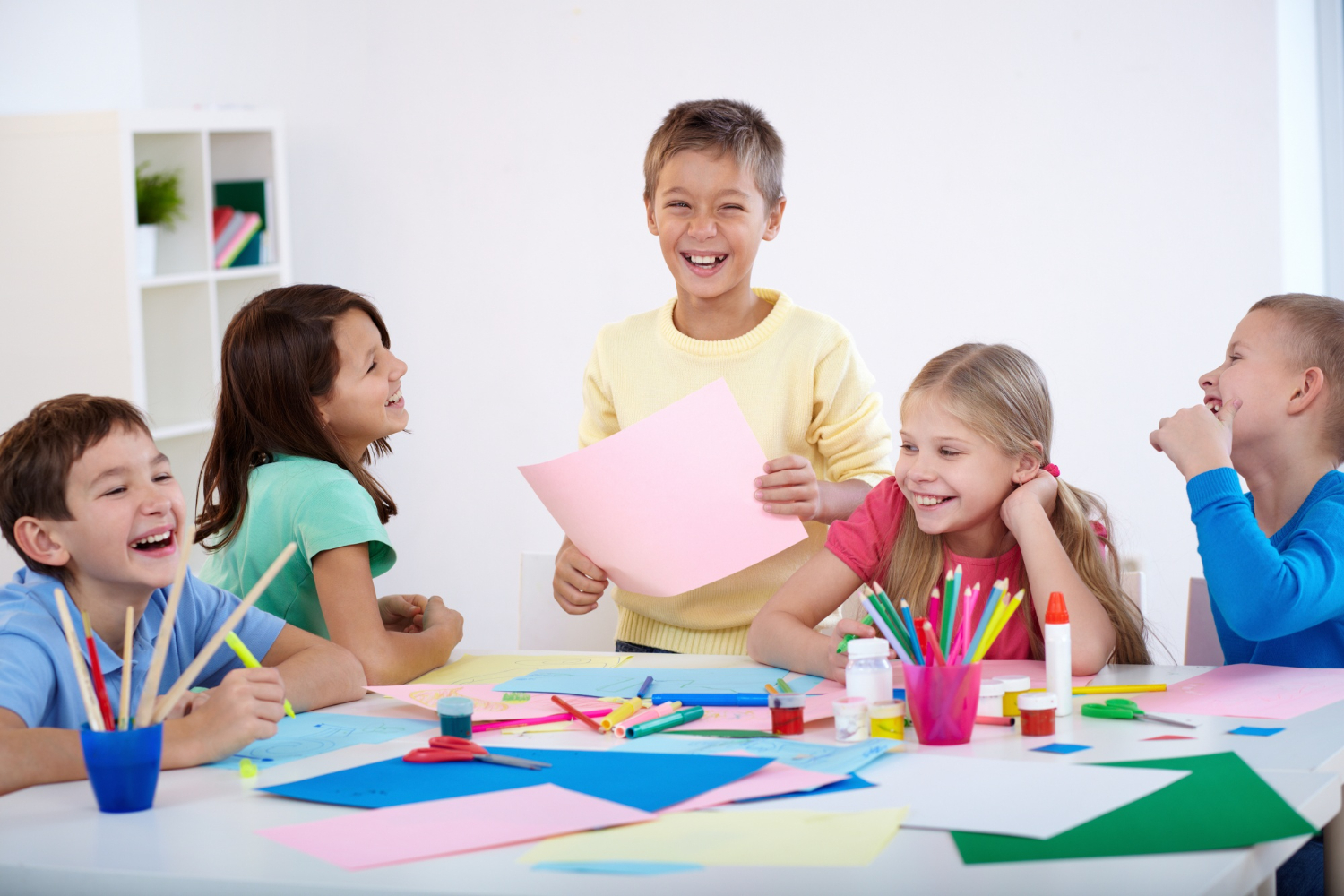
Few things are harder to watch than your child standing just outside a group of kids, clearly wanting in, with no idea how to make that happen. It’s not a motivation problem. It’s usually a missing skill, specific enough that once it’s taught, it tends to click fast.
Social skills strategies are built around finding that missing piece, whether it’s joining a game, taking a turn, or reading a peer’s cues, and teaching it directly instead of hoping a child picks it up on their own. Heading into a new school year, our back-to-school ABA program builds exactly this kind of readiness before the first bell rings, and the strategies below are what that work actually looks like.
What Making Friends Requires, Skill by Skill
“Making friends” sounds like a single skill. It’s closer to a dozen small ones stacked on top of each other, and most kids build them just by watching other kids without anyone teaching a single one directly.
The Skills Hiding Inside Playing Together
A child who looks like they’re “bad at socializing” is often missing just one or two pieces of a much longer list:
- Joint attention, noticing what a peer is looking at or interested in, not just what you want to talk about
- Initiating, starting an interaction instead of only responding when approached
- Turn-taking, waiting through someone else’s turn without disengaging or taking over
- Reading nonverbal cues, picking up on tone, facial expression, and body language in real time
- Tolerating losing, staying regulated when a game doesn’t go their way
- Repairing, recovering from an awkward moment instead of walking away from the whole friendship
Why This Looks Different for Every Child
Some children I work with can hold a conversation all day but freeze the moment they need to start one. Others start easily but miss the cue that a peer has lost interest and keep going anyway. Before we teach anything, we watch closely enough to know which specific piece is missing, because teaching the wrong skill first wastes a child’s patience and yours.
Signs Your Child May Need Extra Social Skills Support
A few patterns are worth mentioning to your pediatrician or your child’s teacher, broken out roughly by age:
- Preschool, ages 3 to 5: rarely approaches other children first, plays only alongside peers rather than with them, or doesn’t respond when a peer says hello
- Elementary, ages 6 to 10: often plays alone at recess despite seeming to want company, struggles to join a game already in progress, or gets into repeated conflicts over rules
- Preteen and teen years: says they don’t understand why a joke was funny or why a group went quiet, sticks to one narrow friendship that feels fragile, or avoids group activities altogether
None of these on their own means your child needs formal support. Together, especially if they’re causing your child real frustration, they’re worth a closer look.
Why Peer Relationships Are Harder to Build Than Sitting Still in Class
Classroom skills like staying on task or finishing a worksheet follow a predictable structure. A teacher sets it, and a child learns to meet it. The playground doesn’t work that way, and that difference is exactly why friendship skills need their own kind of practice.
The Unwritten Rules of Group Play
Rules change mid-game, get renegotiated by whoever’s loudest, and are never written down anywhere. A child has to track the game itself and the shifting social agreement underneath it at the same time. In the school-based sessions we run in Denver, this is usually the single hardest transition for kids who do well one-on-one but struggle the moment a third or fourth kid joins in.
When Sensory or Communication Differences Get in the Way
A loud cafeteria or a crowded playground adds a layer most adults don’t have to think about. A child who processes language a little slower than peers can miss the exact second a game’s rules shift, and by the time they catch up, everyone’s already moved on. We see this constantly with families in Aurora, where noisy elementary schools make quiet, structured practice at home even more valuable.
If sensory overwhelm is part of what’s happening for your child, our guide to sensory overload strategies covers ground that often overlaps directly with these social challenges, since a dysregulated nervous system makes reading a peer’s cues even harder.
Teaching Turn-Taking Without Killing the Fun
Turn-taking is usually the first skill we target, because so much of group play depends on it, and because it’s teachable in a way that feels like a game rather than a lesson.
Start With Structured Games
Board games, card games, and simple turn-based games give turn-taking a visible structure: a token moves, a timer runs out, a card gets played. That structure does a lot of the teaching for you before a child ever has to manage an unstructured playground. In sessions across Colorado Springs, we often start here specifically because the rules are fixed and visible, which takes a lot of the guesswork out for a child who’s still learning.
Fade the Structure as Skills Build
Once turn-taking is solid inside a board game, we start moving it into looser, faster-moving play: tag, backyard games, made-up pretend play with shifting roles. This is where the skill actually has to generalize, and families in Lakewood often tell me this is the stage where they finally see it show up at the actual playground, not just at the kitchen table.
Helping Kids Read Social Cues
Reading a peer’s face, tone, and body language happens in a split second for most kids. For a child who doesn’t pick this up automatically, it has to be taught in slower motion first.
Naming What You See, Out Loud
One of the simplest tools we use is narrating cues in the moment: “Look, she’s smiling and stepping closer, that usually means she wants to keep playing.” Said consistently over weeks, this builds a library of cues a child can eventually read on their own. Families we work with in Fort Collins often build this into everyday moments, narrating cues from siblings or even characters on a favorite show.
Practicing With Video and Role-Play
Video modeling and role-play let a child practice reading a cue and responding to it without the real-time pressure of an actual playground. We’ll rehearse a specific scenario, walking up to a game already in progress, asking to join, handling a “not right now”, until the response starts to feel automatic rather than effortful. This has been one of the most effective tools we use with kids in Pueblo who freeze up the moment a real interaction starts moving too fast to think through.
The Research Behind These Strategies
None of this is guesswork. A specific handful of approaches has real research behind it for building peer relationships in autistic kids, and it’s worth knowing what that evidence actually says before you invest time in any particular strategy.
Why Peer-Mediated Play Is Considered Evidence-Based
The approach where trained peers help model and prompt social interaction, sometimes called peer-mediated instruction and intervention, has been reviewed extensively by researchers at the University of North Carolina’s Frank Porter Graham Child Development Institute.
Their National Clearinghouse on Autism Evidence and Practice classifies peer-based instruction as a recognized, evidence-based practice for building communication, joint attention, play, and social skills in autistic children and young adults. The same research center maintains free training modules on peer-mediated instruction for practitioners and families who want to see exactly how it works, step by step.
Structured Social Skills Groups Are a Recognized Approach
Starting with structured games rather than open-ended play isn’t just a preference of ours. The CDC lists social skills groups and tools like Social Stories among its recognized treatment approaches for building social skills in people with autism spectrum disorder, specifically because a structured setting gives a child room to practice without the full unpredictability of free play working against them at the same time.
Coaching Your Child Into Group Play
Group play asks more of a child than one-on-one play does, simply because there are more people, more shifting dynamics, and less predictability. We build toward it in stages rather than expecting a child to manage a group cold.
The Bridge Between One-on-One and a Group
A single, well-matched playdate is a much easier place to practice a new skill than a birthday party with fifteen kids. We often coach families in Thornton to start there deliberately, choosing one peer who’s patient and a low-pressure setting, before working up to bigger groups where the skill actually needs to hold up.
What to Do When They Get Left Out
Getting left out sometimes reflects a skill gap, and sometimes it’s just an unkind moment that any child might hit. Part of what we coach parents on, including families in Arvada, is how to tell the difference: whether to step in and problem-solve on the spot, or hang back and let your child try the repair themselves first, with you ready if it doesn’t land.
Common Myths About Social Skills and Autism
A few misconceptions come up often enough in parent meetings that I want to address them directly, because they tend to delay families from reaching out for support.
If They Wanted Friends, They’d Ask
I hear this one from well-meaning relatives more than anyone else. Wanting connection and knowing how to pursue it are two completely different things. I’ve worked with kids who could tell me, in detail, exactly which classmates they wished would invite them over, and still had no idea how to make that actually happen.
Kids Either Have Social Skills or They Don’t
Social ability isn’t a fixed trait any more than reading or riding a bike is. Some kids need more explicit instruction to get there, and some need more repetition once they’ve learned a piece of it, but I haven’t met a child who couldn’t build at least some of this with the right teaching and enough practice.
Building These Skills Across Home, School, and Everywhere Between
A skill your child only shows in a therapy room hasn’t actually generalized yet. Social skills strategies only hold up if they travel with your child through the places they actually spend time.
At home, our in-home ABA therapy turns sibling play, family game night, and neighborhood friendships into practice reps that don’t feel like practice. Our parent training sessions coach you on narrating cues and prompting turn-taking yourself, since you’re present for far more social moments than any therapist will be. If mornings or after-school hours already feel chaotic in your house, our post on morning and homework routines covers how to build the kind of predictable structure that makes room for social practice in the first place.
During the school day, our school-based ABA team works directly on the playground and in the lunchroom, the exact settings where these skills actually get tested. Coordinating with your child’s teacher makes a real difference here too, and our guide to partnering with your child’s teacher walks through how to keep that relationship productive. Younger children often build the earliest version of these skills through our daycare-based ABA support, well before kindergarten friendships are even on the radar.
Skills built during the school year shouldn’t disappear the moment summer starts. Our weekend ABA sessions keep social practice going through camps, neighborhood play, and family trips, so a child doesn’t have to rebuild the same ground every August. Families in Westminster often lean on this specifically to keep summer friendships from fading once the structure of a school day disappears.
How Friendship Skills Shift as Kids Get Older
The skills themselves don’t change much year to year, but the stakes and the setting do, and it helps to know what’s coming as your child moves through school.
Elementary Years: Play-Based Friendships
Friendship at this age is mostly built through shared activity: the same recess game, the same lunch table, the same after-school program. The skills we’ve covered so far, joining play, taking turns, reading a peer’s mood, do most of the heavy lifting here, and progress tends to be visible fairly quickly once the right piece is targeted.
Middle and High School: Higher Stakes, Subtler Rules
Once kids hit middle school, friendship starts running on things that are much harder to teach directly: sarcasm, shifting social status, group texts, unspoken rules about who sits where. We shift our focus at this age toward more nuanced social reasoning, and toward making sure social goals actually show up in a student’s IEP where relevant. Our guide to IEP parent rights covers how to push for that if a school team is slow to include it, since social skills goals are just as legitimate a part of an IEP as academic ones.
You don’t have to figure out which piece is missing on your own. If recess, birthday parties, or group play have been harder than you’d like for your child, reach out to our Colorado team and we’ll help you understand what’s underneath it and what support could look like. Reach out to Achieve ABA Therapy Group, and we’ll guide you through how we support kids at every age and every stage of friendship.
Frequently Asked Questions
What age should I start working on social skills?
There’s no single right age to start. Some children benefit from targeted social skills work as early as preschool, while others don’t show a clear gap until group play gets more complex in early elementary school. What matters more than age is whether your child is consistently struggling to join, sustain, or repair peer interactions.
Is it normal for my child to prefer playing alone?
Preferring solo play sometimes is completely normal for many children. What we look at more closely is whether a child wants to join peers and can’t figure out how, versus a child who genuinely prefers their own company and isn’t distressed by it. Those two situations call for very different approaches.
Can social skills really be taught, or is this just personality?
Both are true at once. Temperament plays a real role in how a child approaches other people, but the specific mechanics, initiating, turn-taking, reading cues, repairing, are learnable skills. We’re not trying to change who a child is, only giving them tools they’re currently missing.
How is this different from general classroom support?
Classroom support usually targets task completion, attention, and following instructions in a structured setting. Social skills strategies target the unscripted, fast-moving world of peer interaction, recess, lunch, group projects, which asks something very different of a child than sitting through a lesson does.
Will my child’s school be involved in this work?
Whenever possible, yes. Our school-based team coordinates directly with teachers and, where relevant, with your child’s IEP goals, so the strategies practiced at home and in sessions carry into the actual playground and lunchroom.
Sources:
- Centers for Disease Control and Prevention. (2024). Treatment and intervention for autism spectrum disorder. U.S. Department of Health and Human Services. https://www.cdc.gov/autism/treatment/index.html
- National Clearinghouse on Autism Evidence and Practice. (2020). Evidence-based practices for children, youth, and young adults with autism. University of North Carolina at Chapel Hill, Frank Porter Graham Child Development Institute. https://ncaep.fpg.unc.edu/
- Sam, A., & AFIRM Team. (2015). Peer-mediated instruction and intervention. University of North Carolina at Chapel Hill, Frank Porter Graham Child Development Institute. https://afirm.fpg.unc.edu/peer-mediated-instruction-and-intervention
- Eunice Kennedy Shriver National Institute of Child Health and Human Development. (2017). Social skills training for autism. National Institutes of Health. https://www.nichd.nih.gov/health/topics/autism/conditioninfo/treatments/social-skills
- Merrill, A. (2014). Incorporating typical peers into the social learning of children with autism spectrum disorders. Indiana University, Indiana Resource Center for Autism. https://iidc.indiana.edu/irca/articles/incorporating-typical-peers-into-the-social-learning-of-children-with-autism-spectrum-disorders.html