I still remember a little boy who sat on the floor across from me during our very first in-home ABA therapy in Arvada and hadn’t said a single word to anyone, not “mama,” not “no,” not even a sound that resembled speech. His mother asked me the question I hear more than almost any other in this work.
Was something wrong with him, or was he just going to talk later than other kids? Twenty minutes in, that same boy was pointing to a picture of juice on a communication board, looking me straight in the eye, and getting exactly what he wanted. He had been trying to tell us things the whole time. He just hadn’t had a tool that let the rest of us hear it.
If you’re reading this because your child isn’t talking yet, or talks far less than you expected at this age, you’re probably sitting with some version of that same worry. Nonspeaking and minimally speaking autism shows up in a meaningful share of autistic children, and it rarely means what parents fear it means when they first hear the words. In this piece, I’ll walk you through what these terms actually describe, why speech develops on a different timeline for some autistic kids, what real communication support looks like, and how to take the next step if you’re ready to.
What Nonspeaking and Minimally Speaking Autism Actually Means
In session notes and parent meetings, I hear “nonverbal” used as a catch-all term, but it blurs together several very different presentations. Getting the language right helps you ask sharper questions of your child’s team and make sense of what you read online at midnight.
Not Talking Is Not the Same as Not Communicating
Nonspeaking autism describes a child who does not use spoken words to communicate. Minimally speaking, sometimes written as minimally verbal, describes a child who has some spoken words, often fewer than twenty or thirty, and uses them inconsistently or only in narrow situations.
Neither label tells you how much a child understands or how much they have to say. I’ve worked with children who could “speak” fluently through a tablet, forming full sentences about their day, long before they ever said a word out loud. Their spoken language was limited. Their communication was not.
Terms You’ll Likely Hear From Providers
A few words tend to come up early in evaluations and reports, and they’re worth knowing in plain language:
- Receptive language is what your child understands when others speak, which is frequently stronger than what they can say back.
- Expressive language is what your child can produce, whether through speech, gesture, sign, or a device.
- Apraxia of speech is a motor planning difficulty that makes it hard for the brain to coordinate the muscle movements speech requires, even when a child knows exactly what they want to say.
- Echolalia is the repetition of words or phrases someone has heard before, which can be a meaningful communication strategy rather than “noise” to correct away.
Why Some Autistic Children Don’t Develop Spoken Language on the Usual Timeline
There’s no single explanation that fits every child I’ve worked with, and I stopped expecting one a long time ago. Speech is a physically demanding skill built from several systems working in sync, and autism can disrupt any one of them differently from child to child.
Motor Planning Gets in the Way for Some Kids
Speech requires the brain to sequence dozens of tiny, fast muscle movements in the lips, tongue, and jaw. For children with speech apraxia, that sequencing is unreliable even when the underlying language is intact. This is one reason a child can hum a tune perfectly, or say one word clearly one day and struggle with it the next.
Sensory and Language Processing Differences Play a Role Too
Some children process incoming language more slowly than same-age peers, which can make timed, back-and-forth conversation genuinely exhausting. Clinical research on minimally verbal autistic children has repeatedly found that what these kids understand often exceeds what their spoken output suggests, sometimes by a wide margin.
It Is Not About Effort, Parenting, or Intelligence
I want to say this plainly, because I still meet parents who were told otherwise. Estimates from recent clinical research put the share of autistic children who remain minimally verbal or nonspeaking beyond age five somewhere around one in four to nearly one in three. That is not a rare or unusual outcome, and it is not caused by screen time, by a parent talking “too little” or “too much,” or by a lack of motivation in the child.
Recognizing the Early Signs Colorado Parents Ask About
Most families come to me after noticing something felt different well before any formal diagnosis was on the table. Here’s what tends to show up at different ages, and what to do with that information.
What to Watch for Before Age Two
A few patterns are worth flagging to your pediatrician sooner rather than later:
- No babbling with consonant sounds by around 12 months
- No single words by 16 months
- No two-word combinations by 24 months
- Loss of words or sounds a child was previously using
- Limited pointing, waving, or showing objects to share interest
None of these on their own confirms autism. Together, especially alongside social or sensory differences, they’re a reasonable basis for an evaluation.
Signs Between Ages Two and Four
Families of slightly older toddlers often ask what to watch for once the first-birthday milestones have already passed. A few patterns tend to stand out in this age range:
- Not combining three or more words into a phrase by around age three
- Using language mainly to repeat rather than to spontaneously request or comment
- Relying on pulling or leading an adult by the hand instead of pointing, gesturing, or using words
- Difficulty answering simple questions like “what’s your name” even with prompting
If your child fits this pattern, it doesn’t mean the window for progress has closed. It usually means it’s time for a more thorough look at how they’re communicating and why.
Starting the Evaluation Process in Colorado
If your child is under three, Colorado’s Early Intervention program can evaluate them at no cost, and you don’t need a formal autism diagnosis to make a referral. A documented delay in communication alone is generally enough to open the door, whether your family lives in Denver or a smaller town elsewhere in the state. We’ve written more about how that eligibility process works and what it costs in our early intervention eligibility guide.
For children who are older, or families who want an autism-specific evaluation alongside early intervention, our diagnostic evaluation process moves quickly, with most families seen within one to two weeks rather than the months-long waits that are common elsewhere. From there, early intervention ABA support can begin building communication skills well before a child’s third birthday.
How We Build Communication Before Speech Ever Arrives
Once we understand how a child currently communicates, even if that’s mostly through gesture, behavior, or frustration, we build from there instead of waiting for speech to show up first.
Augmentative and Alternative Communication, Explained Simply
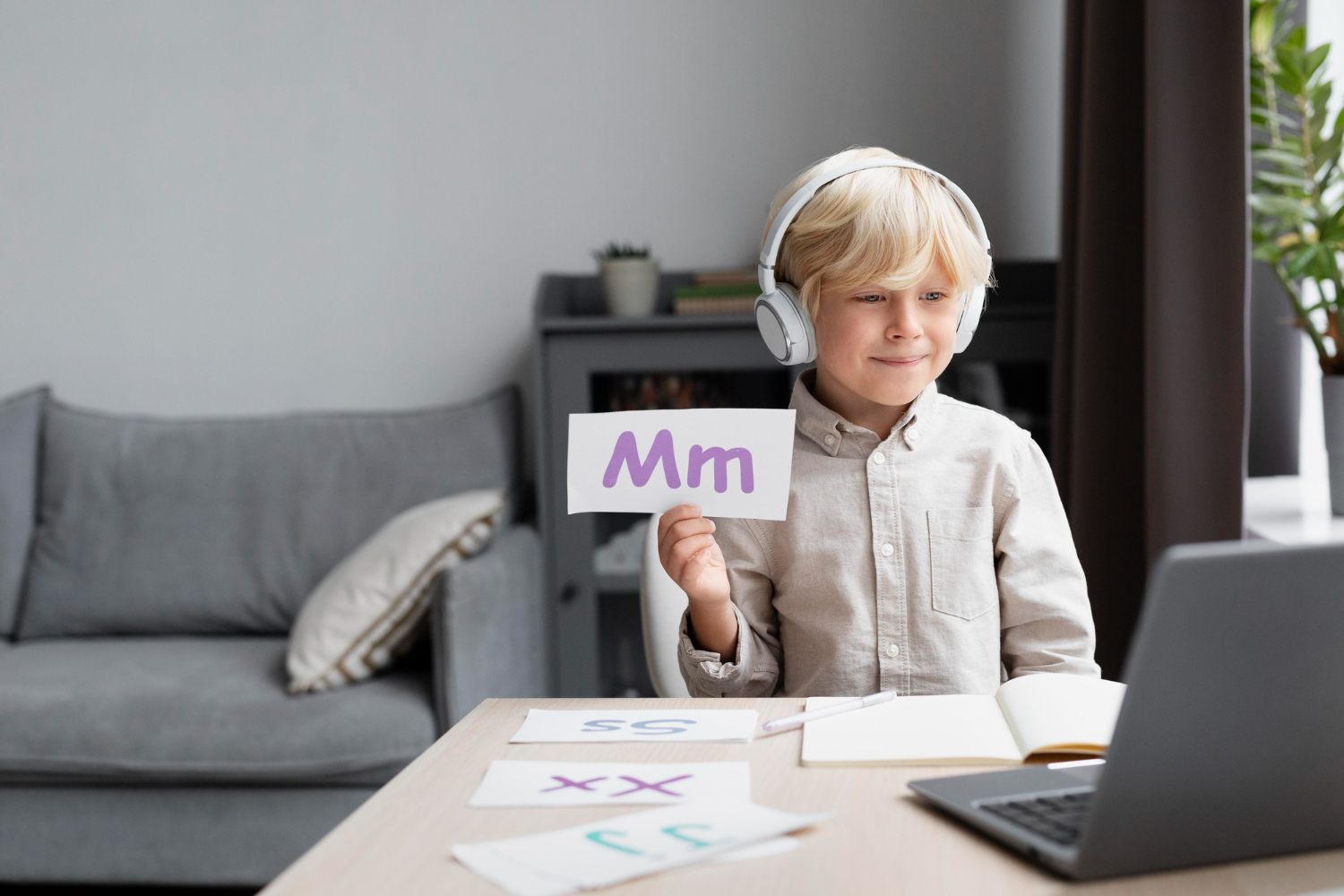
Augmentative and alternative communication, or AAC, covers any tool that supplements or replaces spoken words: picture exchange systems, sign, and speech-generating devices or tablet apps. The starting point for all of it is presuming competence, meaning we assume a child has something to say and our job is to find the channel that lets them say it.
Functional Communication Training
Before we work on much else, we teach a reliable way to request, protest, or reject, because a child who can ask for a break or say “no thank you” has far less reason to reach for a meltdown to get the same message across. I’ve watched aggressive or self-injurious behavior drop sharply within weeks once a child had a functional way to be understood.
Does AAC Delay Speech? Here Is What the Evidence Shows
This is the question I get asked most, usually with real worry behind it. The research on this is consistent: AAC does not suppress natural speech development, and for many children it appears to support it by lowering the pressure and frustration around communication. Giving a child a device or picture system now does not close the door on spoken words later.
Choosing the Right AAC System for Your Child
There’s no single AAC system we reach for by default. The right starting point depends on your child’s motor skills, attention, and how they already interact with pictures, objects, and screens, so we assess before we recommend anything.
Low-Tech vs. High-Tech AAC Options
Low-tech options like picture exchange systems and communication boards are often where we start, since they’re simple, portable, and don’t depend on a charged battery. High-tech options, like a tablet running a dedicated speech-generating app, offer a much larger vocabulary and can grow with your child over years rather than months.
Working With Speech-Language Pathologists
AAC decisions work best as a team effort. Speech-language pathologists bring expertise in language development and device selection that complements the behavioral and skill-building side we focus on as BCBAs and RBTs, and the strongest plans come from both perspectives working together rather than in parallel. We regularly coordinate with SLPs for families in Lakewood and across the metro area so that AAC goals in speech therapy and ABA sessions reinforce each other instead of pulling in different directions.
What Support Looks Like Across Your Child’s Day
Communication goals rarely stay contained to a single room or a single hour of therapy. For skills to stick, they need to travel with your child through the places they actually spend their time.
At Home and During Everyday Routines
Breakfast, bath time, and bedtime are full of natural chances to practice requesting and choosing. Our in-home ABA therapy is built around exactly those moments, and it’s often where families in Aurora and nearby communities see the fastest early gains, since a child’s own home tends to be where they feel most comfortable taking communication risks.
Our parent training sessions give you the tools to keep that momentum going between visits, since you spend more hours with your child than any therapist ever will.
At Daycare, School, and On Weekends
Communication support that only happens at home leaves a gap everywhere else your child spends time. We provide daycare-based ABA for younger children and school-based support that partners directly with teachers and IEP teams, including schools we work with in Colorado Springs, to carry the same strategies into the classroom.
For families who don’t want progress to pause on Saturdays, weekend sessions keep therapy consistent without eating into your workweek. If your child’s regulation tends to spike in loud, busy classrooms, our thoughts on sensory overload strategies may help too, since dysregulation and communication struggles often show up together.
As Your Child Gets Older
Communication needs don’t end when a child ages out of early intervention. For teens and adults in group home settings, our group home ABA work focuses on the same principle we start with at age two: give a person a reliable way to be understood, and independence tends to follow.
During school breaks, ABA therapy can also keep communication skills from sliding backward when the regular routine disappears, something we see play out consistently for families in Fort Collins and other communities where school-year support pauses for the summer.
Common Myths About Nonspeaking Autism
A few misconceptions come up often enough in intake calls that I want to address them directly, because they tend to keep families from reaching out sooner.
My Child Will Never Really Communicate
I consulted a family in Thornton whose son had been labeled “severely nonverbal” by more than one provider before we met him. Within a few months of consistent AAC use, he was combining pictures into short requests and correcting us when we misread what he wanted. Communication ability is not fixed at intake. It’s something we build.
AAC Is a Last Resort We Try After Everything Else Fails
Some families worry that introducing a device or picture system means giving up on speech, so they hold off for months hoping words will come first. Waiting rarely helps and often costs a child valuable time to build any reliable way to be understood. The evidence points the other direction: earlier communication support, in whatever form fits the child, tends to lead to better outcomes than waiting to see what happens.
Supporting Your Child Without Losing Sight of Real Growth
I try to hold two things at once with the families I work with: honesty about what we don’t yet know, and genuine hope grounded in what I’ve actually seen happen.
What Progress Actually Looks Like
Some children I’ve worked with go on to develop spoken language over months or years, sometimes well after age five, which is later than many families expect based on outdated milestone charts. Others build rich, reliable communication through AAC that they carry into adulthood without ever relying primarily on speech. Both are legitimate, successful outcomes. Neither ABA therapy nor any other intervention can promise which path a specific child will take, and I’d be wary of anyone who tells you otherwise.
Partnering With Your Child’s School Team
Communication goals belong in your child’s IEP, not just their therapy plan, and you have more say in that process than many parents realize. If a school team pushes back on communication supports or AAC access, whether you’re working with a district in Arvada or anywhere else in Colorado, our guide to IEP parent rights walks through what you’re entitled to ask for and how to advocate for it.
Our how it works page also outlines how we typically coordinate with schools once services begin.
Getting Started With an Evaluation and Support Plan
If you’ve made it this far, you likely already suspect something. Trust that instinct, because in my experience, parents are usually right.
What the Evaluation Process Looks Like With Us
We start with a conversation, followed by a thorough evaluation to understand exactly how your child currently communicates and where the gaps are. This is the same process whether you’re calling us from Westminster or anywhere else we serve.
Most of the families we work with carry major Colorado insurance plans, and our insurance page breaks down what coverage for ABA and communication-focused therapy typically looks like, including Medicaid, for families who qualify.
We work with families throughout the state, including in Centennial and Boulder, in addition to the communities mentioned earlier.
So if you’re noticing signs that your child isn’t communicating the way you expected, reach out to our Colorado team, and we’ll help you understand what an evaluation would involve and what support could look like from there.
Frequently Asked Questions
Will my nonspeaking child ever talk?
Some children go on to develop spoken language, sometimes years later than typical milestones suggest, while others build strong communication through AAC without relying on speech. Nonverbal reasoning ability and early access to communication support are both linked to better outcomes, but no provider can promise a specific timeline or result for an individual child.
Does using AAC mean my child will always need a device?
Not necessarily. Research consistently shows AAC does not delay or replace speech development. Some children reduce their reliance on AAC as spoken language grows, while others continue to use it long term, and both are considered successful outcomes.
What is the actual difference between nonverbal and nonspeaking autism?
“Nonverbal” is often used loosely to describe children who don’t speak, but many clinicians now prefer “nonspeaking” or “minimally speaking” because these terms describe spoken output specifically, without implying anything about a child’s language comprehension or intelligence.
How early can we start therapy for a child who isn’t talking?
Colorado’s Early Intervention program accepts referrals from birth to age three at no cost, and early intervention ABA services can begin well before a formal autism diagnosis is finalized, since a documented communication delay alone is often enough to qualify.
Is Early Intervention the same thing as ABA therapy?
No. Early Intervention is a free, state-run evaluation and referral program for children birth to three. ABA therapy is a specific, evidence-based service that families can access through that referral or independently, including through providers like our team.
Sources:
- CDC — Data and Statistics on Autism Spectrum Disorder https://www.cdc.gov/autism/data-research/index.html
- NIDCD (NIH) — Minimally Verbal/Non-Speaking Individuals With Autism: Research Directions https://www.nidcd.nih.gov/news/events/minimally-verbalnon-speaking-individuals-autism-research-directions-interventions.
- ASHA — Augmentative and Alternative Communication in Early Intervention https://www.asha.org/practice/early-intervention-provider-support/augmentative-and-alternative-communication-in-early-intervention/
- ASHA — Childhood Apraxia of Speech (Practice Portal) https://www.asha.org/practice-portal/clinical-topics/childhood-apraxia-of-speech/
- University of Colorado Denver — SWAAAC Assistive Technology Loan Library https://www.ucdenver.edu/center-for-innovative-design-and-engineering/community-engagement/assistive-tech-in-k-12/at-loan-library/loan-bank-overview
- Colorado Department of Early Childhood — Early Intervention for Infants and Toddlers https://cdec.colorado.gov/early-intervention-for-infants-and-toddlers
- Colorado Department of Education — Parents of a Child with a Disability https://ed.cde.state.co.us/cdesped/spedparents
- Colorado Department of Education — Speech or Language Impairment (SLI) https://ed.cde.state.co.us/cdesped/sd-main/sd-sli