



Sensory processing disorder vs. autism comes down to scope.
Autism is a recognized neurodevelopmental diagnosis defined by differences in social communication and by restricted, repetitive patterns of behavior, and unusual responses to sensory input are one of the ways those patterns can show up.
Sensory processing disorder (SPD) describes trouble handling sensory input on its own, but it is not a stand-alone diagnosis in the DSM-5, and the American Academy of Pediatrics advises pediatricians not to use it as one.
A child can have sensory differences without being autistic, and many children with autism have sensory differences. A developmental evaluation is how clinicians sort out which picture fits.
At Achieve ABA Therapy Group, parents ask us about this when a child covers their ears at the hand dryer, gags at certain textures, or falls apart in a crowded store. We wrote this for you. It covers where the two ideas overlap, what each looks like day to day, and how families in Colorado can get answers and support.
What Sensory Processing Differences Look Like
Sensory processing is how the nervous system takes in sound, touch, taste, smell, movement, and sight and turns that input into a response. Some children react strongly to input most people barely notice. Others need far more input than usual before it registers, and many show both patterns depending on the day.
- Over-responsive: covering ears for vacuums or birthday songs, refusing tags and seams, gagging at food textures or smells, and becoming distressed in echoing gyms or busy stores.
- Under-responsive or seeking: crashing into furniture, spinning, chewing on sleeves or toys, seeming not to notice a scraped knee, or craving intense movement.
- Mixed: very sensitive to sound while seeking deep pressure, for example.
None of these patterns is misbehavior. A child who bolts from a loud room is protecting themselves, and the first job for the adults nearby is to read that signal.
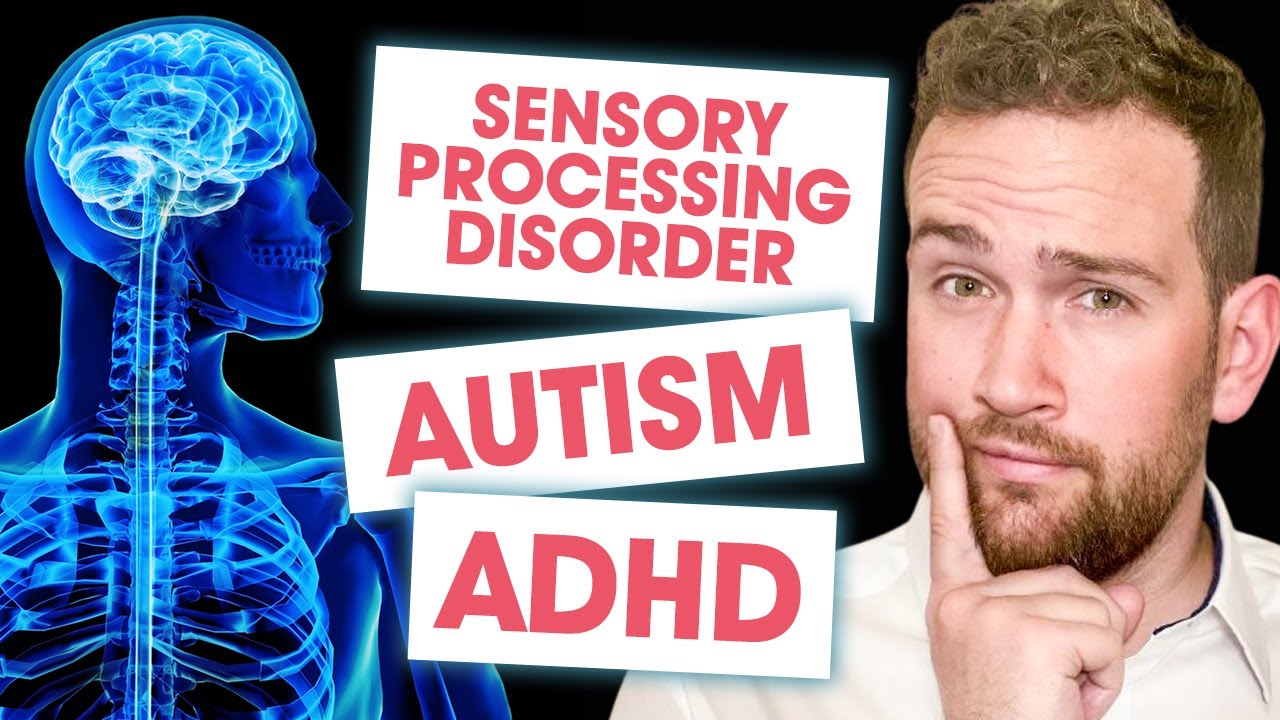
Sensory Processing Disorder vs. Autism: Seven Key Differences
Clinicians weigh sensory differences alongside everything else a child does. This comparison shows how the picture usually differs when sensory challenges stand alone and when they are one part of autism.
| Area | Autism | Sensory differences without autism |
| 1. Diagnostic status | Recognized diagnosis in the DSM-5 | SPD is not a stand-alone DSM-5 diagnosis, so clinicians look for the condition behind the sensory signs |
| 2. Social communication | Differences in back-and-forth interaction, nonverbal communication, and relationships | Social communication usually follows the child’s age and language level |
| 3. Repetitive behavior and routines | Repetitive movements or speech, insistence on sameness, intense interests | Not a defining feature |
| 4. Sensory responses | Over- or under-reactivity to sensory input is one of the recognized criteria | The central concern, often limited to one or two senses |
| 5. When it shows up | Signs usually appear in the first years of life | Sensory reactions can appear at any age and may accompany anxiety, ADHD, or other differences |
| 6. Who evaluates | Developmental pediatrician, psychologist, or another qualified autism evaluator | Pediatrician first, then often an occupational therapist for a sensory-focused assessment |
| 7. Common supports | Communication, play, and daily-living skills, with sensory accommodations built in | Environmental changes and occupational therapy goals tied to daily function |
Use the table as a general map. Real children cross the lines, and only a qualified evaluator can say which description fits yours.
Why the Two Get Confused: Where They Overlap
Families often hear both terms in the same appointment, which adds to the confusion. The overlap is built into how autism is defined.
Sensory features sit inside the autism criteria
The DSM-5 lists hyper- or hyporeactivity to sensory input, or unusual interest in sensory aspects of the environment, as one of four examples of restricted and repetitive behavior. A child needs at least two of the four to meet that part of the criteria. Harvard’s summary of the DSM-5 criteria gives examples such as adverse responses to specific sounds or textures and visual fascination with lights or movement.
That is why sensory differences often lead a family toward an evaluation, and why they are worth describing to the evaluator in detail.
Other conditions can bring sensory differences too
The American Academy of Pediatrics notes that difficulty tolerating or processing sensory information appears in many developmental and behavioral conditions, including autism, ADHD, developmental coordination disorder, and anxiety.
Its 2012 policy statement advises pediatricians not to use sensory processing disorder as a diagnosis and to evaluate for those other conditions instead. If your child’s reactions seem tied to worry, our post on autism and anxiety shows how fear can look like behavior.
Colorado families may meet both viewpoints. The STAR Institute in Greenwood Village is a well-known center that treats and studies sensory processing differences, while pediatric guidance favors identifying the underlying condition. Both can be true at once: sensory differences are real and worth supporting, and the label for them remains debated.
Signs That Point Beyond Sensory Differences
Sensory reactions on their own do not make a child autistic. Clinicians look for what travels with them.
These patterns, alongside sensory differences, are worth raising with your pediatrician:
- Limited back-and-forth play, such as not responding to their name or not sharing interest by pointing or showing a toy
- Delayed speech, or repeated phrases used in place of flexible language
- Strong distress at small changes in routine
- Repetitive movements or lining up toys
- Unusually intense interests
CDC surveillance explains why early questions are worth asking. In CDC’s 2022 monitoring data, about 1 in 31 eight-year-olds across 16 sites were identified with autism, and the median age of earliest known diagnosis was 47 months, even though autism can in certain cases be reliably identified as early as age 1. Colorado is not one of those 16 sites, so the figure is a national snapshot rather than a Colorado count.
How an Autism Evaluation Sorts It Out in Colorado
A developmental evaluation looks at the whole child: language, play, social interaction, flexibility, and sensory responses, drawn from your interview and direct observation.
Through our autism evaluation pathway, we partner with As You Are, and most families are seen within one to two weeks. The process typically involves two to three appointments: a parent interview, an observation, and a results visit.
If you prefer a university clinic, JFK Partners at the University of Colorado Anschutz Medical Campus in Aurora is Colorado’s university center for developmental disabilities. Ask about current availability.
Before any evaluation, gather:
- A short list of sensory reactions with examples, such as which sounds, textures, or places cause distress
- Short phone videos of typical moments
- Notes from daycare or school staff
- Any earlier occupational therapy or speech-language reports
Families in Denver and Aurora can talk with our local teams at any stage. Coverage rules differ: many commercial plans require an autism diagnosis before ABA begins, while families on Health First Colorado may have a referral-based pathway. We verify which applies before you commit to anything.
How ABA and Occupational Therapy Work Together on Sensory Challenges
ABA does not treat sensory processing itself. It teaches skills and adjusts routines so sensory challenges interfere less with daily life, and it works best alongside an occupational therapist (OT) who understands your child’s sensory profile.
CDC notes that behavioral approaches have the most evidence among treatments for autism, with ABA a notable example. For sensory challenges, our team’s role looks like this:
- Teaching a child to ask for a break, a quieter space, or headphones
- Building tolerance gradually, only with your consent and your child’s comfort, such as practicing a haircut routine in small steps
- Changing the environment first, including lighting, noise, and the order of tasks
- Sharing data with your OT and speech-language pathologist so everyone works toward the same goals
On the evidence for sensory-based therapies, the AAP notes that data are limited and advises families and clinicians to set specific goals, timeframes, and measures of success. We hold ourselves to the same standard. If a sensory strategy is not helping your child participate more comfortably, we change it.
Most of our families receive in-home ABA, where we can see sensory triggers in the real kitchen, bathroom, and bedtime routine. For children in child care, daycare-based ABA brings the same approach to circle time, snack time, and transitions.
Families in Lakewood, Arvada, Englewood, Greenwood Village, and Centennial can ask about teams near them. Our approach is neurodiversity-affirming. We do not try to remove a child’s sensory preferences or make them appear neurotypical, and we do not push a child through distress.
Practical Ways to Support Sensory Needs at Home and Out in the Community
You can start supporting your child’s sensory needs before any evaluation is complete. Small changes often make the day smoother for everyone.
- Track triggers for a week. Note the time, place, sound or texture, and what helped.
- Preview the plan. Photos or a simple visual schedule tell your child what is coming.
- Build a sensory toolkit. Headphones, sunglasses, a chewable item, and a favorite fidget cover many situations. Colorado’s bright, high-altitude sun reflecting off snow bothers some children, so sunglasses and hats belong in the winter bag too.
- Use deep-pressure tools with care. Our post on whether weighted blankets help children sleep covers what to know before you try one.
- Look closely at eating. If textures limit the menu, read about food selectivity to see how it differs from typical picky eating.
- Choose gentler outings. Our list of sensory-friendly fall activities shows Colorado options that suit children who get overwhelmed in crowds.
- Plan the exit. Know where the quiet spot is, and leave early when your child’s signals say it is time.
What to Do Next If You Suspect Sensory Processing Disorder or Autism
Start with your pediatrician and a written list of what you see. If sensory differences come with communication or social differences, ask for an autism evaluation instead of waiting. If your child has just been diagnosed, our post on the first 90 days after a diagnosis lays out a sensible order of steps.
Sensory processing disorder vs. autism is a question with a clear route to an answer: observe, evaluate, then build supports around the child you have. Progress takes time, and it looks different for every family.
Talk with us. If you are in the Denver metro or anywhere along the Front Range, call Achieve ABA Therapy Group or start your intake online. Our team will answer your questions, verify your insurance benefits, and explain the next steps.
Frequently Asked Questions
Can a child have sensory processing disorder and autism at the same time?
Sensory differences are common in autism, so many children with autism have sensory challenges. Because sensory processing disorder is not a separate DSM-5 diagnosis, clinicians usually describe sensory needs as part of the autism profile instead of adding a second label.
Is sensory processing disorder a real diagnosis?
Sensory differences are real and can disrupt daily life. As a formal label, sensory processing disorder is not in the DSM-5, and the American Academy of Pediatrics advises against using it as a diagnosis. Evaluation looks for conditions such as autism, ADHD, developmental coordination disorder, or anxiety.
How can I tell whether sensory issues mean autism?
Sensory reactions alone cannot tell you. Autism evaluations look at social communication and repetitive patterns along with sensory responses. If you also see delayed or unusual communication, limited play with others, or a strong need for sameness, ask your pediatrician about an evaluation.
Does ABA help with sensory issues?
ABA can teach communication, coping, and flexibility so sensory challenges disrupt less, and it can adjust routines and environments. It works alongside occupational therapy rather than replacing it. Results vary by child, and we do not promise specific outcomes.
Do I need a diagnosis before starting ABA in Colorado?
For many commercial plans, an autism diagnosis is required for ABA coverage. Families enrolled in Health First Colorado may have a referral-based pathway while the evaluation is pending. Reach out to our team, and we will check which applies.
Sources:
- Centers for Disease Control and Prevention. (2025). Prevalence and early identification of autism spectrum disorder among children aged 4 and 8 years: Autism and Developmental Disabilities Monitoring Network, 16 sites, United States, 2022. https://www.cdc.gov/mmwr/volumes/74/ss/ss7402a1.htm
- American Academy of Pediatrics, Section on Complementary and Integrative Medicine, & Council on Children with Disabilities. (2012). Sensory integration therapies for children with developmental and behavioral disorders. https://doi.org/10.1542/peds.2012-0876
- Harvard Health Publishing. (n.d.). The formal diagnostic criteria for autism. https://adult-autism.health.harvard.edu/resources/the-formal-diagnostic-criteria-for-autism
- National Institute of Mental Health. (n.d.). Autism spectrum disorder. https://www.nimh.nih.gov/health/topics/autism-spectrum-disorders-asd
- Centers for Disease Control and Prevention. (n.d.). Treatment and intervention for autism spectrum disorder. https://www.cdc.gov/autism/treatment/index.html
- Centers for Disease Control and Prevention. (n.d.). Signs and symptoms of autism spectrum disorder. https://www.cdc.gov/autism/signs-symptoms/index.html
- JFK Partners, University of Colorado School of Medicine. (n.d.). About us. https://medschool.cuanschutz.edu/jfk-partners/about-us
- STAR Institute for Sensory Processing. (n.d.). Understanding sensory processing. https://sensoryhealth.org/