

Executive dysfunction and autism often show up together at home: a child who knows how to brush their teeth still stalls at the sink, loses track of the steps, or melts down when the plan changes.
Executive function is the set of mental skills that lets a child plan, start, hold steps in mind, switch gears, and stop one activity to begin another. Research reviews find that people with autism, on average, show differences across these skills, with wide variation from person to person. Executive dysfunction describes how these skills work for a child, and it is not a separate diagnosis.
It also appears in ADHD and anxiety. When everyday tasks feel this hard, the most effective response combines clearer routines, built-in supports, and step-by-step teaching.
Many parents describe the same puzzle: a child who focuses for an hour on a favorite game and then freezes at “time to put your shoes on.” At Achieve ABA Therapy Group, we hear about it often. Here is why it happens, what helps, and how Colorado families can find support at home and at school.
What Executive Dysfunction Means for Children With Autism
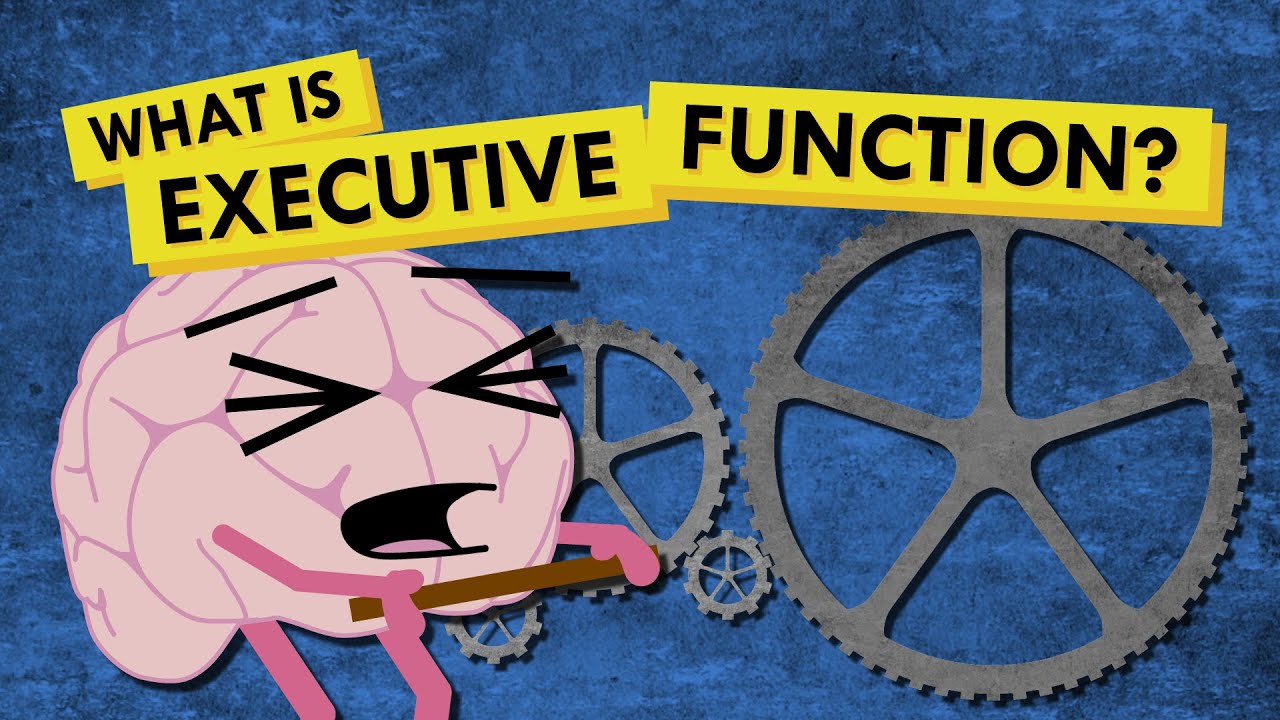
Executive function is often compared to an air traffic control system for the brain. Harvard’s Center on the Developing Child describes executive function as relying on three types of brain function: working memory, mental flexibility, and self-control.
- Working memory: holding the steps of a task in mind while doing them
- Mental flexibility: switching tasks, adjusting to change, and shifting between rules
- Self-control: stopping an impulse, waiting, and starting or stopping on cue
Planning, time awareness, and managing frustration draw on the same skills. Children are not born with them. The Center notes that they develop over time, continuing through the teen years and into early adulthood.
Reviews of the research by Demetriou and colleagues describe executive function differences as common in autism but highly variable from one person to the next. Your child’s own profile counts for more than any average.
Executive dysfunction is a description, not a diagnosis, and it overlaps with ADHD and anxiety. If attention and impulsivity stand out, our post on autism vs. ADHD explains how the two differ, where they overlap, and what it means when a child has both.
Signs of Executive Dysfunction and Autism at Home and School
The signs tend to cluster around a few everyday demands. Look for patterns that repeat across days and settings.
Starting and finishing tasks
- Stalls before beginning, even on tasks the child wants to do
- Starts, then drifts away from the task
- Cannot turn “clean your room” into steps
- Stops at 90 percent and leaves a task unfinished
Switching and flexibility
- Struggles to stop a favorite activity
- Becomes upset when the schedule changes
- Holds tightly to a rule or routine even when it no longer fits
Organization, memory, and time
- Loses belongings or leaves materials at school
- Forgets multistep directions after the first step
- Has trouble judging how long something will take
- Struggles to organize a backpack, desk, or homework
Emotions are tied in. When a task overwhelms working memory, frustration often follows, and the frustration can then look like a behavior problem.
Why Everyday Tasks Feel So Hard
A task that looks simple to an adult may contain dozens of small steps, and each step asks for working memory, planning, and attention.
- Hidden steps. “Get ready for school” includes toileting, clothes, shoes, teeth, backpack, and more, in an order the child must hold in mind.
- Competing demands. Sensory load, worry, and fatigue use up the same mental bandwidth the task needs.
- Hard transitions. Leaving a preferred activity asks a child to disengage, shift attention, and start something new, all at once.
- Context. Skills that appear in a calm room can disappear in a noisy kitchen at 7:30 a.m. That is why we teach in the settings where skills are used.
Willpower is rarely the missing ingredient. The gap sits in planning, holding steps in mind, and shifting attention, and adults can close it with structure.
Nine Ways to Support Executive Function at Home
Pick two or three of these to start. Changing everything at once adds to the overload.
- Use a visual schedule. Pictures or words in order show what comes next, so nothing has to be held in memory. Our post on building a visual schedule shows how to make one your child will use.
- Break tasks into small steps. Turn “get dressed” into a checklist or photo sequence.
- Give transition warnings. Use a five-minute and two-minute heads-up, a visual timer, and a clear “then” activity.
- Make the first step tiny. Start together, and let your child take over as momentum builds.
- Use external reminders. Timers, labeled bins, and phone alarms carry the memory load.
- Reduce the number of instructions. Give one direction at a time and cut extra choices.
- Reinforce starting, not only finishing. A simple token economy can reward the hard first step.
- Offer the least help that works, then fade it. Our post on prompting levels explains how support steps back as skills grow.
- Build in recovery. A movement break, snack, or quiet space after demanding stretches protects energy for the next task.
Executive Function Support at School in Colorado
School stacks executive function demands: packing up, tracking assignments, changing classes, and following group directions.
Under the federal Individuals with Disabilities Education Act (IDEA), schools must identify and evaluate children who may have a disability, and eligible students receive an Individualized Education Program (IEP) with services and supports. The U.S. Department of Education’s IDEA website explains Child Find, evaluations, and IEP steps. In Colorado, you can ask your child’s school or district special education team for an evaluation. PEAK Parent Center, Colorado’s federally designated parent training and information center based in Colorado Springs, offers free guidance on IEPs and 504 plans.
Your home address, not your city name, decides which district runs the evaluation. A Broomfield address, for example, can fall within Boulder Valley, Adams 12 Five Star, Jefferson County, St. Vrain Valley, Brighton 27J, or Weld County districts, so confirm yours early.
Researchers at the University of Colorado’s JFK Partners are comparing two school-based programs for managing anxiety and emotion regulation in students with autism, a reminder that Colorado schools are an active site for this kind of work.
Our school-based ABA team works alongside teachers and IEP teams. Back-to-School ABA builds routines and classroom skills at home before the first bell, and Summer ABA keeps skills steady during the long break. We provide support from Boulder, Broomfield, Westminster, and Thornton on the Front Range to Grand Junction on the Western Slope.
How ABA Builds Independence Across Ages
ABA breaks big skills into teachable steps, which suits executive function challenges well.
- Task analysis and chaining: teaching a routine one step at a time, then linking the steps
- Prompting and prompt fading: giving the least help that works, then reducing it
- Reinforcement: rewarding starting, persisting, and finishing
- Self-management tools: checklists, timers, and self-monitoring that move the job from adult to child
- Planned flexibility practice: small, predictable schedule changes practiced with support
Executive function demands grow in adolescence, when planning, organization, and self-advocacy carry more weight. Our post on ABA for teens covers independence skills beyond the early years. For individuals in group home settings, our group home ABA team works with staff to build consistent routines. Our partnership with the Colorado Neurodiversity Chamber of Commerce keeps us connected to employment-focused practices for neurodivergent adults.
Our approach is neurodiversity-affirming. We do not aim for a child to look neurotypical. We aim for skills that make days easier, and we measure progress against your family’s goals. Results vary, and we do not promise specific outcomes.
Moving Forward With Executive Dysfunction and Autism
Executive dysfunction and autism ask adults to change the setup before asking for more effort. Show the steps, shrink the first one, warn before transitions, and fade help as skills grow. Bring the same picture to your child’s school, so home and classroom pull in the same direction.
Every child builds these skills on their own timeline, and small wins at the kitchen sink or the backpack hook add up over time.
Talk with us. If you are in Boulder, Broomfield, Westminster, Thornton, or anywhere across Colorado, call Achieve ABA Therapy Group at 720-463-9000 or start your intake online. Our team will answer your questions, verify your insurance benefits, and explain next steps. You can also browse our ABA services, read about Achieve ABA, or find your Colorado location.
Frequently Asked Questions
Is executive dysfunction part of autism?
Executive function differences are common in autism but are not part of the diagnostic criteria, and they vary widely from child to child. They also occur in ADHD and other conditions.
What is the difference between executive dysfunction and laziness?
A child with executive function differences often wants to succeed and still stalls. Looking at the skill gap instead of motivation usually leads to better supports.
Can executive function improve?
Executive function skills continue developing into early adulthood, and teaching strategies and supports can help. Progress varies, and no program can promise specific results.
Does ABA help with executive dysfunction?
ABA can teach routines step by step, build independence with prompts that fade, and reinforce starting and finishing tasks, often alongside school supports and other therapies.
How do I request school supports in Colorado?
Contact your child’s school or district special education team to ask for an evaluation, and consider calling PEAK Parent Center for free guidance. Your home address determines which district handles the request.
Sources
- Center on the Developing Child at Harvard University. (2012). InBrief: Executive function. https://developingchild.harvard.edu/resources/inbrief-executive-function/
- Demetriou, E. A., Lampit, A., Quintana, D. S., Naismith, S. L., Song, Y. J. C., Pye, J. E., Hickie, I., & Guastella, A. J. (2018). Autism spectrum disorders: A meta-analysis of executive function. https://doi.org/10.1038/mp.2017.75
- Demetriou, E. A., DeMayo, M. M., & Guastella, A. J. (2019). Executive function in autism spectrum disorder: History, theoretical models, empirical findings, and potential as an endophenotype. https://doi.org/10.3389/fpsyt.2019.00753
- Center on the Developing Child at Harvard University. (n.d.). Enhancing and practicing executive function skills with children from infancy to adolescence. https://developingchild.harvard.edu/wp-content/uploads/2024/10/Enhancing-and-Practicing-Executive-Function-Skills-with-Children-from-Infancy-to-Adolescence-1.pdf
- U.S. Department of Education. (n.d.). Individuals with Disabilities Education Act (IDEA) website. https://sites.ed.gov/idea/
- JFK Partners, University of Colorado School of Medicine. (n.d.). Study comparing approaches of two school-based interventions to manage anxiety in autistic students. https://medschool.cuanschutz.edu/jfk-partners/research/press-release—pcori-fyf-comparison
- PEAK Parent Center. (n.d.). PEAK Parent Center: Colorado’s Parent Training and Information Center. https://www.peakparent.org