
Last reviewed November 2026. This article is general education and is not a diagnosis or a substitute for care from your child’s providers.
AAC for autistic children means giving your child a dependable way to communicate beyond spoken words. Augmentative and alternative communication covers gestures, signs, picture boards, tablet apps, and speech-generating devices. Some children use AAC for a short time, and others use it for life.
Research suggests about 30 percent of children with autism remain minimally verbal even after years of intervention, according to a widely cited review by Tager-Flusberg and Kasari. For those children, waiting for speech to arrive can mean years without a way to say “I want,” “stop,” or “help.”
At Achieve ABA Therapy Group, our ABA services team works alongside families and speech-language pathologists to make AAC part of everyday life. Below you will find the main types of AAC, how to choose one, how to teach it at home, and how to get support in Colorado.
What AAC Means for Autistic Children
AAC is a broad term, and it can feel confusing at first. The National Institute on Deafness and Other Communication Disorders describes AAC devices as tools that help people with communication disorders express themselves, from a simple picture board to a computer program that turns text into speech.
AAC is a range of tools, not one device
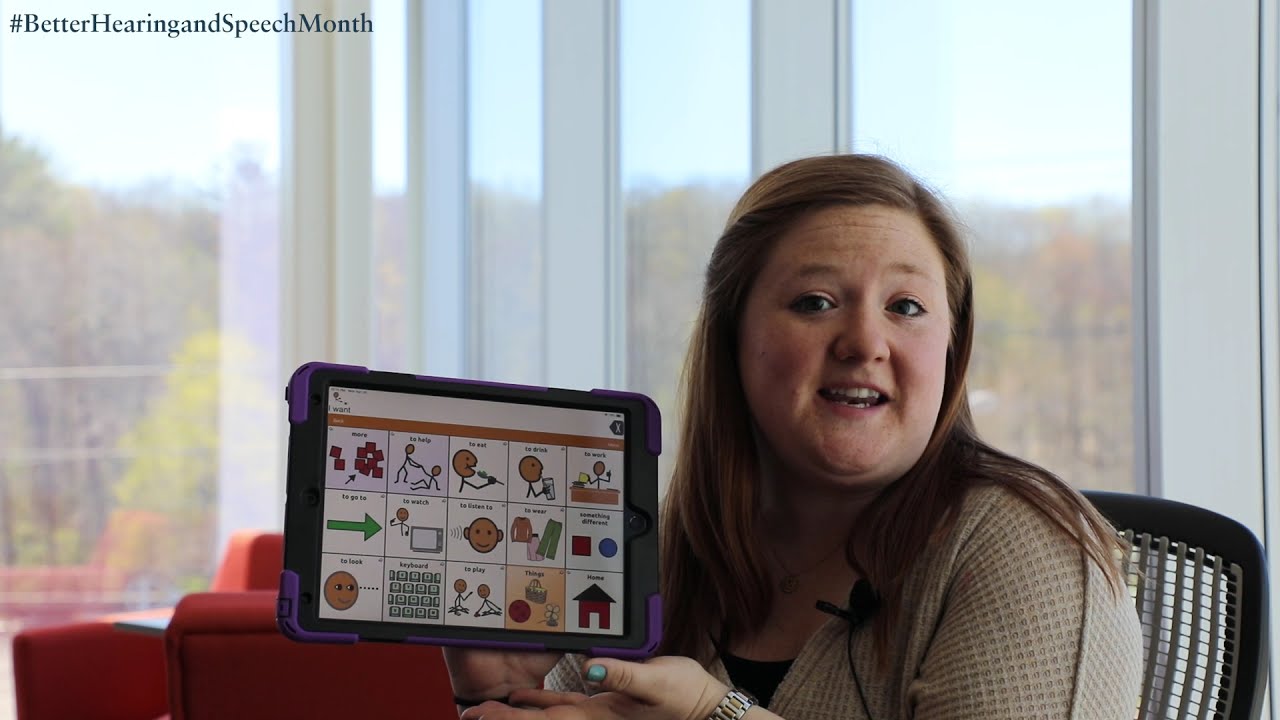
Some AAC needs nothing but your child’s body: gestures, facial expressions, and signs. The American Speech-Language-Hearing Association (ASHA) groups other options as no-tech or low-tech, such as drawing, writing, or pointing to pictures and words, and high-tech, such as a tablet app or a speech-generating device.
Many children use several at once. A child might point to a picture at the table, use a few signs, and tap a tablet at school.
Who can use AAC, and when to start
ASHA reports that research shows AAC helps people of all ages, including children younger than 3, and that no thinking skills, test scores, or milestones are needed first. If your child is not yet using words to meet their needs, it is reasonable to ask about AAC now.
Some children use AAC alongside speech. Others use it as their main voice.
Will AAC stop my child from talking?
This is the most common worry we hear. ASHA says research does not support it. AAC does not stop speech or slow language development, and the research points toward benefits instead.
In our experience, a child who has a reliable way to be understood often has less frustration and more reason to keep communicating. That is true whether the communication is spoken, signed, or typed.
Picture Systems and Low-Tech AAC to Start With
Low-tech systems are often the first step. They are inexpensive, quick to start, and easy to carry. They also teach the key idea behind all AAC: my message gets a response.
Real objects, photos, and choice boards
For a child who is just starting, real objects and photos make good first symbols. A choice board with two pictures, such as juice and milk, lets your child pick at snack time.
Keep the first choices to things your child wants. Respond right away, and give your child what they chose.
Picture exchange
Picture exchange systems teach a child to hand a picture to a communication partner to request something. One well-known program is the Picture Exchange Communication System, or PECS. It is structured in phases and builds from single requests toward longer messages.
It works well for teaching a child to initiate with another person. Its limits are practical: pictures have to be on hand, and a partner has to be present to receive them.
Core word boards
A core board organizes common, flexible words, such as “more,” “stop,” “go,” “help,” “my turn,” “like,” and “not,” in a fixed layout. These words are used in almost every setting, which is why many teams favor them.
Specific words, such as a favorite character or snack, are added as the child shows interest. A consistent layout helps your child learn where each word lives, much like a keyboard.
Sign and gesture
Signs and gestures are AAC, too. They are always with your child and need no equipment. The drawback is that many people do not know them, so a child who signs may still need a picture or device to reach teachers, relatives, and peers.
Speech-Generating Devices and Apps: When a Tablet or Dedicated Device Fits
Speech-generating devices turn words or pictures into spoken output. NIDCD notes that some use prerecorded words, and others can build speech from typed words. Your team may suggest one when a child needs to reach many different listeners with a growing vocabulary.
Tablet apps and dedicated devices
AAC apps run on a standard tablet, which many families already know how to use. A dedicated device is built only for communication and is often sturdier, with a louder speaker and longer battery life.
Each has trade-offs:
- Tablet apps: lower upfront cost and more familiar, but the tablet can be dropped, distract with other apps, or run out of battery.
- Dedicated devices: more durable and purpose-built, but usually more expensive and heavier.
A mount, a case, and a lock that keeps the tablet on the AAC app are worth considering.
Vocabulary and layout
A good system gives your child both a small set of words they can use right away and a path to grow. Many teams begin with a limited set of buttons and expand as your child shows interest.
Try to keep the layout consistent. When buttons move around, children have to relearn where words are.
Access methods
Most children touch the screen. Some need a keyguard, a different button size, or another way to select. ASHA notes that speech-language pathologists work with occupational and physical therapists when a child’s movement affects access.
How to Choose AAC for Your Child
Picking an AAC system is a team decision, and it should start with an evaluation rather than a shopping trip. The best tool is the one your child will use, in the places they need it.
Start with a speech-language pathologist
A speech-language pathologist, or SLP, can help find the right AAC system and teach your child and the people around them how to use it. ASHA points out that not every tool works for every person, which is why trials matter.
Ask about trying a device before buying one. The U.S. Department of Education’s 2024 assistive technology guidance notes that every state has an assistive technology program offering device demonstrations and short-term loans.
Questions to ask during a trial
Bring this list to the evaluation:
- Can my child reach, see, and activate it easily?
- Does it let my child say “no,” “stop,” “all done,” and “I need a break”?
- Can my child take it to school, the car, and the grocery store?
- Does it include words about my child’s favorite people, foods, and activities?
- Who will program it and teach us to use it?
Protest and break words deserve a place on the first page. A child who can say “no” safely has less reason to shout it.
Let your child’s interests lead
Children learn to communicate about what they care about. If your child loves trains, include train words. If bath time is a favorite, include “splash” and “more water.”
Teaching AAC at Home and in Therapy
The tool is only part of the picture. The people around your child do most of the teaching, and they teach best by using AAC themselves.
Model it yourself
Modeling means pointing to the symbols or buttons for key words as you speak, without asking your child to respond. If you say “more juice,” you tap “more” and “juice.” Your child watches you use the tool in a real moment.
Keep your models short and tied to what is happening. Try it at snack, bath, and play. Children see the system used, and over time they try it themselves.
Make communication worth it
Respond to every attempt, even if it is messy. Pause longer than feels comfortable, and give your child time to find the word. Then follow through with what they asked for.
If your child presses “juice,” give juice. If they press “stop,” stop when it is safe. When communication works, children do more of it.
Teach requests, protests, and breaks
Many challenging behaviors, such as grabbing, yelling, or throwing, are a child’s way of saying something. In ABA, differential reinforcement rewards a helpful communication response while the behavior that caused trouble earns little or nothing.
A “break” button is a classic example. Teach it during calm moments, honor it quickly, and your child learns that asking works better than melting down.
Keep it available all day
Keep AAC within reach, at school, at home, and in the community. Never use it as a reward or take it away as a consequence. It is your child’s voice.
AAC, ABA, and Speech Therapy Working Together
The strongest teams combine skills. An SLP leads on choosing and designing the system, and a behavior analyst helps build everyday use around it. Parents and teachers practice alongside both.
What ABA adds
ABA looks closely at when and why a child communicates. Our team builds teaching opportunities into routines such as meals, play, and bedtime, tracks how often your child uses AAC, and reinforces every attempt.
We also care about how therapy feels for the child. Neurodiversity-affirming ABA gives a child a real voice in therapy, and it starts with presuming your child is capable of communicating.
If you are still sorting out the cause of delayed speech
AAC does not require a diagnosis, and it can begin while you are still gathering information. If you are wondering whether your child’s late talking points to autism, our post on telling speech delay from autism covers the signs and where to start in Colorado.
If you have questions about an evaluation, our diagnosis page explains the process.
Where AAC support can happen
AAC use grows when it is practiced where your child spends their day. We support families in several settings:
- In-home ABA, where mealtime and bedtime routines become practice
- Early intervention ABA for children under six
- School-based ABA, working with teachers and IEP teams
- Daycare-based ABA, alongside staff during play and snack
- Weekend ABA for families who need Saturday or Sunday options
- Parent training, so you can model AAC between sessions
- Group home ABA, supporting older individuals and their care staff
Availability varies by location, so contact us to confirm what is offered near you.
Getting AAC in Colorado: Schools, Early Intervention, and Funding
Access to AAC in Colorado depends on your child’s age. Knowing which door to knock on first can save weeks.
Birth to age 3: early intervention
Early Intervention Colorado is the state’s program for infants and toddlers. According to the U.S. Department of Education, assistive technology devices and services, including AAC, can be provided as an early intervention service when the child’s team determines they are needed, with costs depending on the state’s payment system.
You do not need a diagnosis to ask for an evaluation.
School age: the IEP and SWAAAC
For children with an IEP, the Department of Education guidance says the IEP team must consider whether a child needs assistive technology at every IEP development, review, or revision. If the team decides it is needed for a free appropriate public education, the school district must provide and fund it, and the team must consider training for the child, family, and staff.
In Colorado, the Colorado Department of Education funds SWAAAC teams, a statewide assistive technology and AAC program managed by the Center for Innovative Design and Engineering at CU Denver. Boulder Valley, Douglas County, and Adams 12 all describe assistive technology teams on their school district websites.
A practical step is to ask in writing, before the IEP meeting, that the team consider assistive technology and AAC.
Medicaid and insurance
ASHA notes that some AAC tools are covered by insurance and some are not. Your SLP can help you understand your options and what documentation a plan may require.
In Denver, a University of Colorado Boulder grant project assessed students and procured AAC systems through Medicaid for 12 students at charter schools. Coverage depends on the plan and the child, so check with your insurer.
Coverage for ABA is a separate question from coverage for a device. Our insurance page explains how we work with plans on ABA services.
Common AAC Concerns Parents Raise
Most families have the same few worries when they start. They are all reasonable, and each one has a plan.
My child just presses buttons
Early exploration is normal. Many children press buttons to hear the sound before they learn what the words mean. Keep modeling, keep responding, and let your child play with it.
People at school or at home will not use it
AAC works when partners use it. Ask your SLP or ABA team to train the adults in your child’s day, and write the system into the IEP if your child has one.
My child stopped using it
A drop in use is information. Revisit vocabulary, access, and motivation with your team. The Department of Education guidance says that when a child does not want to use an assistive technology device, the IEP team should work with the child to understand and address the root cause.
Support for Families Across Colorado
Achieve ABA Therapy Group serves families throughout the state. That includes Lakewood, Arvada, Centennial, Greeley, and Castle Rock.
See every area we serve on our locations page.
AAC for Autistic Children: Starting Now Gives Your Child a Voice
AAC for autistic children is not a last resort and not a replacement for speech. It is a way for your child to be understood today while spoken language, if it comes, keeps developing.
You do not have to pick the perfect system on day one. Start with a few meaningful words, model them often, and respond to every attempt. Progress looks different for every child, and no provider can promise a specific outcome.
When you are ready to talk it through, complete our intake form and tell us how your child communicates now. We will help you sort out next steps with your child’s speech-language pathologist.
Frequently Asked Questions About AAC and Autism
Will AAC stop my child from talking?
No. ASHA says research shows AAC does not stop speech or slow language development, and it can help. Many children use AAC alongside speech.
What age can an autistic child start AAC?
There is no required age. ASHA notes that AAC helps people of all ages, including children under 3, and that no skills or milestones are needed first.
Do we need a diagnosis or ABA before starting AAC?
No. You can ask a speech-language pathologist about AAC at any time. ABA through insurance generally requires an autism diagnosis, but AAC does not.
Who decides which AAC system is right?
A speech-language pathologist usually leads, working with you, your child’s teachers, and other therapists. Trials of different systems help show what your child can use.
Who pays for an AAC device in Colorado?
It depends on your child’s situation. If an IEP team decides a device is needed for school, the district must provide it. Medicaid or private insurance may cover some devices, and your SLP can help you understand options.
Sources
- National Institute on Deafness and Other Communication Disorders. (2019). Assistive devices for people with hearing, voice, speech, or language disorders. https://www.nidcd.nih.gov/health/assistive-devices-people-hearing-voice-speech-or-language-disorders
- American Speech-Language-Hearing Association. (n.d.). Augmentative and alternative communication (AAC). https://www.asha.org/public/speech/disorders/aac/
- U.S. Department of Education. (2024). Myths and facts surrounding assistive technology devices and services. https://sites.ed.gov/idea/idea-files/at-guidance/
- Caywood, E. (2025). Opening conversations: Empowering youth with complex communication needs. University of Colorado Boulder, Office for Outreach and Community Engagement. https://www.colorado.edu/oce/2025/05/19/opening-conversations-empowering-youth-complex-communication-needs
- Tager-Flusberg, H., & Kasari, C. (2013). Minimally verbal school-aged children with autism spectrum disorder: The neglected end of the spectrum. Autism Research, 6(6). https://pmc.ncbi.nlm.nih.gov/articles/PMC3869868
- University of Colorado Denver, Center for Innovative Design and Engineering. (2026). Powering educational access across Colorado. https://www.ucdenver.edu/center-for-innovative-design-and-engineering/CIDE-about-us/cide-communicator-enewsletter/article/cide-news/powering-educational-access-across-colorado
Written by Aisha Rahman, BCBA, Communication & AAC Specialist. Aisha helps nonspeaking and minimally speaking children find reliable ways to be understood, from picture systems to speech-generating devices, always centered on what each child most wants to say.