

Twelve minutes in a salon chair. Twenty minutes at the dentist. Maybe half an hour at the pediatrician’s office. For most families, that is nothing. For a lot of the autistic kids we see at Achieve ABA Therapy Group, those short appointments are some of the hardest parts of the whole month.
The same handful of stories come up on repeat: the clippers set off a meltdown before the stylist ever picks up the scissors, the dentist’s chair turns into a wrestling match, a routine checkup ends in tears before anyone gets near the exam table. Getting through an autism haircut, a dental visit, or a doctor’s appointment means asking a child’s nervous system to sit still through noise, touch, bright light, and a stranger’s hands, all at once. That is a real ask, and it has nothing to do with willpower or bad behavior.
We’re a Colorado ABA therapy provider, and appointment prep like this comes up in session more than people expect. Here is what actually works with the kids and families we support, from Denver to the Western Slope: how to prepare, what to bring, and which small adjustments make the biggest difference at the salon, the dental office, and the pediatrician’s.
Why These Ordinary Appointments Overwhelm an Autistic Nervous System
Haircuts, dental visits, and checkups share a few features that make them uniquely hard for autistic kids: unpredictable sensory input, physical touch from a near stranger, and very little control over what happens next. Understanding why an appointment is hard is usually the first step toward making it easier.
The Sensory Load Adds Up Fast
A salon chair alone brings buzzing clippers, cold metal against the neck, loose hair on bare skin, and a mirror reflecting a room full of strangers. A dental office adds the smell of fluoride, a bright overhead light, and instruments in the mouth. A pediatrician’s office adds a paper gown, a cold stethoscope, and the sting of a shot.
According to the Centers for Disease Control and Prevention, autism affects roughly 1 in 31 eight-year-old children nationally, and sensory differences, such as strong reactions to certain sounds, textures, or lights, are among the diagnostic features clinicians look for. Colorado ran its own piece of that national picture for years: JFK Partners at CU Anschutz partnered with the state on local autism monitoring across the seven-county Denver metro area before that effort folded into the national network. None of these appointments were designed with a sensory-sensitive nervous system in mind.
Predictability Is the Missing Piece
Autistic kids tend to do best when they know what is coming next. A haircut or a checkup breaks that pattern every time: new place, unfamiliar schedule, an adult the child may have never met. In our sessions, we regularly see kids who can sit calmly through a fire drill they have rehearsed but fall apart at an unannounced knock on the door.
It is the same reason bedtime routine transitions can unravel a whole evening when the pattern breaks. The appointments in this blog are not hard because a child is being difficult. They are hard because they are unpredictable, and predictability is exactly what autistic brains are built to want.
A Toolbox That Works Across All Three Appointments
The strategies that help at the salon are close cousins of the ones that help at the dentist and the doctor’s office. Once a family builds this toolbox, it gets reused and refined for every new appointment instead of reinvented from scratch each time.
Social Stories and Visual Schedules
A social story is a short, literal walkthrough of what will happen, step by step, told from the child’s point of view. Read it a few times in the days before the appointment, not just the morning of. Pair it with a visual schedule so the child can see the sequence (arrive, wait, sit in the chair, appointment happens, all done, reward) and physically mark off each step. We have written more about building a visual schedule guide kids will actually use; the same format works just as well for a trip to the salon as it does for a morning routine at home.
Practicing in Small, Low-Stakes Steps
Trying to complete an entire haircut, cleaning, or exam cold is rarely the fastest path to success. Breaking the appointment into small, practiced pieces first (tolerating a cape, holding a toothbrush, sitting in a waiting room) tends to get families further, faster. A few short, low-pressure practice runs at home usually beat one long, high-stakes appointment.
Packing a Sensory Kit
- Noise-reducing headphones or soft earplugs
- A favorite small fidget or chew tool
- A weighted lap pad or comfort item from home
- A tablet or phone loaded with a preferred show
- A small snack or reward saved for right after
The goal is not to eliminate every sensory input in the room. It is to give the child something familiar to hold onto while everything else is new.
Getting Ready for an Autism Haircut
An autism haircut is often the very first sensory hurdle a family runs into, sometimes years before dental visits or doctor appointments become a struggle, simply because haircuts start early and happen often.
Picking the Right Stylist and Time Slot
Book the first or last appointment of the day, when the salon is quietest and the stylist is not running behind. Call ahead and ask directly whether anyone on staff has experience with sensory-sensitive kids; many stylists are glad to slow down or skip the blow dryer if you simply ask. A consistent stylist, seen every time, removes one more unknown from the visit.
What to Bring to the Chair
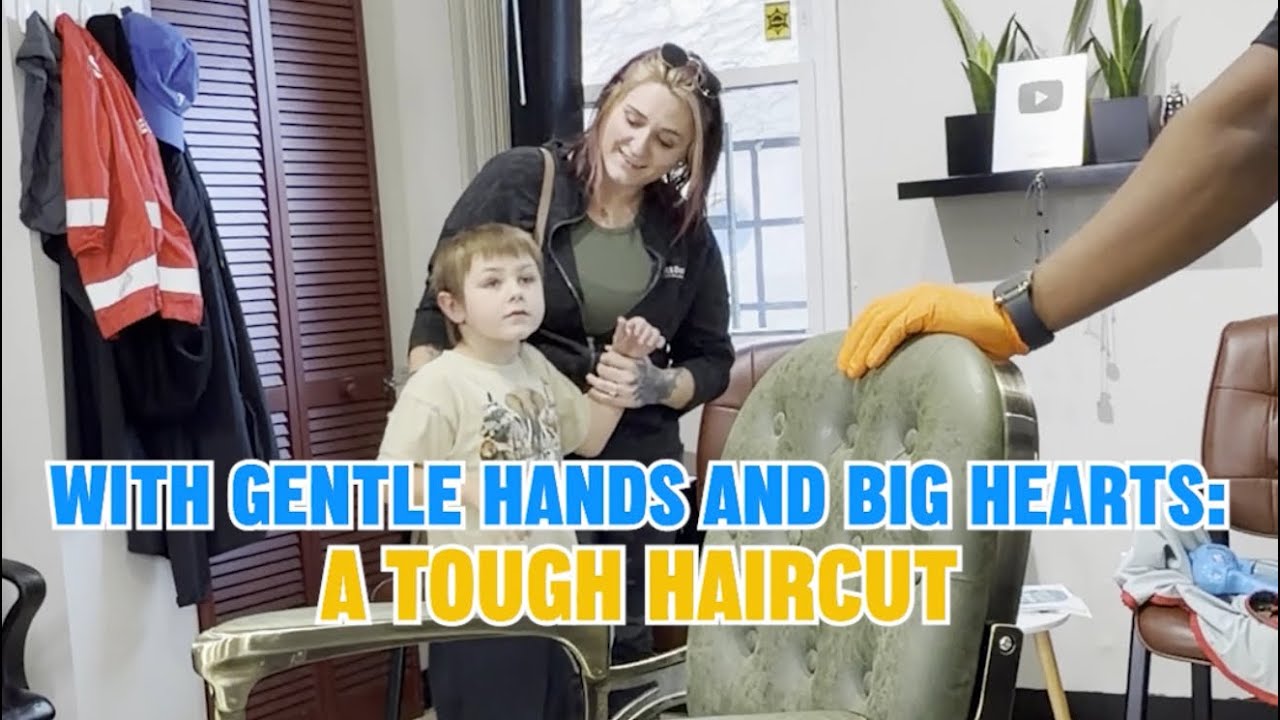
A cape with the tag cut off (or worn inside out), the child’s own towel, and a pair of child-safe noise-reducing headphones solve a surprising number of haircut struggles on their own. If clipper noise is the main trigger, ask the stylist to demonstrate the clippers away from the child’s head first, then switch to scissors if that is what the child tolerates better.
When to Start Practicing at Home
For kids who bolt the moment they see a cape, practice at home first. Brushing hair daily, wearing a cape while watching a show, letting the child hold a comb: these small, repeated exposures build tolerance before the real appointment. One family we currently support in the Aurora area spent about four weeks practicing cape-wearing and comb strokes at home before their child’s first successful salon visit. That is a realistic timeline, not a fast fix, and it is worth planning for.
What Helps at the Dentist
Dental care carries real stakes. Children with autism are more likely to develop cavities and gum disease, partly because brushing itself can be a sensory struggle and partly because avoided appointments mean small problems go untreated. Pediatric dentistry has specific, published guidance for exactly this situation.
What the Guidelines Recommend
The American Academy of Pediatric Dentistry recommends nonpharmacological behavior guidance first for kids with sensory sensitivities: Tell-Show-Do (explain, demonstrate, then perform), sensory-adapted environments, and picture-based communication, reserving sedation for situations where those approaches are not enough.
Ask your dentist’s office directly whether they offer a sensory-adapted appointment, such as dimmed lights, a weighted blanket, noise-reducing headphones, or a slower Tell-Show-Do pace. More Colorado pediatric dental offices are adding these options every year.
Before You Walk In
Call the office ahead of time and describe your child’s specific triggers rather than a general “sensory issues.” Ask whether you can schedule a short, no-treatment meet-and-greet visit first, just to sit in the chair and meet the hygienist. Bring your own toothbrush and toothpaste if flavor or texture is a known trigger; the same oral food selectivity patterns that show up at mealtimes often show up at the sink too.
If a Typical Cleaning Is Not Realistic Yet
Some children need more support than a standard cleaning can offer, and that is not a failure on the family’s part. Sedation dentistry and hospital-based dental care exist for exactly this reason, and a pediatric dentist can walk you through whether either option fits your child.
Doctor Visits Without the Meltdown
Well-child checkups, sick visits, and school physicals bring a different mix of triggers: cold instruments, unfamiliar touch, and needles. A growing number of Colorado pediatric practices have started making small, low-cost changes that go a long way.
What We’re Seeing Colorado Pediatricians Do Differently
Developmental Pediatrics at Children’s Hospital Colorado has worked directly with Denver-area pediatricians on adjustments like offering a sensory bin (fidgets, a weighted blanket) to every patient at check-in, dimming exam room lights on request, and letting a child hold and explore the stethoscope before it touches their skin. None of this requires a special program. Most practices will do it if you simply ask when you schedule.
Getting Ready for Shots and Exams
Bring a comfort item, request the first appointment slot of the day, and ask whether the practice offers numbing cream before vaccines. A short countdown (“three more seconds and then we’re done”) tends to help more than a surprise.
If your child has a diagnosis on file and is still not getting accommodations that help, ask your pediatrician for a referral to a developmental specialist for a closer look.
Before the Back-to-School Physical
School physicals tend to land during the single busiest, most sensory-loaded weeks of the year. If your child’s fall routine is already shaky, our back-to-school ABA support builds classroom-ready routines before the first bell, which tends to make the physical itself less of a flashpoint too.
How ABA Therapy Ties Into All of This
None of the strategies above are unique to Achieve ABA Therapy Group, but they come directly out of the same clinical toolbox we use in our ABA services every session, which is why appointment prep tends to fold naturally into a child’s regular goals with us. Curious what a typical session actually looks like? Our how it works page walks through the process.
Task Analysis: One Big Ask Broken Into Small Steps
Task analysis, breaking a big skill into its smallest teachable parts, is a core ABA technique, and it maps almost perfectly onto haircuts, dental visits, and doctor appointments.
Instead of “sit still for the whole exam,” a task analysis might look like: walk in, sit on the table, tolerate the stethoscope, tolerate the ear check, tolerate the throat check, all done. Each step gets practiced and reinforced on its own before they are chained together.
Parent Training Between Appointments
You are the one holding your child’s hand in that chair, not us, which is a big part of why parent training is built into how we work.
We walk families through exactly how to run a practice session at home, how to read early signs of overwhelm, and how to reinforce the small wins that add up to a calmer appointment. It is the same kind of between-session home practice that carries over into every other goal a child is working on.
Skills That Travel: Home, School, and Beyond
A child who can tolerate a haircut at home still has to generalize that skill to an unfamiliar salon chair, which is part of why we build practice into whatever setting a child spends the most time in: school-based support, daycare routines, or early intervention for children under six who are just beginning to build these skills.
For families juggling school-week schedules, weekend sessions keep practice consistent without pulling a child out of class. For older individuals in group home settings, the same appointment-prep skills carry forward into adult life.
Two Things Worth Doing Before Your Next Appointment
A little groundwork before you ever walk in the door saves everyone time, the provider included. These are the two steps we tell Colorado families to prioritize first.
Build a One-Page Cheat Sheet for New Providers
A single page beats a rushed phone call every time. List your child’s name, their main triggers (clipper noise, bright lights, unexpected touch), what actually calms them (headphones, a specific toy, counting out loud), and two or three words or phrases they respond to best. Hand it to the receptionist at check-in, or email it ahead of the appointment if the office allows it.
We help families put these together all the time, and it tends to save the first five awkward minutes of any new appointment, the part where a provider is still guessing at what your child needs.
Getting an Evaluation Without a Long Wait
If your child has not been formally diagnosed yet and you are not sure whether what you are seeing at the salon or the doctor’s office is sensory, behavioral, or something else entirely, our diagnostic evaluation process is built to move quickly. Most families are seen within one to two weeks, not months.
Support Across Colorado, Wherever You’re Starting From
We currently work with families across the Front Range and beyond, delivering in-home ABA wherever a child spends their day, from kitchen tables to daycare drop-off lines.
That includes families in Denver, Aurora, Lakewood, Thornton, Arvada, Westminster, Centennial, Parker, and Castle Rock, along with the northern corridor around Fort Collins, Greeley, Longmont, and Loveland.
We are also working with families near Boulder, Broomfield, Colorado Springs, Pueblo, and Englewood regularly.
If your family is working through this in Colorado and wants a hand building that practice into your child’s routine, we are here. Contact our team to talk through what your child needs.
Frequently Asked Questions
How long does it usually take before a haircut, dental visit, or checkup gets easier?
It varies by child. Some families notice a difference after two or three practiced attempts. Others need a few months of small, consistent exposure. Consistency tends to matter more than speed.
What if my child’s stylist or dentist won’t slow down or make adjustments?
Look for another provider. A growing number of Colorado salons, dental offices, and pediatric practices are willing to accommodate sensory needs, and a provider who is receptive from the first phone call is usually worth the extra search.
Is it normal for a child to need the exact same routine every single time?
Yes. Predictability is doing real work here, not just habit. Once an appointment becomes reliably calm, families can start introducing small, planned variations.
Do I need a formal autism diagnosis before trying these strategies?
No. Visual schedules, social stories, and sensory kits help many kids, diagnosed or not. A diagnosis can open the door to funded services like ABA therapy and EPSDT dental benefits, but you do not need one to start preparing for an appointment differently.
Can ABA therapy actually help with something as specific as a haircut?
Yes, and it is one of the more concrete, quick-to-see-progress goals families bring to us. Task analysis, reinforcement, and generalization training, the core building blocks of ABA, apply directly to appointments like these.
What should I tell the stylist, dentist, or doctor’s office ahead of time?
Be specific rather than general. Instead of “sensory issues,” say “the sound of clippers is the main trigger” or “she needs to see the tool before it touches her.” Specific information gives the provider something concrete to work with.
Sources:
- Centers for Disease Control and Prevention. (2025). Data and statistics on autism spectrum disorder. https://www.cdc.gov/autism/data-research/index.html
- Colorado Department of Public Health and Environment. (2026). Colorado Autism and Developmental Disabilities Monitoring (ADDM) Project. https://cdphe.colorado.gov/registries-and-vital-statistics/birth-defects/colorado-autism-and-developmental-disabilities
- American Academy of Pediatric Dentistry. (2023). Behavior guidance for the pediatric dental patient. https://www.aapd.org/research/oral-health-policies–recommendations/behavior-guidance-for-the-pediatric-dental-patient/
- University of Washington School of Dentistry. Oral health: Children with autism, key insights for dentists. https://dental.washington.edu/dept-oral-med/special-needs/autism-dental-professionals-treating-children/
- Children’s Hospital Colorado. Supporting autistic pediatric patients. https://www.childrenscolorado.org/doctors-and-departments/departments/psych/mental-health-professional-resources/primary-care-articles/supporting-autistic-pediatric-patients/
- University of Colorado Anschutz Medical Campus, JFK Partners. Welcome to JFK Partners. https://medschool.cuanschutz.edu/jfk-partners
- Colorado Department of Public Health and Environment. Autism spectrum disorder (ASD). https://cdphe.colorado.gov/autism-spectrum-disorder-asd