


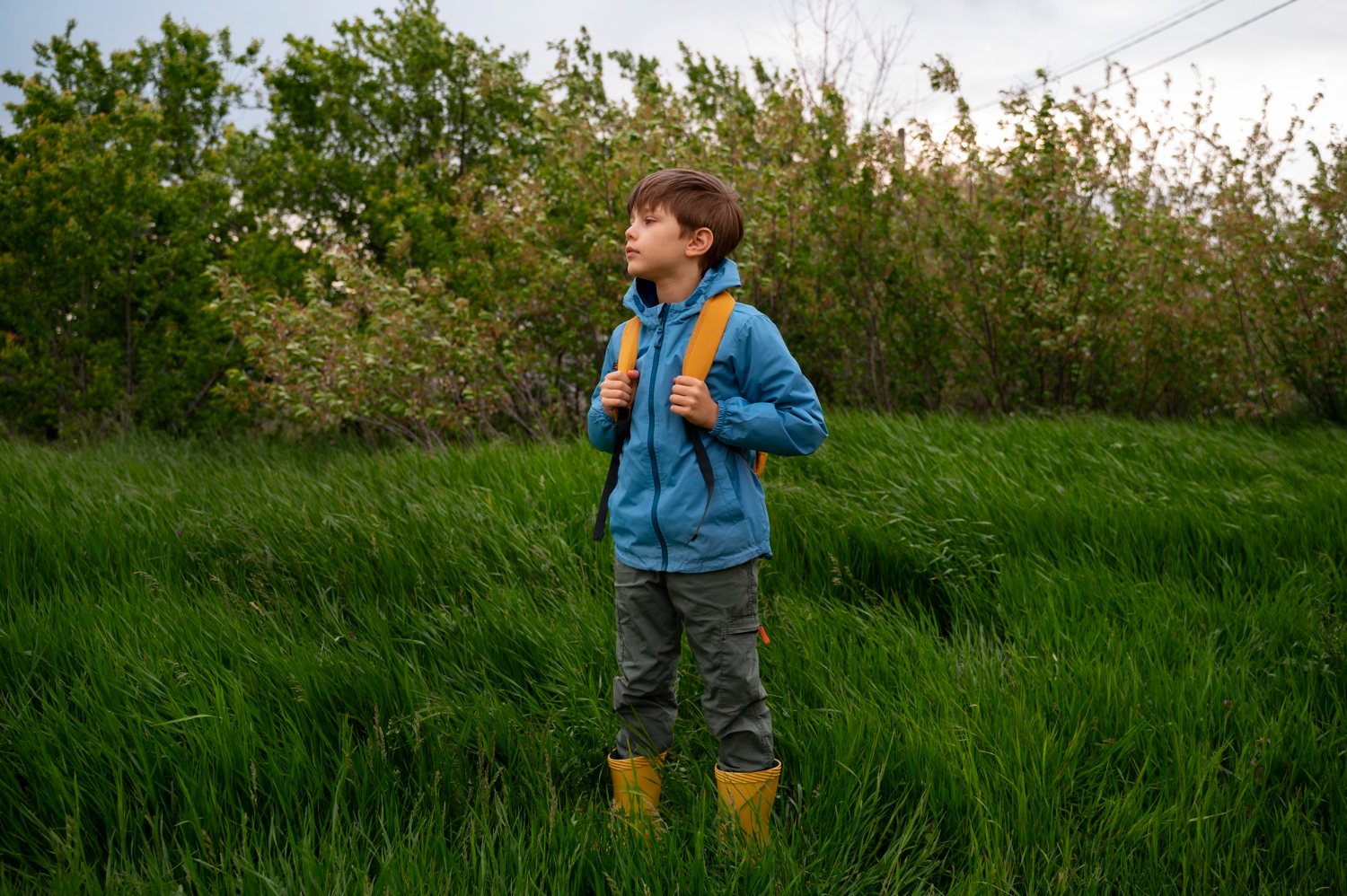
I still remember the first time a family in Greeley called me in a panic because their son had slipped out the back door while everyone was busy with dinner. He was found twenty minutes later, three houses down, standing at the edge of a neighbor’s koi pond. Nothing happened to him that day. But the fear on his mother’s face stayed with me, and it’s a big part of why I take autism elopement so seriously in every home I work in.
Elopement, sometimes called wandering or bolting, is one of the most common and most frightening safety issues autism parents face. It isn’t about a child being naughty or a parent not paying attention. It’s a behavior with real, identifiable causes, and once you understand those causes, you can build a plan that actually reduces the risk.
That’s what we’re going to walk through here: why kids run, what the research says about how often it happens, and the concrete steps that help keep your child safe.
Elopement in Autism
Every parent has had a moment where a toddler darted away in a parking lot. Elopement in the context of autism is a different, more persistent pattern, and it’s worth being precise about what separates the two.
How It Differs From Ordinary Wandering
A typical toddler who runs off usually responds to their name, understands “stop,” and eventually tires of the game. Many autistic children who elope don’t have reliable safety awareness yet. They may not turn around when called, may not recognize a busy street as dangerous, and may not be able to tell a stranger their name or address if they’re found.
That combination of speed, an unclear sense of danger, and limited communication is what makes elopement a distinct safety concern rather than ordinary childhood mischief.
Where Children Most Often Go
In my case notes over the years, a handful of destinations come up again and again: water (pools, ponds, retention basins), a favorite spot the child associates with comfort, or simply an open door with no particular destination in mind at all.
Some children leave home or a classroom; others slip away during a fire drill, a crowded store, or a school diagnosis evaluation day when a routine is disrupted. Knowing your own child’s pattern, the time of day, the trigger, the direction they tend to head, is one of the most useful things a family can track.
Why Autistic Children Run
Elopement almost always serves a purpose for the child, even when it looks impulsive from the outside. Understanding the function behind the behavior is what turns a vague worry into a workable plan.
Sensory Pull and Escape
Some children run toward something: moving water, traffic lights, open space, the hum of a highway. Others run away from something: a loud cafeteria, a scratchy tag, a demand they don’t want to meet. Both patterns are forms of communication. A child who bolts from a noisy room is telling you something just as clearly as a child who signs “all done,” even if we haven’t taught them a safer way to say it yet.
Gaps in Functional Communication
When a child doesn’t yet have a reliable way to ask for a break, express discomfort, or say “I want to go home,” elopement can become the fastest available option. This is one of the clearest links between communication delays and safety risk, and it’s why we treat communication goals as safety goals, not just academic ones, in early intervention work with our youngest clients at Achieve ABA Therapy Group.
Fixations, Routines, and Special Interests
A child fascinated by trains, elevators, or a particular fence line may bolt directly toward that interest without any warning sign a caregiver would normally catch. Disruptions to a routine, an unexpected substitute teacher, a canceled outing, a change in the drive home, can also trigger elopement as the child tries to restore something familiar.
What the Research Tells Us About Autism Elopement Risk
Talking with a new family, I try to be honest about the numbers, because minimizing them doesn’t help anyone plan. The research on autism elopement is more substantial than most parents realize, and it points clearly toward where prevention should focus.
How Common is Elopement?
The CDC reports that about half of children and youth with autism spectrum disorder have been reported to wander, and of those, roughly one in four were missing long enough to cause real concern.
The largest study on the subject, conducted by the Interactive Autism Network and published in Pediatrics, found that 49 percent of children with autism had attempted to elope after age four, and of those who tried, 53 percent went missing long enough to cause concern.
That same research found children eloped most often from their own home or someone else’s home, followed by stores and school or classroom settings.
Where the Real Danger Concentrates
The consequences are what make this such an urgent topic rather than a mild inconvenience. Among children who went missing, close calls with traffic injury were reported for 65 percent of families, and drowning remains the single greatest danger. We wrote more about that specific risk, and how to reduce it, in our guide to water safety and swimming for autistic children, which is worth reading alongside this one if your child is drawn to pools, ponds, or open water the way so many of the kids I work with are.
Beyond the physical danger, elopement takes a real toll on families. In the IAN study, 62 percent of parents of children who eloped said that fear of wandering had kept them from enjoying or attending activities outside the home. I hear a version of that from Colorado families constantly, birthday parties skipped, trips to the mountains postponed, front doors triple-checked before bed. It’s a heavy, exhausting kind of vigilance, and it’s one of the reasons a real plan matters more than sheer willpower.
Building a Layered Safety Plan at Home
No single tool prevents elopement on its own. The families who worry least are the ones who’ve built several layers of protection, so that if one fails, another one catches the gap.
Securing Doors, Windows, and the Yard
Start with the exits your child actually uses. Practical steps that come up often in my visits with families include:
- Locks placed well above or below your child’s typical reach on exterior doors
- Door and window alarms, including a chime that alerts you the moment a door opens
- Self-closing, self-latching fencing around the yard, and secured gates near any pool
- A visual or physical cue on the door your child associates most with leaving
If you’re just starting in-home services and wondering how much you need to change about your house first, our post on preparing your home for in-home ABA therapy covers the same kind of practical, low-effort setup, and much of it overlaps with elopement-proofing.
Identification and Tracking Tools
A simple ID bracelet with your child’s name and a contact number is a good baseline, but for children with a real history of eloping, a tracking device adds another layer. In Colorado, Project Lifesaver is administered through the Colorado Bureau of Investigation and local law enforcement agencies statewide, and it equips enrolled individuals with a personal transmitter that first responders can locate quickly if a search becomes necessary. It isn’t a substitute for supervision, but it’s a meaningful backstop.
Looping In Neighbors, School, and First Responders
Families in Colorado Springs and Pueblo have told me how much it helped simply to introduce their child to a few trusted neighbors and let them know what to do if they ever saw the child alone outside. The same goes for schools. A written safety plan attached to your child’s IEP, shared with the classroom team and included in school-based ABA support when we’re on campus, means adults who spend hours a day with your child know exactly what to watch for and how to respond.
How ABA Gets at the Root of Elopement
Locks and alarms manage risk from the outside. ABA therapy works from the inside, addressing why a child runs in the first place, so the behavior becomes less likely rather than just harder to act on.
Starting With a Functional Behavior Assessment
Before we write any plan, we look closely at when elopement happens, what came right before it, and what happened right after. Does it cluster around transitions? Loud environments? A specific demand? A functional behavior assessment turns a scary, unpredictable behavior into a pattern we can actually work with, and it’s the same clinical process we use across our in-home ABA therapy sessions for any challenging behavior, not just elopement.
Teaching Communication as a Safer Alternative
Once we understand the function, we teach a replacement the child can use instead. A child who runs to escape a loud room can be taught to request a break. A child who bolts toward a favorite spot can be taught to ask to go there, and to wait for a yes. This only works when the new skill is genuinely faster and easier for the child than running, which is why we build it carefully rather than expecting it to stick after a single lesson.
Building Tolerance for Transitions and Waiting
For kids whose elopement is tied to routine disruptions, we work on tolerating small changes in a low-stakes way long before it’s tested in a parking lot. Visual schedules, countdown timers, and practiced “wait” routines all reduce the sudden, overwhelming feeling that often precedes a bolt. Parents are part of every step of this.
We coach these same strategies directly during parent training sessions so the skills your child builds with us hold up at home, at a cousin’s birthday party, or in line at the grocery store, not just during a scheduled session.
Resources Colorado Families Can Lean On
Elopement prevention works best as a team effort, and Colorado families have more support available than many realize.
State and Local Safety Programs
Beyond Project Lifesaver, it’s worth talking to your local police department directly. Many Colorado agencies keep a voluntary file on residents prone to wandering, including a description and photo, so that if a call comes in, officers already have information that would otherwise take precious minutes to gather. If elopement risk is part of what’s driving your family’s need for extra support, our post on Colorado Medicaid waivers walks through programs that can help fund tracking devices, respite care, and additional services beyond standard therapy hours.
Where Our Services Fit Into a Safety Plan
Elopement risk doesn’t stay confined to a school year or a single setting, which is part of why we offer coverage across the calendar and across environments. Families juggling summer breaks often see wandering spike once the regular school routine disappears, so we built summer ABA therapy specifically to keep safety skills and structure in place when the days get less predictable.
For younger children not yet in school full time, our daycare-based ABA therapy puts the same safety-focused strategies to work wherever your child spends the day. And if weekday scheduling doesn’t fit your family, weekend ABA therapy keeps that consistency going.
For older teens and young adults who need more structured supervision, our group home ABA therapy extends the same layered safety approach into residential settings.
We work with families across the Front Range and beyond, including in Lakewood, Thornton, Arvada, Westminster, and Centennial, and we tailor the safety plan to whatever your specific home, school, and neighborhood look like.
What To Do If Your Child Goes Missing
Even with a strong plan in place, it’s worth knowing the first moves cold, because panic makes it hard to think clearly in the moment.
- Call 911 immediately. Tell the dispatcher your child has autism, may not respond to their name, and may be nonverbal or minimally verbal.
- Search water first. Pools, ponds, retention basins, and any nearby creek or ditch should be checked before anywhere else.
- Give responders a recent photo and a description of what your child is wearing, along with any favorite destinations they might head toward.
- Alert neighbors immediately. Extra eyes cover ground faster than one exhausted parent can alone.
- If your child is enrolled in Project Lifesaver or a similar tracking program, tell the dispatcher right away so the signal can be picked up.
Moving Forward, One Layer at a Time
Autism elopement is frightening precisely because it can happen in seconds, but it isn’t something you have to face with guesswork. A layered safety plan at home, a clear understanding of what’s driving the behavior, and a therapy team working on the underlying skills all reduce the risk in ways that compound over time. None of it promises to erase the danger completely, and I’d never tell a parent it does, but it gets you from constant dread to something closer to steady, manageable vigilance.
If you’re not sure where to start, or you want a second set of eyes on the plan you already have, reach out to our team. We serve families across Colorado with ABA therapy built around your child’s specific safety needs, and you can call our Colorado line directly at 720-463-9000 to talk through what a plan might look like for your family.
Frequently Asked Questions
At what age does elopement risk peak?
Research from the Interactive Autism Network found the highest rates between ages four and seven, with risk declining somewhat, though not disappearing, in later childhood. Every child is different, and some teens and adults continue to elope, particularly during periods of stress or transition.
Does elopement mean my child is more severely affected by autism?
Not necessarily. Elopement is more closely linked to communication ability and safety awareness than to a diagnosis level on its own. A child with strong verbal skills can still elope, especially if the behavior is tied to a specific sensory pull or routine disruption.
Will my autistic child outgrow elopement?
Some children do, especially as communication and safety awareness develop. Others continue to need active safety planning well into the teen years. We treat it as an ongoing part of a child’s plan rather than a phase to simply wait out.
Is a tracking device a sign that I’m not supervising my child closely enough?
No. Even attentive, careful parents have children who elope, often in seconds, sometimes under direct supervision. A tracking device is a backstop for the moments supervision alone can’t fully prevent, not a judgment on your parenting.
Can ABA therapy really reduce elopement, or does it just help us respond faster?
Both, but the goal is prevention. A well-built plan reduces how often a child feels the urge to run by addressing the underlying trigger, while the safety measures around it catch what the plan doesn’t yet prevent.
Sources
Centers for Disease Control and Prevention. “Wandering (Elopement).” https://www.cdc.gov/child-development/disability-safety/wandering.html
Anderson C, et al. “Occurrence and Family Impact of Elopement in Children With Autism Spectrum Disorders.” Pediatrics, 2012 (Kennedy Krieger Institute summary). https://www.kennedykrieger.org/stories/nearly-half-children-autism-wander-or-bolt-safe-places
Kiely B, Migdal TR, Vettam S, Adesman A. “Prevalence and Correlates of Elopement in a Nationally Representative Sample of Children with Developmental Disabilities in the United States.” PLOS ONE, 2016. https://www.ncbi.nlm.nih.gov/pmc/articles/PMC4742252/
National Autism Association. “Big Red Safety Box” and wandering resources. https://nationalautismassociation.org/big-red-safety-box/
Colorado Bureau of Investigation. “Technology Resources for Persons Who Wander.” https://cbi.colorado.gov/investigations/missing-persons/persons-who-wander/technology-resources