
Water safety and swimming for autistic children is a subject no parent wants to dwell on, and it is one of the most important we raise at Achieve ABA Therapy Group.
Drowning is the leading cause of death among children with autism through age 14, and the danger climbs in summer, when pools open and wandering rises. We know how heavy that is to read, so this blog stays practical: why the risk is so high, how to lower it with layers of protection, and how swimming lessons and ABA strategies can help.
We also know, from our experience working with Colorado families in Denver, Aurora, and Colorado Springs, where cold reservoirs and fast mountain rivers add hazards many parents do not expect.
Why water safety is a serious concern for children with autism
The numbers around this topic are sobering, and understanding them is the first step toward prevention. Autistic children face a far higher water-related risk than their peers, for reasons worth grasping clearly.
What the statistics tell us
Research has consistently found that drowning is the leading cause of death among children with autism through age 14. The National Autism Association reports that roughly 91% of wandering-related deaths in autistic children were due to drowning, and that several children with autism are lost this way in an average month. These figures are hard to read as a parent, and they point clearly to where prevention should focus.
Why water draws so many children with autism
Many children with autism are powerfully drawn to water. The way light moves across the surface, the sound, and the full-body sensory experience can be soothing and fascinating. A child who finds water calming may head straight for it with no sense of the danger it holds, and when a child cannot yet swim or recognize risk, a moment of fascination can turn dangerous fast.
Why the risk climbs in summer
Summer combines more open water, more outings, and longer days with a well-documented rise in wandering. Pools open, families visit lakes, and doors and gates are left ajar in the heat. The same season that makes water fun makes it far easier for a child to reach it unnoticed.
Understanding elopement and the pull toward water
Elopement, often called wandering or bolting, is when a child leaves a safe space or a caregiver without warning. It sits at the center of most water tragedies in the autism community, so it is worth understanding closely.
What is elopement?
Elopement can be a quiet slip out a back door or a sudden sprint across a parking lot. Around half of children with autism wander at some point, and for many the destination is water. We have seen how quickly it happens, a child settled at the table one moment and at the gate the next, which is why planning ahead is so valuable.
The reasons behind bolting
Wandering usually has a reason, even when it looks impulsive. A child may be moving toward something they love, like a pool or a pond, or away from something overwhelming, like noise or a difficult demand. Understanding the function of the behavior is what makes a safety plan effective rather than guesswork.
How ABA helps address elopement
In ABA, we start by assessing why a child elopes, then teach safer replacements. That can mean building functional communication so a child can ask for a break or for water access, teaching them to stay with an adult, and reinforcing those skills until they hold. A thorough ABA assessment helps pin down the triggers and settings that raise the risk for your child specifically.
Layers of protection every family can put in place
No single measure is enough on its own, which is why safety experts recommend layers. If one fails, another is there to catch the gap.
Securing your home and yard
Start where your child spends the most time. Practical steps include:
- Locks placed high or low, out of your child’s usual reach, on doors and windows
- Door and window alarms, plus a gate alarm if you have a pool
- Fencing around the yard with self-closing, self-latching gates
- Removing or securing items that tend to draw your child toward exits
Alerting neighbors, schools, and first responders
Safety extends beyond your walls. Let trusted neighbors know your child may head for water and ask them to secure their own pools. The National Autism Association’s free Big Red Safety Box includes a first-responder profile and caregiver checklists, and adding a safety plan to your child’s IEP can put protections in place at school.
Constant supervision and the water watcher role
Around water, assign one adult as the designated water watcher whose only job is to watch, with no phone and no side conversations. More adults present does not mean more protection, because everyone tends to assume someone else is watching. Stay within arm’s reach of any child who cannot swim.
Barriers around pools and open water
Physical barriers save lives. Four-sided isolation fencing around a pool, pool and gate alarms, and locked covers on hot tubs all add protection. Empty and flip wading pools and buckets after use, and remove floating toys that invite a child back to the water.
Colorado’s water hazards and what makes them different
Water safety looks different depending on where you live, and Colorado carries risks many families underestimate. The water here is colder, faster, and less supervised than people expect.
Cold water and fast currents
Colorado Parks and Wildlife classifies most of the state’s water as cold water, meaning under 70 degrees for much of the year. Sudden immersion can trigger cold water shock, an involuntary gasp and rapid breathing that can lead to drowning even for strong swimmers. Dressing for the water temperature rather than the air, and respecting fast snowmelt currents, is a Colorado habit worth teaching your child early.
Reservoirs, creeks, and backyard pools near you
Front Range families live close to open water that can look calm and turn dangerous. Bear Creek Lake in Lakewood, the Cache la Poudre River and Horsetooth Reservoir near Fort Collins, Boulder Creek and the St. Vrain waters around Boulder, and Lake Pueblo near Pueblo all draw families in summer. T
hese reservoirs are deep, often 40 to 100 feet, and none of Colorado’s state-park swim areas have lifeguards on duty.
Life jackets and Colorado law
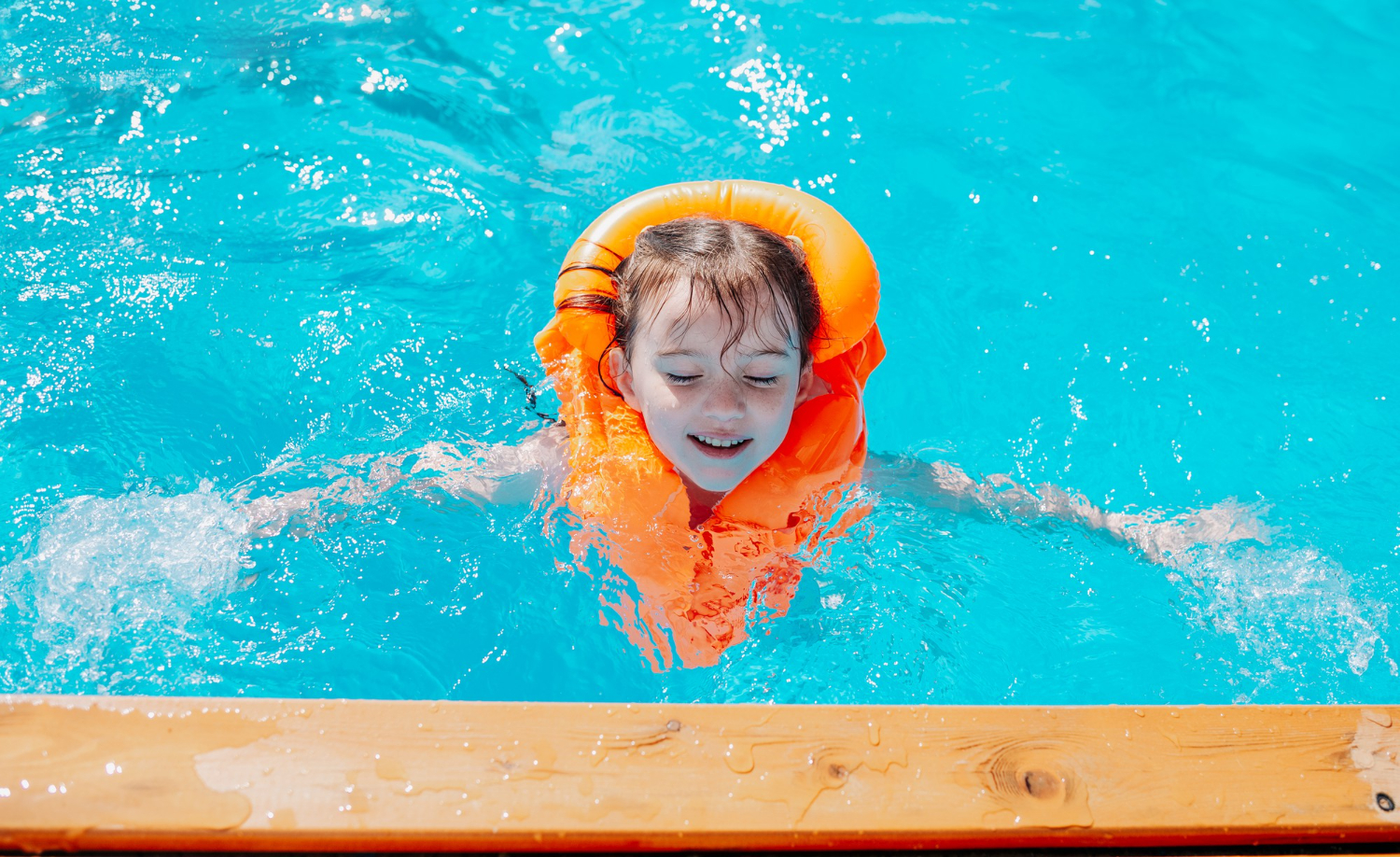
Colorado law requires children age 12 and under to wear a properly fitted life jacket at all times on any vessel, including paddleboards and kayaks. Colorado Parks and Wildlife also runs free life jacket loaner stations at many state parks. For a child who wanders or cannot swim, a Coast Guard-approved life jacket near open water is a simple, powerful safeguard.
How to teach your autistic child to swim and be safer around water
Swimming lessons are one of the most protective steps a family can take, and they lower risk without erasing it. Supervision and barriers still come first, every time.
Finding adaptive swim lessons
Look for instructors trained to teach children with autism, who use patience, visual supports, and a pace that fits your child. Adaptive programs run across the Front Range, and the Autism Society’s water program can help you locate lessons near you. Ask whether a lesson can end with your child fully clothed, since real falls happen in clothes and shoes.
How ABA strategies support swim learning
The same tools we rely on every day translate well to the pool. Breaking a skill into small steps, prompting and then fading that help, reinforcing effort, and using visual schedules can turn an overwhelming lesson into a series of small wins. We often coordinate directly with swim instructors so the approach stays consistent across the water and the home.
Water safety skills beyond swimming
Swimming strokes are only part of staying safe. Skills worth teaching include:
- Rolling onto the back to float, breathe, and rest
- Turning to reach and hold the wall
- Getting to the steps or edge and climbing out
- Asking permission before going near any water
- Waiting for an adult every single time
Keeping your child safer around water
Water safety for autistic children comes down to steady, layered protection: a secure home, close supervision, barriers around water, life jackets, and swimming skills built at your child’s pace. No single step is enough, and together they make a real difference.
Steady vigilance and realistic expectations
Progress in this area is quiet and ongoing rather than a single milestone. Skills fade without practice, seasons change the risks, and vigilance has to hold even on the easy days. We avoid promising that any approach removes danger entirely, because none does, and honest, consistent effort is what keeps a child safer over time.
How Achieve ABA can help
No family should carry the worry about wandering and water alone. We help build safety and communication skills into a child’s everyday routine, and our parent training and summer support work is often where those skills take root. Achieve ABA also supports families in Thornton, Arvada, Westminster, and Centennial.
See how ABA works, or start with the autism diagnosis process if your family is just beginning. When you are ready to talk through a plan for your own child, call 720-463-9000 or reach out through our contact page.
Frequently asked questions
Why are autistic children at higher risk of drowning?
Two factors combine. Many children with autism are strongly drawn to water for its sensory qualities, and many also wander or elope from safe spaces. When a child heads for water without recognizing danger or knowing how to swim, the risk rises sharply.
At what age should my autistic child start swim lessons?
Earlier is generally better, and the American Academy of Pediatrics supports lessons for many children starting around age 1. That said, readiness varies, so an adaptive instructor who can meet your child where they are is more important than hitting a specific age.
Do swimming lessons make my child safe in the water?
Lessons lower the risk, and they do not remove it. Even a capable swimmer can struggle in cold water, a strong current, or a moment of panic. Supervision, barriers, and life jackets remain essential alongside swimming skills.
What should I do first if my child is missing?
Call 911 immediately and tell them your child has autism and may head for water. Search the nearest water first, including pools, ponds, ditches, and creeks. Quick action saves lives, and first responders would rather come to a false alarm than arrive late.
What is a Big Red Safety Box?
It is a free toolkit from the National Autism Association for families whose children are prone to wandering. It includes caregiver checklists, a first-responder profile you can share with local police, and simple tools to help prevent and respond to elopement.
Are life jackets required for children in Colorado?
Yes. Colorado law requires children age 12 and under to wear a properly fitted, Coast Guard-approved life jacket at all times on any vessel, including paddleboards and kayaks. Wearing one near cold, open water is wise for any child at risk of wandering.
Can ABA therapy help with wandering toward water?
It can be part of the picture. ABA can help identify why a child elopes and teach safer replacement skills, such as asking for a break or staying with an adult. It works best alongside physical safeguards and supervision, not in place of them.
Sources:
- Guan J, Li G. Characteristics of unintentional drowning deaths in children with autism spectrum disorder. Injury Epidemiology, 2017 (PMC, National Library of Medicine): https://pmc.ncbi.nlm.nih.gov/articles/PMC5721095/
- National Autism Association, Water Safety and Drowning Prevention: https://nationalautismassociation.org/watersafety/
- National Autism Association, Big Red Safety Box: https://nationalautismassociation.org/big-red-safety-box/
- Autism Society of America, Water and Wandering: https://autismsociety.org/water-and-wandering/
- Colorado Parks and Wildlife, Water Safety (cold water, life jacket law): https://cpw.state.co.us/water-safety