
Most parents meet me holding a small stack of referrals: one for ABA, one for speech therapy, one for occupational therapy, and no clear sense of how they fit together. It is a lot to hand a family in a single appointment, especially when each service comes with its own initials, its own evaluation, and its own waitlist.
I have sat with parents from Fort Collins to Colorado Springs who felt that exact overwhelm, unsure whether they were signing up for three versions of the same thing. So let me do what that appointment often could not: explain what each therapy does, who provides it, where they overlap, and how to tell which specialist addresses which need.
Meet the Three Specialists Behind the Acronyms
Each therapy comes with its own profession, credential, and area of focus. Knowing what each clinician is trained to do makes the rest of the day much easier to map.
The Speech-Language Pathologist (SLP)
A speech-language pathologist is a master’s-level clinician certified through the American Speech-Language-Hearing Association. Per ASHA’s autism scope, the SLP is the specialist for communication in every form, spoken and unspoken, and often for feeding and swallowing. That includes expressive language, understanding others, speech clarity, the social side of conversation, and communication devices for children who are minimally or nonspeaking.
The Occupational Therapist (OT)
An occupational therapist is a licensed clinician who, as the American Occupational Therapy Association describes it, uses everyday activities to help a person take part in daily life. For children, that focus lands on sensory processing, fine and gross motor skills, motor planning, and self-care routines. Work published in the American Journal of Occupational Therapy names these as core parts of OT for autistic children.
The Board-Certified Behavior Analyst (BCBA)
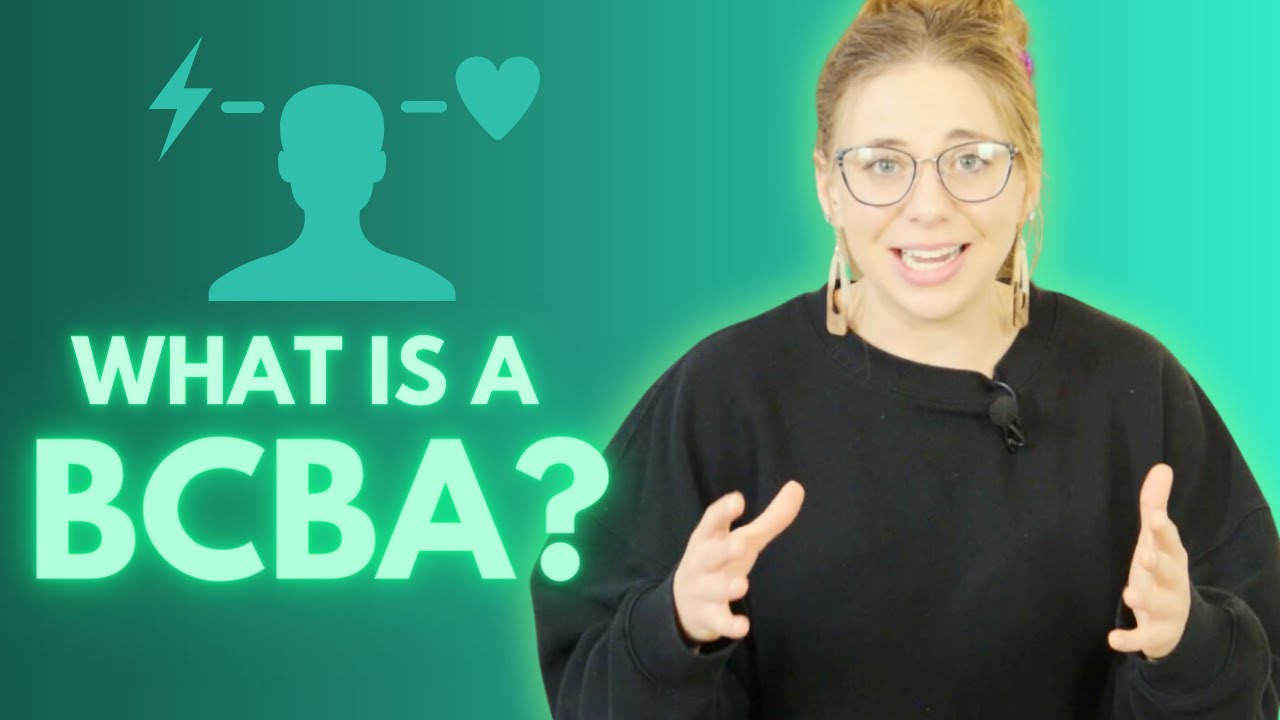
A board-certified behavior analyst leads ABA therapy. According to the Behavior Analyst Certification Board, a BCBA is a graduate-level, independently practicing clinician who assesses behavior, writes the treatment plan, and supervises the technicians who run daily sessions. ABA studies how learning and the environment shape behavior, then teaches skills in small steps and reduces barriers to a child’s safety and participation.
Walking Through the Day: Who Handles What
Now the fun part. Let me take an average day, moment by moment, and show where each specialist steps in. You will notice the same child, the same day, and three different lenses. Roughly 1 in 31 eight-year-olds is identified with autism, per the CDC, so odds are good that some of these moments sound like your house.
The Morning Routine
Getting dressed and brushing teeth ask a lot of a small body: sequencing the steps, coordinating both hands, and tolerating the feel of clothing tags and toothpaste. When those are the sticking points, an occupational therapist leads, building the motor skills and sensory tolerance behind the routine.
If your mornings in Aurora tend to unravel over transitions and refusals rather than the physical steps, that is where ABA comes in, shaping a predictable routine and teaching your child to move from one step to the next with less friction.
Breakfast and Mealtimes
The breakfast table is a crossroads. Managing a spoon or fork is fine motor work for an OT. Chewing and swallowing safely, or a very limited food range tied to texture, can involve both an OT and a speech-language pathologist, since feeding sits inside the SLP’s scope too.
When mealtime has hardened into a daily battle of escalating refusals, an ABA program can help reshape the routine so the table feels calmer for everyone.
The School Drop-Off and Transitions
Leaving the house and separating at the door is often less about logistics and more about coping with change. Behavior analysts frequently target transitions, teaching a child to handle the shift with a visual schedule or a calming strategy. The speech-language pathologist supports the same moment by giving your child the words, signs, or device to say goodbye or ask for help.
If you are reading this from Fort Collins, where a specialty provider can be a real drive away, this is exactly the kind of skill worth reinforcing at home so it does not depend on a clinic visit.
Inside the Classroom
A single classroom hour can call on all three. Handwriting and cutting are fine motor and visual-motor tasks for an occupational therapist. Understanding multi-step directions and answering questions draws on the language work of a speech-language pathologist. Staying with a task, raising a hand instead of calling out, and participating in a group lean on the skill-building of ABA.
Picture your child in a Lakewood classroom who understands the lesson but cannot yet organize a written answer. That gap between knowing and doing is a common reason a teacher suggests an OT evaluation, and pairing those strategies with school-based ABA support helps them stick through the school day.
Recess and Playtime
The playground is where social skills get tested in real time. Reading a peer’s tone and taking conversational turns is social communication, guided by a speech-language pathologist. Knowing how to approach a group, wait for a turn, and handle losing a game is often shared between the SLP and the behavior analyst. Climbing, balancing, and coordinating a run come back to the occupational therapist.
At a busy Denver playground, all of that happens at once and fast, which is why children who do well one-on-one can still struggle in the open. Coordinated goals across providers make those moments far more manageable.
After School, Homework, and Winding Down
By late afternoon, many children are running on empty. Recognizing that overload and using calming strategies is self-regulation, an area where occupational therapists shine. Sitting down to finish a homework task, or following a bedtime routine without a meltdown, is often where ABA supports the family with structure and follow-through. Asking for a snack, a break, or help winding down is communication, and the SLP makes sure your child has a reliable way to do it.
For a household in Thornton, we once helped turn a chaotic evening into a workable routine simply by making sure every provider used the same wind-down sequence, so the plan did not change from one adult to the next.
How to Tell Which Specialist Your Child Needs First
You do not have to solve the whole puzzle at once. A few practical steps point you toward the right starting place.
Start With a Full Evaluation
Begin with a comprehensive evaluation. A physician, psychologist, or developmental pediatrician typically diagnoses autism, and your pediatrician can route the referrals. If your child has not been evaluated, our diagnostic support team can help you start, and the early signs worth watching are a good primer while you wait for appointments.
Match the Biggest Barrier to the Specialist
Then name the barrier that disrupts the day the most, using the moments above as your guide:
- Communication is the hardest part? Start with a speech-language pathologist.
- Sensory, motor, or self-care is the hardest part? Start with an occupational therapist.
- Learning routines, participating, or staying safe is the hardest part? Start with a board certified behavior analyst.
Searching from Colorado Springs and feeling unsure where to land? The answer usually reveals itself the moment you ask what worries you most from wake-up to bedtime. That single question tends to sort communication, sensory and motor needs, and skill or behavior goals into a clear order, and it is common for a child to need more than one over time.
Why the Best Results Come From Coordination
Choosing the right therapies is only half the work. Making them work together is the other half, and it is where families often see the biggest gains.
How a Coordinated Team Works
The therapies are strongest when they pull in the same direction. ASHA itself frames autism care as interprofessional, and it plays out every week in our work. A speech-language pathologist may introduce a communication device, an occupational therapist may build the hand strength and regulation needed to use it, and our behavior analysts help that skill appear reliably across the whole day.
Keeping Progress Going at Home
If your family is in Pueblo or anywhere with fewer providers nearby, coordination matters even more, because each visit needs to count. We build that teamwork into early intervention for our youngest clients and extend it to caregivers through ABA parent training, so the same strategies continue at home between sessions and during in-home visits.
Where Achieve ABA Fits Into Your Child’s Team
We designed our services to slot into whatever your child already has in place, rather than to stand apart from it.
One Part of a Larger Team
We provide ABA therapy services across Colorado, and we treat ourselves as one member of a larger team rather than the whole answer. When your child already sees a speech therapist or occupational therapist, we align our goals with theirs. When you are just beginning, we help you understand the landscape and sequence things sensibly.
Serving Families Across Colorado
Maybe your weekdays run through Arvada. Maybe pickup happens in Westminster while therapy sits closer to Centennial. Wherever your map lands, you can see every community we cover on our locations page, and our how ABA works page lays out intake in plain steps.
As school and therapy so often intersect, families in places like Boulder also find our guide to an IEP for autism in Colorado a useful companion, and our walkthrough of a first ABA assessment shows what starting looks like.
Choosing Your Child’s Therapy Path With Confidence
It helps to end where we started, with a whole day in view and a clear sense of who owns each part of it.
The Bottom Line on ABA, Speech, and OT
The difference between ABA, speech therapy, and occupational therapy comes down to focus. Speech builds communication. Occupational therapy builds sensory and motor foundations and daily independence. ABA builds and generalizes skills while easing the barriers that get in the way of learning and safety. No single one replaces another, and the strongest plan is simply the one matched to the moments in your child’s day that need the most support.
If you would like a hand sorting out where to begin, our Colorado team is glad to talk it through.
Not sure which therapy fits your child’s day? Let’s map it out together.
Call our Colorado team at 720-463-9000, email hello@atgaba.com, or reach us through our contact page. We serve children and young adults ages 2 to 21, accept all insurances including Health First Colorado, offer bilingual services, keep no waitlist, and gladly coordinate with your child’s speech and occupational therapists.
Frequently Asked Questions
If my child is in ABA, do they still need speech and occupational therapy?
Often, yes. ABA can address communication and daily-living skills through behavioral methods, but it does not replace the specialized training of a speech-language pathologist or occupational therapist. Many children make the most progress when the three services run in parallel and coordinate goals.
How many therapies is too many for one child?
There is no fixed number. The right amount depends on your child’s needs, stamina, and schedule. A good team watches for signs of overload and adjusts hours so therapy supports the child rather than overwhelming the family.
Can ABA therapists work on speech and motor goals?
ABA can support communication and motor-related routines as part of a broader plan, and behavior analysts frequently reinforce what an SLP or OT is teaching. For specialized communication and motor evaluation and treatment, though, the SLP and OT lead in their own areas.
Which professional should evaluate my child first?
Start with your pediatrician, who can refer based on your biggest daily concerns. If communication is the main worry, an SLP evaluation makes sense first; if sensory or motor needs dominate, an OT; if learning and behavior are central, a behavior analyst.
What if my therapists give conflicting advice?
This is a signal to get everyone talking. Ask your providers to coordinate, share notes, and align on shared goals. Well-run teams expect to collaborate, and you can request that they do.
Will my child need all three therapies forever?
Not necessarily. Needs change as children grow. Many families add or reduce services over time, and some skills graduate out of therapy altogether once they are firmly in place.
Sources:
- Behavior Analyst Certification Board (BACB), About the BACB: https://www.bacb.com/about/
- American Speech-Language-Hearing Association (ASHA), Autism practice portal: https://www.asha.org/practice-portal/clinical-topics/autism/
- American Occupational Therapy Association (AOTA), What Is Occupational Therapy?: https://www.aota.org/about/what-is-ot
- American Journal of Occupational Therapy, OT intervention for children on the autism spectrum: https://research.aota.org/ajot/article/78/5/7805205210/25227/Characterizing-Occupational-Therapy-Intervention
- Council of Autism Service Providers (CASP), ABA Practice Guidelines: https://www.casproviders.org/asd-guidelines
- CDC, Data and Statistics on Autism Spectrum Disorder: https://www.cdc.gov/autism/data-research/index.html