
ABC data in ABA is a simple way of recording what happened right before a behavior (the antecedent), what the behavior looked like (the behavior), and what happened right after (the consequence). Behavior analysts use these notes to spot patterns and choose supports that fit your child. At Achieve ABA Therapy Group, our Colorado teams collect ABC data as part of every plan and explain it in plain language, so you always know what we are tracking and why.
If you are new to ABA, or you are holding a data sheet and trying to make sense of it, here is what each column means and how our team uses it to build your child’s plan.
What ABC Data in ABA Means for Your Child
Every behavior happens inside a moment, and that moment has a beginning and an end. ABC data captures both ends so your child’s team can see more than the behavior alone.
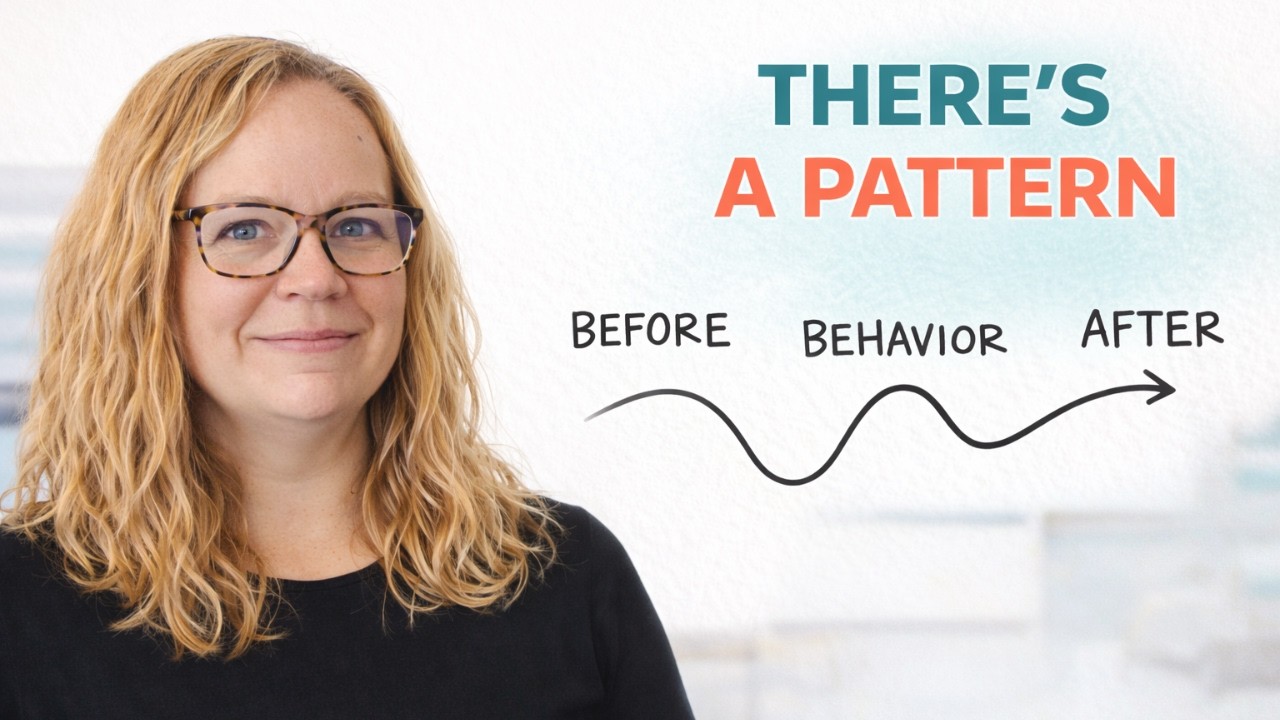
Antecedent, behavior, and consequence in plain language
Each letter answers one question:
- Antecedent: What happened right before? Examples include a teacher announcing cleanup time, a sibling grabbing a toy, a vacuum starting up, or hearing “not yet.”
- Behavior: What did your child do? The description should be specific enough that two observers would write the same thing. “Dropped to the floor and cried for about two minutes” tells the team far more than “had a meltdown.”
- Consequence: What happened right after? That might be an adult stepping in, a task being put away, a snack appearing, or classmates reacting. In ABA, a consequence is anything that follows a behavior. The word does not mean punishment.
Together, the three parts show how the events around your child connect to each other.
What a sample ABC entry looks like
The short sample below is made up to show the format. The rows illustrate how notes are written and do not come from any child’s record.
| Time and place | Antecedent | Behavior | Consequence |
| 4:15 pm, kitchen | Parent says “homework time” and closes the tablet | Child throws pencil and leaves the table | Parent follows and sits with child; homework is delayed |
| 4:40 pm, kitchen | Parent sets a timer and offers a choice of two assignments | Child picks one and starts | Parent gives specific praise and a two-minute break |
| 6:10 pm, living room | Sibling turns on a loud video | Child covers ears and shouts | Sibling lowers the volume and child calms |
One row proves very little. A BCBA looks for the same antecedents and consequences repeating across many entries before suggesting a pattern, and then tests that idea through the plan itself.
Why Behavior Analysts Use ABC Data
Behavior serves a purpose for the child, even when that purpose is hard to see from the outside. ABC data gives your BCBA the evidence to make an informed guess about what that purpose is.
Finding the function behind a behavior
Behavior analysts group the purposes behind behavior into a few common functions: gaining attention, escaping or avoiding a demand, getting access to an item or activity, and meeting a sensory need. ABC data does not prove which one applies. As the University of Nebraska–Lincoln’s Autism Network describes it, the tool records the events around a behavior so patterns can be analyzed and a possible function can be hypothesized.
That work sits inside a functional behavior assessment (FBA). The AFIRM project at UNC’s Frank Porter Graham Child Development Institute built 28 evidence-based practice modules from the 2020 review by the National Clearinghouse on Autism Evidence and Practice, and the AFIRM evidence-based practice modules include both functional behavioral assessment and antecedent-based interventions.
Turning patterns into supports
Once a pattern is clear, the team has three levers. They can change what happens before the behavior, such as adding a visual schedule, giving a two-minute warning before a transition, or offering a choice. They can teach a replacement skill, such as asking for a break. And they can change what follows the behavior so the replacement skill works better for your child than the original behavior did.
Reward systems such as token economies are one way we build that last piece.
Sometimes the antecedent turns out to be worry, hunger, or sensory overload rather than a demand, and behavior that looks like defiance is a signal of distress. Our look at autism and anxiety explains why teams consider those possibilities early.
How We Collect ABC Data During Sessions and at Home
Good data comes from careful, respectful observation. Our teams build data collection into the natural flow of play and routines so it does not interrupt your child’s day.
Narrative notes and checklists
Teams usually choose one of two formats. Narrative notes are short written descriptions of the antecedent, behavior, and consequence. Checklists list common options, such as “demand placed” or “item removed,” so an observer can tick boxes quickly, which can help people who are newer to collecting data. Either way, the entries should record objective facts that can be seen and measured, with interpretations left out.
Who records the data
Registered Behavior Technicians record data during sessions, and the supervising BCBA reviews it and decides what to do next. Parents and caregivers can learn the skill too, because ABC data can be collected by anyone trained to do it accurately. Our parent training sessions walk you through the same note-taking we use, so your observations at home can sit beside ours.
How many entries it takes
There is no single number that fits every child. The University of Nebraska–Lincoln guidance suggests looking for a minimum of three instances of a behavior with the same or similar consequences across at least two different days before deciding whether a pattern is clear enough to form a hypothesis. Your BCBA decides when the picture is clear and when more observation is needed.
Why the early weeks look different
At the start of services, collecting information often comes before teaching. Baseline data shows how often a behavior happens and under what conditions, which gives the team a starting line to measure from. Our post on the first month of ABA explains what that stage looks like week by week.
What makes a useful ABC note at home
If your BCBA asks you to jot notes between sessions, these habits keep entries useful:
- Write what a camera would capture, such as “threw the cup” instead of “got angry.”
- Record the time and place so the team can spot patterns by setting.
- Note the consequence right away, including your own response.
- Keep it short. Thirty seconds on a phone beats a detailed summary written that night.
- Share the notes with your BCBA rather than trying to interpret them alone.
ABC Data Across Home, School, and Community Settings
Behavior changes with the setting, so the same child can show very different patterns in a living room, a classroom, and a grocery store. We collect ABC data wherever we provide services so the plan reflects your child’s whole day, and our ABA services are built around that idea.
At home and in the early years
In-home ABA lets us observe real routines such as mealtimes, bedtime, and sibling play. For children under six, early intervention ABA uses the same three-part structure with caregiver coaching, and daycare-based ABA brings data collection into group care, where crowded rooms and shared toys are part of the day.
At school and during breaks
School-based ABA places a therapist alongside teachers, so antecedents such as group instruction, transitions, and unstructured recess become visible and can be addressed in the moment. Our back-to-school ABA support helps families prepare for the shift in routine each fall, and weekend ABA covers the hours when school structure falls away and different triggers appear.
As your child’s needs change
Skills and settings change as children grow. Group home ABA extends this kind of data-informed support to individuals living in group home settings.
ABC data cannot diagnose autism. If you are still looking for answers, our autism diagnosis team can help you start the evaluation process.
Reading Your Child’s ABC Data With Confidence
You do not need a statistics background to follow your child’s data. You need a clear explanation from your BCBA and a few good questions.
Questions worth asking your BCBA
- What pattern are you seeing, and how many entries support it?
- What do you think the behavior is doing for my child?
- Which change will we try first, and how will we know whether it worked?
- How can I take notes at home that help the team?
- When will we review the data together?
Common worries parents share
Some parents worry that ABC data is a list of everything their child does wrong. The sheet records neutral facts about events, and entries can capture moments that go well, which tells the team what to build on.
Others wonder whether one hard day will change the plan. Teams look for trends across many entries, and a steady trend line carries more weight than any single session. Our post on seven signs your child’s therapy is working shows how data trends fit into the bigger picture.
Dignity, assent, and privacy
Data collection should feel respectful. Our team watches for signs that a child is uncomfortable, and notes are kept confidential. We share what we record with you in plain language, because you are the expert on your child.
ABC Data, Insurance, and Authorization in Colorado
ABC data guides daily decisions, and it also helps document why a child’s goals and hours of service are medically necessary when a health plan reviews a request.
How data connects to coverage
Colorado has an autism insurance requirement that applies to many state-regulated health plans, and Autism Speaks reports that 2015 legislation removed age and dollar caps starting in 2017. Plans that fall outside state rules, such as some self-funded employer plans, may differ.
Health First Colorado covers pediatric behavioral therapies for members 20 and younger when services meet medical necessity criteria, and providers submit prior authorization requests to the state’s utilization management vendor along with a plan of care.
Clear ABC data and progress notes give reviewers a record of what we are targeting and how your child is responding. Decisions rest with each plan, and what you pay depends on your benefits.
Plans we work with
Achieve ABA Therapy Group works with Health First Colorado (Medicaid), Anthem Blue Cross Blue Shield, Cigna, Aetna, and others listed on our insurance page. We verify your benefits before services begin, handle authorization paperwork, and explain your costs up front. Coverage varies by plan, so reach out and we will check yours.
Where Colorado Families Can Start
We provide ABA support in communities across the state, and each location page shows how our team serves that area.
Denver metro and the Front Range
Families in Denver, Aurora, Lakewood, Arvada, Westminster, Thornton, Centennial, Englewood, Broomfield, Parker, and Castle Rock can ask for an initial assessment and a walkthrough of how data collection will work at home or at their child’s school.
Northern and southern Colorado
Our teams also serve Boulder, Longmont, Loveland, Fort Collins, and Greeley, as well as Colorado Springs and Pueblo. If your city is not listed, browse our full list of Colorado locations or call, and we will tell you what is available near you.
Talk with our Colorado team
If you are looking for a team that explains its data as clearly as it collects it, we would be glad to meet your family. Start your intake online, or contact Achieve ABA Therapy Group with questions about your child’s plan.
Frequently Asked Questions About ABC Data in ABA
Is ABC data the same as a functional behavior assessment?
No. ABC data is one tool used within a functional behavior assessment (FBA). An FBA also draws on interviews, record reviews, and sometimes structured testing of ideas about why a behavior occurs. Your BCBA combines these sources before recommending a behavior plan.
Can parents collect ABC data at home?
Yes, with guidance. Your BCBA can give you a simple template and show you what to write, such as the time, what happened before, what your child did, and what happened right after. Short, factual notes taken in the moment are more useful than detailed summaries written hours later.
How long does ABC data collection take?
It depends on the behavior and how often it happens. Published guidance suggests looking for at least three instances across two different days before judging whether a pattern is clear, and your BCBA decides whether more observation is needed. Behaviors that happen daily may show a pattern sooner than those that happen occasionally.
Who can see my child’s ABC data?
Your child’s data is shared with the clinical team working with your child and with you, and it is protected as confidential health information. If a teacher or another provider would benefit from seeing it, sharing is something we coordinate with you.
Sources
- Colorado Department of Health Care Policy and Financing. (n.d.). Pediatric behavioral therapies information for providers. https://hcpf.colorado.gov/pediatric-behavioral-therapies-information-providers
- Nebraska Autism Spectrum Disorders Network, University of Nebraska–Lincoln. (n.d.). ABC data. https://asdnetwork.unl.edu/virtual-strategies/abc-data/
- Sam, A., & AFIRM Team. (2024). Functional behavior assessment brief packet. Frank Porter Graham Child Development Institute, University of North Carolina at Chapel Hill. https://afirm.fpg.unc.edu/wp-content/uploads/Functional-Behavior-Assessment-Brief-Packet-Sam-AFIRM-Team-Updated-2024.pdf
- Sam, A., & AFIRM Team. (2024). Antecedent-based interventions brief packet. Frank Porter Graham Child Development Institute, University of North Carolina at Chapel Hill. https://afirm.fpg.unc.edu/wp-content/uploads/Antecedent-Based-Interventions-Brief-Packet-Sam-AFIRM-Team-Updated-2024.pdf
- Frank Porter Graham Child Development Institute. (n.d.). AFIRM modules. University of North Carolina at Chapel Hill. https://afirm.fpg.unc.edu/afirm-modules/
- Autism Speaks. (n.d.). Colorado state-regulated insurance coverage. https://autismspeaks.org/colorado-state-regulated-insurance-coverage