
If your child has started ABA therapy, or you are weighing it, you have probably come across the term discrete trial training, usually shortened to DTT. It can sound clinical and a little intimidating at first. In plain terms, DTT is a structured teaching method we use within ABA to break a skill into small, clear steps and teach one step at a time, with plenty of encouragement along the way.
Every parent wants the same thing from therapy: real skills their child can use, not just good days in a session. Discrete trial training, usually shortened to DTT, is one of the methods that helps get there, teaching a skill in small, clear steps with steady encouragement until your child can do it on their own.
It is one piece of a larger ABA program. At Achieve ABA Therapy Group, we frequently use the method every week with the children we support across Colorado, from Denver and Aurora to Colorado Springs, so much of what follows comes from the daily reality of the work rather than a textbook.
We’ll walk you through how a single trial works, the skills DTT builds well, its honest limits, and how you can help those skills show up at the dinner table and the playground, not only at the table in session.
What is discrete trial training?
Before the mechanics, it helps to be clear about what DTT is and what it is not. The term gets used loosely, and that causes a lot of confusion for families.
A plain-language definition of DTT
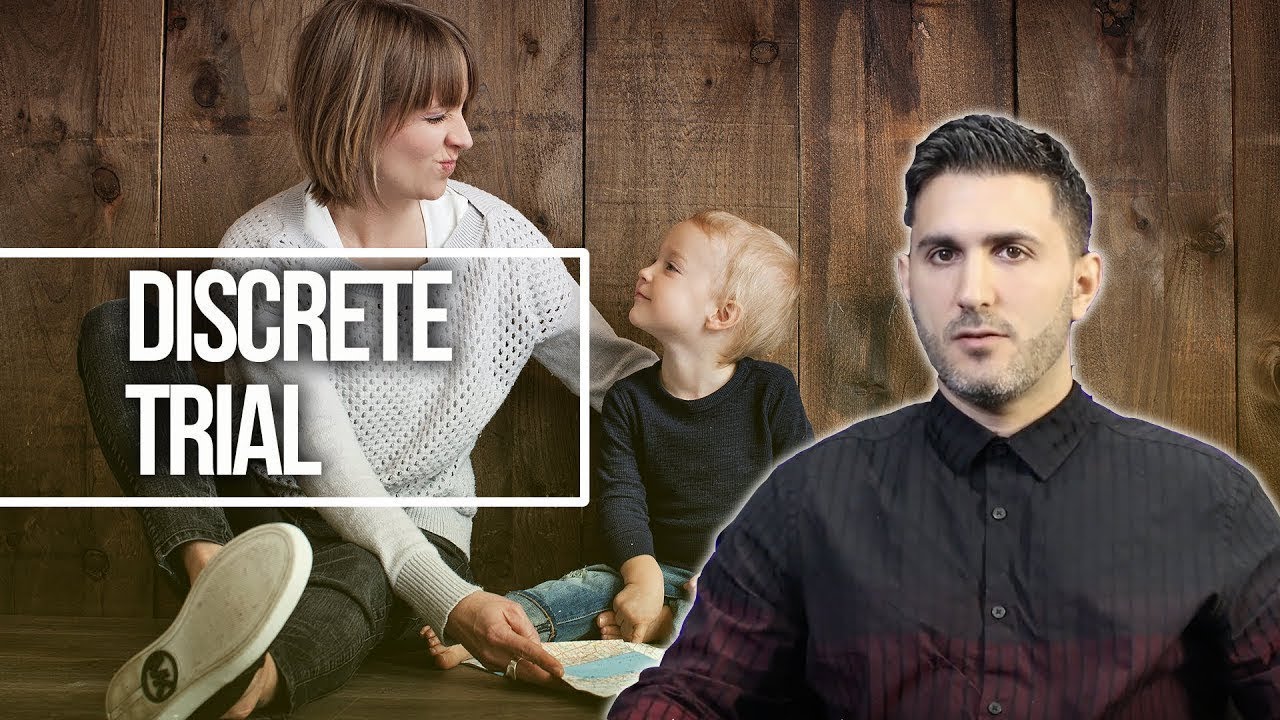
Discrete trial training breaks a skill into its smallest teachable pieces, then teaches each piece through short, repeated learning opportunities called trials. Each trial has a clear beginning and end, which is where the word discrete comes from.
A child might work on identifying colors, requesting a snack, or copying a simple action. The therapist presents one clear instruction, waits for a response, and follows it with immediate feedback. After a brief pause, the next trial begins. Because each trial is short and well defined, your child gets many chances to practice and succeed in a single sitting.
How DTT differs from ABA as a whole
Families often hear DTT and ABA used as if they mean the same thing. They do not. Applied Behavior Analysis is the broad science of how learning and behavior work, and it includes many teaching methods. DTT is one specific method within that larger toolkit.
Think of ABA as the field and DTT as one well-studied technique a clinician might choose. Your child’s program will usually blend DTT with more naturalistic, play-based teaching depending on the goal. You can read how we structure a full program in our overview of in-home ABA therapy.
Where DTT came from
DTT grew out of early behavioral research in the 1960s and was central to the UCLA model developed by Dr. Ivar Lovaas. Over the decades the method has been refined considerably, and today it is recognized as an evidence-based practice by the National Clearinghouse on Autism Evidence and Practice.
What has changed most is tone. Early programs could be rigid and adult-driven. Modern DTT keeps the structure while putting your child’s motivation, comfort, and willingness to participate at the center.
The parts of a single discrete trial
Every discrete trial follows the same simple sequence. Once you can spot the pattern, a session that looked mysterious starts to make sense.
The cue, or instruction
Each trial opens with a clear, consistent cue, which clinicians call the antecedent or discriminative stimulus. It might be a spoken instruction like “point to red,” a question, or a gesture. We keep the cue short and predictable on purpose, so a child can focus on the skill instead of decoding a long sentence.
Your child’s response
After the cue, we give your child a moment to respond. The response is whatever we are teaching, such as pointing to the right card, saying a word, or copying a movement. A correct response is wonderful. An incorrect one is useful too, because it tells us where to add support.
The consequence and reinforcement
What follows the response is the consequence, and this is the heart of the method. A correct response earns immediate, meaningful reinforcement chosen around what your child genuinely enjoys, because motivation drives learning. Common reinforcers include:
- Specific praise tied to what your child did well
- A few moments with a favorite toy or activity
- A preferred snack, when appropriate
- A short, fun break
When a response is incorrect, we respond calmly and guide your child toward the right answer rather than drawing attention to the miss.
The short pause before the next trial
Between trials there is a brief pause called the inter-trial interval. It lasts only a second or two, but it gives each trial a clean ending and helps your child reset before the next opportunity. These short, repeated cycles let a child practice a skill many times in a focused, low-pressure way.
How prompting and prompt fading work in DTT
New skills rarely appear on the first try, so we use prompts to help your child succeed, then gradually remove that help. Done well, this is one of the most powerful parts of DTT.
The kinds of prompts we use
A prompt is any extra help that makes a correct response more likely. We use several types, often moving from more support to less:
- Physical prompts, such as gently guiding your child’s hand
- Gestural prompts, like pointing toward the right answer
- Verbal prompts, including a hint or the first sound of a word
- Visual prompts, such as a picture or an arrow
- Modeling, where we demonstrate the response first
Fading prompts so skills become independent
The goal is never to keep prompting. As your child starts to respond reliably, we fade the help step by step, offering a little less each time until your child performs the skill alone. This careful fading, sometimes paired with errorless teaching that prevents repeated mistakes, helps skills stick while keeping frustration low.
Preventing prompt dependence
One real risk is prompt dependence, where a child learns to wait for help rather than try. Skilled therapists watch for this closely and adjust quickly, balancing enough support to build confidence with enough independence to build true mastery. Getting that balance right is part of the clinical craft, and it is one reason trained oversight is so important.
The skills DTT teaches well, and where it has limits
DTT is strong for certain kinds of learning and weaker for others. Knowing the difference helps you understand why your child’s program looks the way it does.
Early communication and language building blocks
DTT suits the building blocks of communication well: labeling objects, following simple directions, answering questions, and making requests. These discrete skills benefit from clear, repeated practice, and for many children mastering them opens the door to richer, more spontaneous communication later.
Attention, imitation, and readiness skills
Skills like attending to a speaker, imitating actions, and sitting with a short task are foundational for almost all later learning. The structure of DTT is a natural fit for building these early readiness skills, which then support progress in many other areas.
Self-help and early academic steps
Breaking a routine into steps suits DTT, so it can support early self-help skills and pre-academic targets such as matching, sorting, and identifying letters or numbers. These gains often feed directly into school readiness, which we keep in view as part of your child’s broader plan.
What DTT does not do on its own
DTT teaches skills in a controlled setting, and children do not live in controlled settings. By itself it does not guarantee that a skill will transfer to the playground or the dinner table. That is why we pair it with teaching in real-life moments. Research supports this blended approach, combining structured trials with naturalistic teaching to help skills generalize. A program built only on repetitive trials would miss the spontaneity and flexibility children need.
A look into a DTT session
Parents are sometimes surprised by how a real session unfolds. It is more relaxed and more playful than the clinical description suggests.
Setting up a focused, low-distraction space
We usually begin in a calm, low-distraction area so your child can concentrate, then gradually introduce busier, more natural settings as skills grow. Materials are ready in advance so the pace stays smooth and your child stays engaged.
Collecting data and reading progress
During trials, the therapist quietly records whether each response was independent, prompted, or incorrect. This data is not busywork. It tells us when your child has mastered a target and is ready to move on, or when we need to change course. You will see it reflected in progress updates, and it ties directly to the goals set during your child’s ABA assessment.
Keeping sessions warm and motivating
Good DTT does not feel like a test. We weave in your child’s favorite things, keep the energy upbeat, take breaks, and celebrate effort. A child who is enjoying the work learns far more than one who is simply going through the motions.
How parents reinforce DTT skills at home
What happens between sessions shapes how well skills take hold. You do not need to run formal trials at home, and a few simple habits make a real difference.
Carrying skills into daily routines
The most valuable thing you can do is give your child chances to use new skills in everyday life. If your child is learning to request items, build small, natural moments through the day where asking earns something they want. This is how a skill practiced in session becomes a skill your child owns.
Staying consistent without turning play into drills
Consistency helps, and childhood should still feel like childhood. Use the same simple cues your child’s team uses, then let learning happen inside play and routine rather than scheduled drilling. Our guide to parent training covers practical ways to do this without adding stress to your day, and keeping skills going over school breaks is exactly what our summer ABA support is built for.
Working closely with your child’s BCBA
Your child’s board certified behavior analyst designs and adjusts the program, and your observations are a key part of that. Sharing what you see at home, both the wins and the sticking points, helps the team target the skills that will help your family most.
Common concerns about DTT
Many parents arrive with worries about DTT, often shaped by older information or strong opinions online. These concerns deserve honest answers.
Is DTT too repetitive for my child?
Repetition is the point, because practice builds mastery, and repetition should never mean tedium. Skilled therapists vary materials, keep motivation high, and stop well before a child burns out. If your child seems bored or distressed, that is worth raising with the team right away.
Does DTT make children robotic or compliant?
This is a fair concern, and it comes from a real history. Some early programs over-emphasized compliance. Today’s best practice looks different. We seek your child’s willing participation, follow their lead where we can, and treat refusal as communication to understand rather than something to override. The aim is a confident, capable child who can use skills flexibly across real situations.
How modern DTT has changed
Contemporary DTT is more flexible, more play-based, and more attentive to your child’s comfort and dignity than the methods of decades past. It is frequently blended with naturalistic approaches so that structure and spontaneity work together. If something about your child’s program ever feels off to you, a good provider will welcome that conversation.
Ready to talk through your child’s options?
Understanding a method like DTT is one step. Seeing how it fits your own child is the next. At Achieve ABA Therapy Group, we provide in-home ABA therapy across Colorado, and we’re happy to walk you through how we begin, answer your questions, and help if you’re still navigating the autism diagnosis process. No pressure, and no waitlist.
Call us at 720-463-9000 or reach out through our contact page, and one of our team will take it from there.
Frequently asked questions
Is discrete trial training only for young children?
No. DTT is common in early intervention because it suits foundational skills, but it can help learners of many ages when a skill benefits from clear, structured practice. The targets simply change with the child.
How long does it take to see progress with DTT?
It varies by child and by skill. Some targets are mastered in weeks, while others take longer. Because we collect data every session, you do not have to guess. Progress, or the need for a change, shows up in the numbers.
Is DTT always done at a table?
Often it starts at a table because that setting helps a child focus, but it is not required. As skills develop, we move them into natural settings like the floor, the kitchen, or the backyard so they transfer to everyday life.
Can DTT be combined with other approaches?
Yes, and it usually should be. Most strong programs blend DTT with naturalistic teaching and other evidence-based strategies, chosen to fit your child’s goals.
Will my child become dependent on rewards?
Reinforcement is generous early on, then thinned out over time as skills become rewarding in their own right. The plan is always to fade artificial rewards as your child gains independence.
How do I know if DTT is right for my child?
That decision is made with your child’s BCBA, based on assessment and your priorities. If you are still deciding whether ABA fits at all, our post on the signs ABA helps is a helpful starting point.
Sources:
- AFIRM (Autism Focused Intervention Resources and Modules), UNC Frank Porter Graham Child Development Institute, Discrete Trial Training module: https://afirm.fpg.unc.edu/
- AFIRM, Discrete Trial Training Brief Packet (Sam and AFIRM Team, updated 2025): https://afirm.fpg.unc.edu/wp-content/uploads/Discrete-Trial-Training-Brief-Packet-Sam-AFIRM-Team-Updated-2025-1.pdf
- Autism Speaks, Applied Behavior Analysis (ABA): https://www.autismspeaks.org/applied-behavior-analysis
- Peterson T, et al. Examining the Effects of Discrete Trials, Mass Trials, and Naturalistic Environment Training on Autistic Individuals. Cureus, 2024 (PMC): https://www.ncbi.nlm.nih.gov/pmc/articles/PMC10907925/
- Smith T. Discrete Trial Training in the Treatment of Autism. Focus on Autism and Other Developmental Disabilities, 2001 (foundational reference).