
If you’re here, something has been on your mind — a missed milestone, a behavior that doesn’t quite fit, a moment when your toddler didn’t respond the way you expected. In my experience working at Achieve ABA Therapy Group, parents who reach this page are almost never overreacting. They’re picking up on real patterns, often months before any screening tool catches them.
The early signs of autism in toddlers can show up as early as 12 months, but they’re easy to miss or dismiss because individual behaviors often overlap with typical development. What sets them apart is the cluster — multiple signs across communication, social, and play domains, persisting across weeks and settings.
I’ve written this article to walk you through what I look for at each age (12, 18, 24, and 36 months), how to tell the difference, and what to do if your gut is telling you something is worth a closer look.
How Early Autism Can Be Identified in Toddlers
The landscape of early identification has changed significantly in the last decade. Where once parents were told to “wait and see” until age three or four, we now know that meaningful signs are often visible much earlier—and that catching them early changes outcomes.
Below is what the current research and screening practice tell us.
What the Latest Autism Data Shows
According to the CDC’s most recent ADDM Network report (April 2025), about 1 in 31 U.S. children are now identified with autism spectrum disorder, up from 1 in 36 just two years earlier. Children born in 2018 are 1.7 times more likely to be identified by age four than children born in 2014—largely because clinicians and parents are catching things sooner and screening tools have improved.
Reliable diagnoses can be made as early as 18 to 24 months, and many of the patterns we look for are visible even earlier. That doesn’t mean every toddler who skips waving goodbye is autistic. It means certain clusters of behaviors, when seen together and across time, deserve a closer look.
Why Earlier Identification Changes Outcomes
The toddler brain is remarkably plastic. The neural pathways for language, social engagement, and self-regulation are forming rapidly between 12 and 36 months, which is exactly the window when targeted intervention has the strongest effect. Children who begin evidence-based therapy before age five generally show greater gains in communication, adaptive skills, and school readiness than those who start later.
In practice, that means a six-month head start often translates into a year or more of developmental progress. It’s not a guarantee—every child’s profile is different—but it’s a window worth using.
Common Autism Screening Tools Pediatricians Use
If you’ve ever filled out a short questionnaire at your toddler’s 18- or 24-month checkup, you’ve likely encountered the M-CHAT-R/F (Modified Checklist for Autism in Toddlers, Revised with Follow-Up). It’s the most widely used screening tool in pediatric practice, and it’s free, validated, and quick.
Other tools clinicians may use include the Ages and Stages Questionnaire (ASQ), the Survey of Wellbeing of Young Children (SWYC), and direct observational assessments by developmental pediatricians or psychologists. A positive screen doesn’t equal a diagnosis—it triggers a more thorough evaluation.
For a broader primer on the diagnosis itself, this overview of what autism is is a helpful companion read.
A Parent’s Checklist by Age
Use this as a starting point, not a diagnostic tool. A single “yes” on one item isn’t a red flag. Several “yes” answers across categories—especially patterns that persist for more than a few weeks—are worth raising with your pediatrician. Each age range below highlights what I watch for in early sessions and consultations.
Early Signs of Autism at 12 Months
By a child’s first birthday, I expect to see the beginnings of social back-and-forth: shared smiles, joint attention, and gestures that pull a caregiver into the child’s world. When those are missing, it’s worth paying attention.
What I look for at 12 months:
- Doesn’t consistently respond to their own name
- Limited or fleeting eye contact during play and feeding
- Few or no shared smiles in response to your face
- Doesn’t reach up to be picked up or point to things they want
- Doesn’t babble back when you talk to them
- Seems unusually content to play alone for long stretches
- Limited variety in babbling sounds (e.g., only one or two sounds repeated)
A note from practice: I once worked with a family whose 13-month-old would happily flap her hands when excited but never looked at her parents while doing it. The flapping wasn’t the concern. The missing look—what we call shared affect—was the piece that pointed toward earlier screening.
Early Signs of Autism at 18 Months
The American Academy of Pediatrics recommends autism-specific screening at 18 and 24 months, and there’s a reason. This is the age when communication and pretend play really take off in most children—or noticeably don’t.
What I look for at 18 months:
- Few or no spoken words, and limited attempts to imitate sounds
- Doesn’t point to show you something interesting (a dog, a plane, a snack)
- Doesn’t follow your point when you say, “Look over there”
- Little to no pretend play (no feeding a doll, no pushing a toy car with sound effects)
- Strong preference for sameness—routines, foods, clothes, the same video clip on loop
- Repetitive movements like hand-flapping, toe-walking, or spinning that occur often and seem self-soothing rather than playful
- Doesn’t bring objects over to share with you (“Look, mommy!”)
Early Signs of Autism at 24 Months
By two, most toddlers are stringing two words together, asking for help, and beginning to notice other children. When development takes a different shape, the differences usually become more visible here.
What I look for at 24 months:
- Fewer than 50 words, or has lost words they used to say
- Doesn’t combine two words (e.g., “more milk,” “daddy go”)
- Doesn’t respond when you call from across the room, even when hearing is fine
- Avoids or seems indifferent to other children
- Lines up or sorts toys repeatedly instead of using them in play
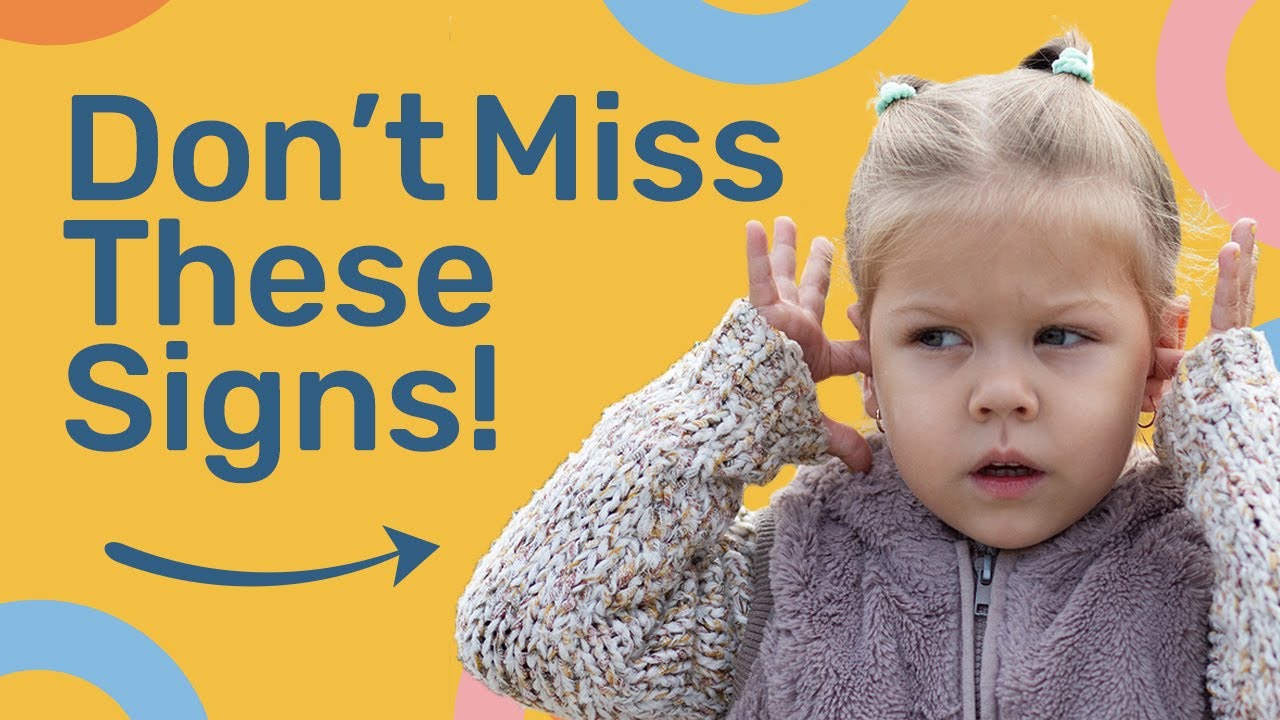
- Strong sensory reactions—covering ears at normal sounds, refusing certain textures, seeking deep pressure
- Meltdowns triggered by small transitions (turning off the TV, leaving the park)
- Restricted food preferences that go beyond typical pickiness
The piece I want parents to hear most clearly: a regression—a child who had words and stopped using them, or who used to point and no longer does—is one of the most important signals to bring up with a pediatrician promptly.
Early Signs of Autism at 36 Months
By age three, social play, conversation, and flexible thinking are usually well underway. Differences at this stage often involve depth of social connection rather than absence of it.
What I look for at 36 months:
- Speech that’s mostly echoed phrases from shows, songs, or earlier conversations (echolalia)
- Difficulty answering simple questions (“What did you eat?”)
- Plays near other children but rarely with them
- Intense, narrow interests that crowd out other activities
- Trouble with imaginative or symbolic play (pretending a banana is a phone)
- Distress that seems out of proportion to small changes in routine
- Unusual responses to pain, temperature, or sensory input
- Difficulty understanding pronouns (“you” vs. “I”) or reversing them
Typical Variation vs. Patterns Worth Watching
One of the hardest parts of this checklist for any parent is the gray zone. Many toddlers go through phases of preferred routines, picky eating, or shyness around new people. Most outgrow them. What separates typical variation from a clinical concern usually comes down to three questions:
- Is the behavior persistent across weeks and settings, not just at home or only with one caregiver?
- Does it appear in clusters across different developmental areas (social, language, play, sensory)?
- Is the child missing the expected skill on top of having the unusual behavior?
When you can answer yes to two or more of those, the conversation moves from “watch and revisit” to “screen and evaluate.”
When to Move from Watching to Acting
If you’re checking off items in more than one category—social, communication, play, sensory—reach out to your pediatrician and ask specifically for a developmental screening. You don’t need to wait for a “wait and see.”
The CDC’s research consistently shows the median age of diagnosis in the U.S. is still around 47 months, meaning many children don’t start intervention until well after the window when it tends to be most effective. The next sections walk through how to move that conversation forward.
Starting the Conversation with Your Pediatrician
Pediatricians have limited time at well-child visits, so come prepared. Bring a list of three or four specific examples, not general worries. “He doesn’t respond to his name even when the TV is off” lands more clearly than “I’m worried about his social skills.” Ask directly: “Can we complete the M-CHAT-R/F today?” and “If anything stands out, can we discuss a referral?”
If your pediatrician suggests waiting and your gut says otherwise, you can self-refer to your state’s Early Intervention program in most cases. Trusting a parent’s gut has saved more time, in my experience, than any single screening tool.
What a Developmental Evaluation Involves
A comprehensive evaluation usually takes two to four hours, sometimes spread across multiple visits. It typically includes:
- A detailed developmental and medical history interview with caregivers
- Standardized observational assessment (often the ADOS-2)
- Cognitive and adaptive functioning measures
- Speech and language evaluation
- Sensory and motor screening when relevant
The result is a written report explaining whether your child meets diagnostic criteria, their strengths, their support needs, and recommended next steps.
Navigating Early Intervention and Insurance
If your child is under three, your state’s Early Intervention (EI) program provides free or low-cost evaluations and services. After age three, services typically transition to your local school district. Private therapy through insurance is another route, and many families combine both.
For ABA therapy specifically, most major insurance plans (including Medicaid in many states) now cover services with an autism diagnosis. Our team helps families navigate that paperwork so you can focus on your child rather than the phone tree.
How ABA Therapy Supports Toddlers After Early Identification
Once a diagnosis or eligibility is in place, evidence-based early intervention—particularly Applied Behavior Analysis (ABA)—can help toddlers build communication, social engagement, play skills, and daily living routines.
The sections below explain what modern ABA looks like, why it’s different from older models you may have read about, and how we approach it at Achieve ABA Therapy Group.
Modern ABA in Practice
Modern ABA is play-based, naturalistic, and built around what motivates the individual child. A typical early-childhood session might look like the therapist sitting on the floor with bubbles, blocks, or animal figurines, gently shaping communication and engagement skills inside activities the child already enjoys. Reinforcement is built in through the activity itself—the bubbles popping, the tower going higher—not delivered as a separate reward.
It’s also data-informed. Every session generates notes on what the child responded to, what skills are emerging, and what to adjust next. That feedback loop is part of what makes the approach effective.
Building Communication as a First Priority
For most toddlers we work with, functional communication is the first goal. Before a child can ask, request, or refuse with words or signs, frustration tends to drive much of their behavior. When we help a child learn to point, sign “more,” exchange a picture, or use a speech device, the meltdowns we see at home and in stores often decrease noticeably—because the child finally has a way to be understood.
Building this foundation early opens the door for everything else: peer play, classroom readiness, self-care skills. You can read more about how early intervention approaches these foundational skills.
Supporting Families, Not Just Children
A good ABA program treats parents and caregivers as partners, not bystanders. We coach families on the same strategies we use in session so progress carries into bath time, grocery runs, and grandma’s house. Parent training is part of the model, not an add-on.
That partnership is something we hold central at Achieve ABA Therapy Group. We work with families across Colorado, New Jersey, tailoring care to each child’s profile rather than applying a one-size-fits-all curriculum.
Our summer ABA therapy program is built specifically to keep momentum going during those months, with consistent routines, peer interaction opportunities, and parent coaching woven in.
If anything on this checklist sounded familiar, please don’t sit with it alone. Contact Achieve ABA Therapy Group team, and we can talk through what you’re seeing, what screening looks like, and what early support could mean for your child.
Whatever you decide to do next, trust the part of you that brought you here in the first place.
Frequently Asked Questions
The questions below come up regularly in intake conversations and parent coaching sessions. If yours isn’t here, please reach out—we’d rather answer directly than have you guessing.
At what age can autism be reliably diagnosed?
Reliable autism diagnoses can be made as early as 18 to 24 months, though many children aren’t formally diagnosed until age four or later. If you have concerns at any age, ask your pediatrician for the M-CHAT-R/F screening and a referral to a developmental specialist.
Is hand-flapping always a sign of autism in toddlers?
No. Many neurotypical toddlers flap their hands when excited. What we look at is whether the movement appears alongside other patterns—limited eye contact, language delays, restricted interests—and whether it persists past age two or three.
My toddler had words and lost them. Should I be worried?
A loss of previously acquired words, gestures, or social skills (called developmental regression) is one of the more specific early signs of autism and warrants prompt evaluation. Don’t wait for the next well-child visit—call your pediatrician.
Can a child show signs of autism but not be autistic?
Yes. Some signs overlap with hearing loss, speech-language disorders, ADHD, or simply individual variation. That’s exactly why a comprehensive evaluation by a qualified professional is important—it sorts out what’s driving the behavior.
What’s the difference between early intervention and ABA therapy?
“Early intervention” is the umbrella term for services provided to young children with developmental delays, often through state programs before age three. ABA is one specific evidence-based therapy that may be part of an early intervention plan, focusing on communication, social, and adaptive skills.
How soon should we start ABA after a diagnosis?
Generally, the sooner the better. Research consistently shows that intervention before age five produces the strongest gains, but ABA can be helpful at any age. The right starting point depends on your child’s profile and your family’s goals.
Do girls show different early signs of autism than boys?
Often, yes. Autistic girls more frequently mask social differences by mimicking peers, which can delay identification. Signs in girls may look like intense interest in a single topic, anxiety in social settings, or “scripted” social behavior rather than the more obvious signs sometimes seen in boys.
Will ABA therapy try to make my child act “normal”?
No, and this is an important question to ask any provider. Modern, ethically practiced ABA focuses on building skills the child wants and needs—communication, self-care, engagement—not on suppressing harmless autistic traits like stimming. Goals should always be set with family input and the child’s wellbeing at the center.
Sources: